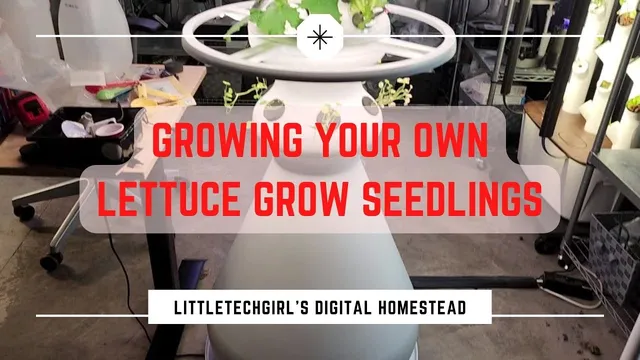
Growing Your Own Seedlings for Lettuce Grow, iHarvest, Gardyn, Rise Garden or Other Large Systems
Based on LittleTechGirl's Digital Homestead's video on YouTube. If you like this content, support the original creators by watching, liking and subscribing to their content.
Plug brands like Viagrow Super Plugs, Rapid Rooter, Organics (by VP/VPS), and Root Riot are described as fitting about 2-inch net cups used by large hydroponic systems.
Briefing
Seedling prices for large hydroponic systems have climbed, and the practical workaround is to grow lettuce and herb starts at home using the same size “plug” inserts that systems like Lettuce Grow, iHarvest, Gardyn, and Rise Garden accept. The core idea is simple: buy inexpensive seed packs, use 2-inch net-cup–compatible seedling plugs, and transplant once roots establish—saving money while avoiding the worry that purchased seedlings might arrive with pests.
The process starts with choosing plug types that match the system’s cup size. The transcript lists several plug brands—Viagrow Super Plugs, Rapid Rooter, Organics (by VP/VPS), and Root Riot—described as roughly 1.25 inches and fitting perfectly into about 2-inch net cups used across these large systems. For systems with slightly different cup sizes (like 3-inch net cups in some setups such as Kratky or DWC), the plugs can be nested in place using clay pebbles or similar media. Tray choice matters too: a cheap seed-starting tray with a dome and vent helps control humidity early, then gets vented as seedlings emerge.
Seeds are then placed into the plugs’ center hole. The transcript emphasizes labeling—both the tray number and the position—because mixed plantings quickly become impossible to track without notes. Small tools make the work easier: tweezers help handle tiny lettuce and mint seeds, while washi tape (or similar tape) can reseal seed packets without tearing them. For some seeds, special handling improves germination. Cilantro (Calypso cilantro) is described as fast to bolt but tricky to germinate; the method used is to lightly crack the seed so it splits, then plant both halves. Mint is also extremely small, so tweezers are used and two seeds may be placed in one plug.
Before sowing, the plugs are prepped by soaking. The transcript recommends soaking with warm water plus peroxide to reduce the chance of hitchhiking pests; boiling is mentioned as an alternative but not preferred beyond about five minutes, followed by cooling and rinsing. Seeds are kept moist rather than soaked: the trays are filled with about an inch of water so the plugs stay wet without drowning.
Once seedlings are established, they’re transplanted into the hydroponic system. The transcript shows moving plugs into Lettuce Grow net cups, including how to handle stressed seedlings during transplant by running the pump after placement. A reflective disc and glue dots are used to block light from reaching the pot area, and a label maker helps track varieties. The result is rapid growth after roots gain direct access to nutrients and water; by about day 10 after planting, seedlings are described as growing “great and fast,” with roots ready to spread.
Overall, the method is positioned as a repeatable, low-cost workflow: start seeds in domed trays, manage humidity and moisture, transplant into standard plug-compatible cups, and keep records so the system stays productive with consistent lettuce and herb supply.
Cornell Notes
Growing seedlings for large hydroponic systems becomes cheaper and more controllable when seeds are started at home in plug trays that match the system’s net-cup size. Plug brands such as Viagrow Super Plugs, Rapid Rooter, Organics (by VP/VPS), and Root Riot are described as fitting 2-inch net cups, letting growers transplant without changing their system. Pre-soaking plugs with warm water and peroxide helps reduce hitchhiking pests, and a domed tray with venting manages humidity until seedlings emerge. Small seeds (lettuce, mint) are placed using tweezers, while cilantro seeds may be lightly cracked to improve germination. After about 10 days post-transplant, seedlings grow quickly once roots access nutrients and water directly.
Why do plug size and net-cup compatibility matter for systems like Lettuce Grow and iHarvest?
What’s the recommended approach for preparing plugs before sowing?
How does the method handle very small seeds like lettuce and mint?
What special technique is used for cilantro germination?
How should trays be watered during seedling start-up?
What changes after transplanting into the hydroponic system?
Review Questions
- What plug brands and approximate dimensions are described as fitting 2-inch net cups, and why is that fit important?
- How do peroxide soaking and controlled water depth (about one inch) support healthier seed starts?
- What germination technique is used for Calypso cilantro, and how does it differ from the approach for lettuce or mint?
Key Points
- 1
Plug brands like Viagrow Super Plugs, Rapid Rooter, Organics (by VP/VPS), and Root Riot are described as fitting about 2-inch net cups used by large hydroponic systems.
- 2
Pre-soak plugs with warm water plus peroxide to reduce the chance of hitchhiking pests before sowing.
- 3
Use domed seed trays with venting to manage humidity during germination, and keep water depth to about one inch to avoid drowning seeds.
- 4
Label trays and positions before moving on, since mixed plantings become hard to track without notes.
- 5
Handle tiny lettuce and mint seeds with tweezers to place them accurately in the plug’s center hole.
- 6
Improve Calypso cilantro germination by lightly cracking seeds so they split, then planting the halves.
- 7
After transplanting, run the pump to help stressed seedlings recover quickly; growth accelerates once roots access nutrients and water directly.