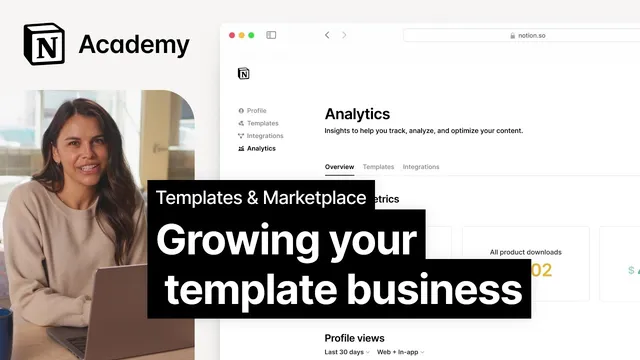
Growing your template business with Notion Marketplace
Based on Notion's video on YouTube. If you like this content, support the original creators by watching, liking and subscribing to their content.
Email addresses collected from template duplicators enable ongoing updates, support, and community building beyond the initial download.
Briefing
Growing a Notion template business over time hinges on three feedback loops built into the Marketplace: email capture, reviews, and analytics. The most immediate lever is email. When users duplicate a template, creators can collect their email addresses and use them to deliver value beyond the download—updates, community touchpoints, and support. That extra layer can turn one-time buyers into an ongoing relationship, and it can be done without forcing a newsletter signup for the core asset. A common approach is to let people choose: get the template alone or opt into additional resources, then follow up with simple autoresponders that deliver quick wins first and later offer a relevant “all-in-one” solution with a subscriber discount.
Reviews provide the second growth engine by turning user experience into product direction. Marketplace ratings and written feedback help creators spot what’s working and what’s breaking, including recurring confusion or missing features. Positive reviews can be used to strengthen promotion, while negative or constructive criticism becomes a roadmap for iteration. Creators can also respond directly—thanking reviewers, acknowledging issues, and calling out bugs that have been fixed—so buyers see responsiveness rather than silence.
Analytics closes the loop by showing where the funnel leaks. Marketing funnel analytics reveal whether the problem is top-of-funnel reach or product-market fit. Lots of views paired with few downloads can signal that the landing page or messaging isn’t landing; a higher view-to-download ratio can indicate the audience is interested and the creator may widen targeting. Marketplace analytics also help creators compare products and landing pages side by side—tracking which templates convert after clicks and which do not—so improvements can be measured rather than guessed. For larger templates in particular, analytics can guide changes to the text and explanations that make complex setups easier to understand, with the goal of raising the percentage of users who actually download.
The course wraps these Marketplace mechanics with practical creation advice from top creators: start by solving a real-world problem, keep the template simple, and don’t copy others—learn from them while shaping your own “vibe” and branding so people recognize and trust your style. Building an audience through content also matters: sharing the process of creating templates and showcasing finished work can attract followers, and templates can even lead to consulting opportunities by demonstrating the creator’s ability to build “custom workspace” solutions. For new sellers, the recommended path is to begin small—avoid massive databases, complex relations, and heavy automations until later—and use the Marketplace as a low-friction starting point because the product page and distribution are handled. The overarching message is straightforward: creators who publish, listen, measure, and iterate build businesses that improve with every release.
Cornell Notes
Email capture turns template duplication into an ongoing relationship by enabling updates, support, and community building—often with optional newsletter signup and simple autoresponders. Reviews convert user reactions into actionable product improvements; positive feedback can boost promotion, while criticism guides fixes, and responses build trust. Analytics reveals where the funnel drops off, distinguishing weak landing-page messaging from stronger product appeal, and helps creators iterate based on conversion rates. Together, these tools create a cycle of publish → collect feedback → improve → measure results. That cycle matters because template businesses grow by repeatedly tightening the match between what buyers expect and what the template delivers.
Why does collecting emails from template duplicators matter, and how can it be done without harming trust?
How should creators use reviews to improve templates rather than just collect ratings?
What does funnel analytics reveal when views are high but downloads are low?
How can analytics guide improvements for larger, more complex templates?
What creation habits help new template sellers succeed before they build complex systems?
Review Questions
- What specific signals in analytics would make you change your product page rather than your marketing targeting?
- How can responding to reviews affect buyer trust and future conversion?
- What are the tradeoffs between starting with a simple template versus building complex databases and automations immediately?
Key Points
- 1
Email addresses collected from template duplicators enable ongoing updates, support, and community building beyond the initial download.
- 2
Offering optional newsletter signup for free resources can preserve trust while still growing an email list.
- 3
Use reviews as a structured feedback loop: promote what works, fix what doesn’t, and respond to build credibility.
- 4
Marketplace analytics help diagnose funnel problems by comparing views, clicks, downloads, and conversion rates across templates.
- 5
A high view-to-download ratio can indicate strong product-market fit and justify expanding reach.
- 6
Clearer text and explanations can materially improve conversion for larger templates, and analytics can validate those changes.
- 7
New creators should start simple, solve real problems, develop a recognizable brand “vibe,” and avoid heavy complexity until later.