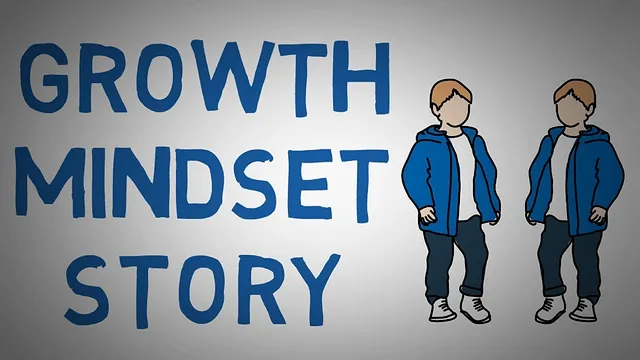
Growth Mindset - Story of Twin Brothers (animated)
Based on Better Than Yesterday's video on YouTube. If you like this content, support the original creators by watching, liking and subscribing to their content.
A fixed mindset treats abilities as unchangeable and failure as evidence of limited potential.
Briefing
A person’s future isn’t determined by the circumstances they’re born into; it’s shaped by whether they treat setbacks as proof they’re stuck or as information that can guide improvement. The core message centers on the difference between a fixed mindset—where abilities are seen as unchangeable—and a growth mindset—where skills and character can be developed through effort, learning, and adaptation. That distinction matters because it changes how people interpret failure: fixed-minded thinking treats failure as evidence of limited potential, while growth-minded thinking treats failure and obstacles as opportunities to learn.
The transcript drives the point home through a twin-brothers story tied to an alcoholism study. Identical twins share the same genes and, in broad terms, similar environments, including an alcoholic father. Yet one twin becomes an alcoholic and ends up homeless, while the other becomes a successful businessman and never drinks alcohol. The contrast comes down to interpretation. The alcoholic twin frames his outcome as inevitable: alcohol was always present, his father drank, and therefore “it was natural enough” that he would follow the same path. The businessman twin also acknowledges the same upbringing, but he draws the opposite conclusion—he swore he would never become like that, turning the father’s behavior into a cautionary lesson rather than a destiny.
Both brothers start from the same place, but their mindsets steer them toward different choices. The alcoholic twin views his father’s influence through a fixed lens, assuming his future is sealed and not even considering that the experience could teach him what to avoid. The successful twin views the same influence through a growth lens, recognizing the harm it caused and using it as a learning signal to choose a different road. In other words, the environment may set the stage, but mindset shapes the script.
The transcript then generalizes the lesson: people can’t control everything that happens around them, and they can’t always choose their circumstances. Still, they can choose how they respond—by repeatedly putting themselves into a growth mindset when challenges or setbacks arrive. Mindsets are described as beliefs: powerful, but changeable with dedication over time. The takeaway is practical and motivational—reminding oneself that intelligence and skills can be developed can produce meaningful results, and the decision between fixed and growth thinking ultimately rests with the individual.
Cornell Notes
The transcript argues that outcomes are strongly influenced by mindset, not just circumstances. A fixed mindset treats abilities as unchangeable and failure as a sign of limited potential, while a growth mindset treats setbacks as learning opportunities and assumes improvement is possible. An alcoholism study involving identical twin brothers illustrates the point: both had an alcoholic father, but one became an alcoholic and the other became a successful businessman who never drank. The difference is how each twin interpreted the same environment—inevitability versus a vow to avoid repeating harm. The message concludes that people can’t control everything that happens, but they can choose to respond with growth-oriented beliefs and actions.
What is the practical difference between a fixed mindset and a growth mindset?
How do the twin brothers’ choices show that the same circumstances can lead to different outcomes?
Why does the transcript treat failure and setbacks as a turning point rather than a dead end?
What does the story imply about personal agency when circumstances are out of someone’s control?
What is the key takeaway about changing beliefs over time?
Review Questions
- How would a fixed mindset interpret a setback differently than a growth mindset, and what behavior would that likely produce?
- In the twin story, what specific interpretation leads the businessman twin to avoid alcohol, and how does that differ from the alcoholic twin’s interpretation?
- What does the transcript suggest people can control when they can’t control their circumstances, and how does that control affect outcomes?
Key Points
- 1
A fixed mindset treats abilities as unchangeable and failure as evidence of limited potential.
- 2
A growth mindset treats abilities as developable and failure as a chance to learn and improve.
- 3
Identical twins with the same alcoholic father take different paths because they interpret the same environment differently.
- 4
Fixed-minded interpretation turns a harmful example into an assumed destiny; growth-minded interpretation turns it into a lesson about what to avoid.
- 5
People can’t control all circumstances, but they can choose how they respond through mindset and action.
- 6
Mindsets are beliefs that can be changed over time through dedication and repeated self-reminders.