Habit Building System I Wish I Had Learned Sooner
Based on Daily Atomic Steps's video on YouTube. If you like this content, support the original creators by watching, liking and subscribing to their content.
Choose up to three priority habits, then design each habit to survive real-life variability rather than relying on one fixed target.
Briefing
Long-term habit success often fails because people rely on a single, rigid version of a behavior—then fall off when life changes. A more durable approach is to build flexibility into the habit itself: define multiple “alternatives” for each habit, and then scale each alternative into four difficulty levels so the habit can survive even on bad days. The system is designed to keep momentum by ensuring there is always a doable way to “show up,” whether the goal is writing, reading, exercising, or something else.
The process starts by choosing up to three core habits to build. For each habit, the next step is to list alternatives—different ways to practice the same underlying behavior. For exercise, alternatives might include going for a walk, running, or doing core exercises. For writing, the transcript highlights a common failure mode: writing “X words per day” breaks down when editing becomes the priority. In that case, editing becomes an alternative that still counts as progress toward the broader habit of producing written work. Alternatives exist to protect consistency when the day’s constraints shift.
After alternatives are defined, each alternative gets four versions: “show up,” “easy,” “medium,” and “hard.” The “show up” version is intentionally minimal, created to keep the habit alive so it can be expanded later. In the writing example, 50 words could serve as the show-up target, 500 as easy, 1500 as medium, and a higher number as hard (the transcript uses 50, 500, and 1500 as examples for the scaled tiers). Not every alternative needs every tier; some habits may have only one alternative (reading is given as an example), and some alternatives may not realistically include an “easy” version (going to a gym is described as already at least medium).
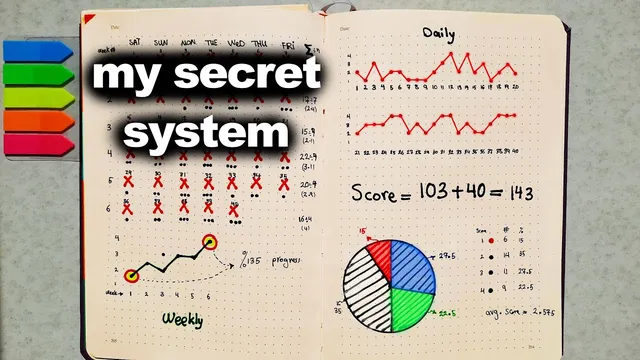
Tracking progress turns the system into a game. Instead of using colors that would require changing marks later in the day, the method uses a single “Big X” to represent that the habit was done at all, then adds dots beneath it to indicate how far the person went: one dot for easy, two for medium, and three for hard. This avoids the hassle of revising earlier entries.
Scoring formalizes the motivation. Each version has points: show-up earns 1, easy earns 2, medium earns 3, and hard earns 4. Over a defined 40-day “Success Cycle Period,” completing the show-up version every day yields 40 points—an explicit incentive to maintain the habit’s presence rather than chase perfection. The transcript credits Stephen Guise with the Elastic Habits framework, noting that the described method includes customizations while keeping the core idea: make consistency the win condition, then scale up when conditions allow.
Cornell Notes
The habit-building system prioritizes long-term consistency by building flexibility into both what counts as the habit and how hard it is on any given day. For each of up to three key habits, it recommends defining multiple alternatives (e.g., different exercise options) and then creating four versions for each alternative: show-up, easy, medium, and hard. A tracking method marks a single “Big X” when the habit is done, then adds dots beneath it to show the version completed, avoiding color changes later. Scoring assigns 1–4 points by version and rewards showing up every day across a 40-day cycle, aligning motivation with habit survival. The approach is attributed to Stephen Guise’s Elastic Habits, with the transcript describing additional customizations.
Why do many people fail to stick to habits, even when they start with strong motivation?
What does “alternatives” mean in this habit system, and how does it help with real-life changes?
How are the four versions (show-up, easy, medium, hard) used to keep habits alive?
How does the tracking method work without requiring changes to earlier entries?
What scoring rules turn habit tracking into a motivation game?
Are all habits required to have multiple alternatives and all four versions?
Review Questions
- For one habit you want to build, what alternatives could you define so the habit still counts on days when your usual approach isn’t possible?
- What would your show-up version look like, and why is it the key to maintaining consistency?
- How would you calculate your score over a 40-day cycle using the 1–4 point system?
Key Points
- 1
Choose up to three priority habits, then design each habit to survive real-life variability rather than relying on one fixed target.
- 2
Define alternatives for each habit so the same underlying goal can be met in different ways on different days.
- 3
Create four versions for each alternative—show-up, easy, medium, and hard—to ensure there is always a doable minimum.
- 4
Use a tracking method that marks a single Big X plus dots beneath it to reflect the highest version completed, avoiding later edits.
- 5
Assign points by version (1–4) and track performance across a 40-day Success Cycle Period to make progress measurable and motivating.
- 6
Treat “show up every day” as the primary win condition; scaling up comes after consistency is secured.
- 7
Credit Stephen Guise’s Elastic Habits as the underlying framework, while recognizing the transcript’s approach includes customizations.