Heisenberg Made a Discovery in 1925. We Still Can't Explain It
Based on PBS Space Time's video on YouTube. If you like this content, support the original creators by watching, liking and subscribing to their content.
Heisenberg’s 1925 formulation anchored quantum mechanics in observables—photon frequencies and intensities from transitions—rather than unobservable electron orbits.
Briefing
In 1925, Werner Heisenberg helped turn quantum mechanics from a set of partial models into a full theoretical framework by building it around what can actually be measured—photon frequencies and intensities—rather than picturing electrons as tiny objects following hidden orbits. That shift mattered because it broke with the older belief that the universe is fully knowable in a deterministic way. Instead, quantum theory made “between measurements” fundamentally uncertain or even undefined, and it tied the limits of knowledge to the mathematics of the theory itself.
The backdrop was a physics worldview still dominated by determinism. Newtonian mechanics treated the universe as computable from universal laws, and Einstein’s general relativity, while revolutionary about space and time, still preserved a deterministic structure: the distribution of matter and energy fixes spacetime geometry, which then fixes motion. Even Einstein’s relativity removed absolute “now,” but it kept the idea that the past and future are as real as the present. The atomic world threatened that confidence. Bohr’s model quantized electron energy levels using standing-wave ideas, but it felt classical and struggled beyond simple cases like hydrogen.
Heisenberg’s path to a new quantum theory began with a practical puzzle: distortions in hydrogen energy levels under strong magnetic fields (the anomalous Zeeman effect). A young Heisenberg tried a mathematically successful approach that used half-integers, a clue linked to deeper symmetries later associated with quantum spin. By 1925, working in Göttingen under Max Born and in close contact with Niels Bohr, Heisenberg adopted a stricter Einstein-like rule: build the theory only from observables. Since electron orbits inside atoms can’t be directly observed, the theory should not describe where electrons “are” or how they “move.” It should instead predict the measurable properties of emitted light when electrons jump between states.
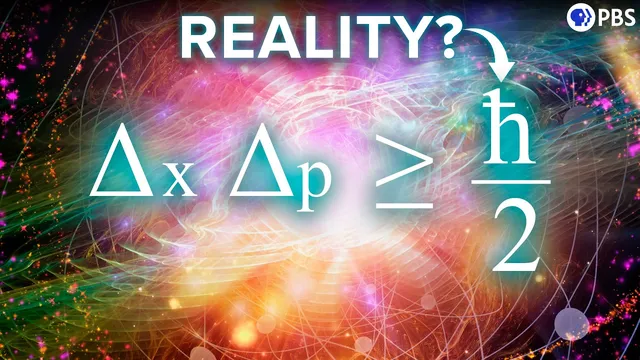
That decision led to a formulation in terms of matrices—two-index lists of quantities describing transitions between initial and final states. Matrix multiplication turned out to be non-commutative, meaning the order of operations matters, and that mathematical feature became inseparable from the uncertainty principle. Heisenberg tested the framework against energy conservation using an anharmonic oscillator, and after a period of illness and retreat to Helgoland, the calculations held together. Born immediately recognized the work as matrix algebra, and collaboration with Pascual Jordan and Wolfgang Pauli helped solidify “matrix mechanics,” the first complete quantum mechanics.
Yet the new approach didn’t come with a satisfying “story” of what electrons are doing internally. That discomfort fed into the Copenhagen interpretation: the universe between measurements is not merely unknown, but not well-defined in the classical sense. Schrödinger then offered a different formulation—wave mechanics—derived from de Broglie’s matter waves and the wavefunction, which Born interpreted as probability amplitudes. Even that more intuitive picture couldn’t escape the same core limitation: only inputs and outputs are definite, while intermediate behavior is potentiality. By 1927, Paul Dirac showed the Heisenberg and Schrödinger pictures are mathematically equivalent, even if they differ in what they emphasize.
Over time, the two pictures found distinct roles. Wave mechanics was less compatible with special relativity, while matrix mechanics fit more naturally with it through an abstract state space (Hilbert space). Heisenberg’s observables-first philosophy also became a foundation for quantum field theory, where particles emerge as excitations of fields and symmetries shape interactions—ultimately feeding into the Standard Model. A century later, quantum mechanics powers modern technology, but its deepest meaning remains unsettled: it still draws a boundary between external reality and what can be known through measurement, leaving the “mechanism beneath observables” an open question.
Cornell Notes
Heisenberg’s 1925 breakthrough recast quantum mechanics around observables: instead of describing electrons as if they follow hidden orbits, the theory predicts measurable photon properties produced by transitions between electron states. The resulting “matrix mechanics” uses two-index quantities and non-commutative algebra, which directly underpins the uncertainty principle and the idea that what happens between measurements is not classically well-defined. Schrödinger’s 1925 wave mechanics offered a more intuitive wavefunction picture, but Born’s probability-amplitude interpretation and later results showed it shares the same core limitation. Dirac later demonstrated the two formulations are mathematically equivalent, while matrix mechanics proved especially useful for making quantum theory consistent with relativity and for building toward quantum field theory.
Why did Heisenberg’s “observables only” rule force a new kind of theory rather than a tweak to Bohr’s model?
How does non-commutative matrix algebra connect to the uncertainty principle?
What role did energy conservation play in validating Heisenberg’s early quantum mechanics?
Why did Copenhagen-style “unknowability” go beyond practical ignorance?
What did Schrödinger’s wave mechanics change—and what didn’t it fix?
How did the Heisenberg and Schrödinger pictures end up being the same theory?
Review Questions
- What measurable quantities did Heisenberg treat as the foundation of quantum theory, and why were electron orbits excluded?
- Explain how non-commutativity in matrix mechanics relates to limits on simultaneously knowing physical properties.
- Compare the conceptual appeal of Schrödinger’s wavefunction with Born’s probability-amplitude interpretation and state what remained unresolved.
Key Points
- 1
Heisenberg’s 1925 formulation anchored quantum mechanics in observables—photon frequencies and intensities from transitions—rather than unobservable electron orbits.
- 2
Matrix mechanics emerged from describing transition properties for every initial–final state pair, leading to two-index quantities (matrices).
- 3
Non-commutative matrix algebra is a core mathematical feature of quantum mechanics and underlies the uncertainty principle.
- 4
The Copenhagen interpretation treats the system between measurements as not just unknown but undefined in the classical sense, reflecting the observables-first approach.
- 5
Schrödinger’s wave mechanics introduced a wavefunction picture, but Born’s probability-amplitude interpretation showed it still doesn’t restore a fully classical “in-between” reality.
- 6
Dirac proved the Heisenberg and Schrödinger pictures are mathematically equivalent, producing the same predictions.
- 7
Matrix mechanics proved especially compatible with special relativity through Hilbert-space methods and helped set the stage for quantum field theory and the Standard Model.