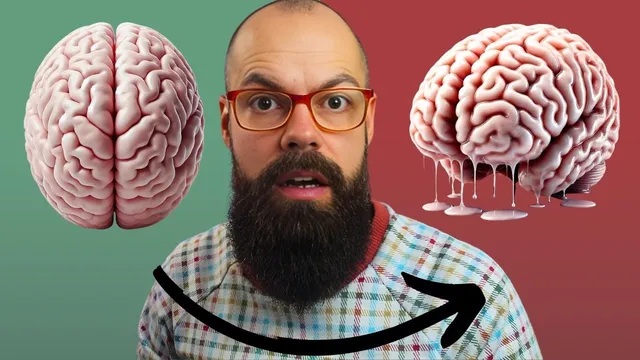
How Academia Rewires Your Brain: The PhD Effect
Based on Andy Stapleton's video on YouTube. If you like this content, support the original creators by watching, liking and subscribing to their content.
Constant criticism in academia can be internalized as a verdict on personal worth rather than treated as feedback on work quality.
Briefing
A PhD can reshape a person’s identity by turning constant, high-stakes feedback into self-judgment—pushing early-career researchers to feel like they are their project, not separate people. The core mechanism is relentless criticism: writing gets questioned, presentations are scrutinized, experiments fail, and the academic system itself runs on “do more” pressure from universities, administrators, and funding expectations. Even when praise appears—such as award ceremonies—it often feels hollow compared with the day-to-day demand for more output. Over time, that imbalance can drain enthusiasm and leave students “shell of themselves,” because criticism stops being a reflection of academic standards and starts being interpreted as a verdict on personal worth.
A second identity-shaping pressure comes from how leaving academia is treated. The fantasy of becoming an academic may fade as stress and research realities set in, but the desire to exit is stigmatized as failure. People who move into industry or other paths are framed negatively—“they couldn’t hack it” or “they didn’t get funding”—rather than being celebrated for choosing a different route. That social framing reinforces a dangerous equation: the success or failure of a PhD project becomes directly tied to self-worth. When a project goes well, students feel relief; when it goes badly, months of depression can follow, because the emotional stakes are attached to identity rather than to work outcomes.
The transcript also highlights how the system narrows perceived options. Students are pressured to give everything to their PhD, leaving little time or freedom to pursue growth outside research—learning a language, playing an instrument, taking up sports, or building hobbies. That outside development is presented as a stabilizing counterweight: it reminds people they can grow as individuals even when experiments stall. Closely related is the belief that academic skills are worthless outside academia. When the narrator left and pursued an internship at Cosmos magazine, others questioned what skills would transfer, reinforcing the sense of being trapped inside an “academic bubble.” The argument here is that this belief is false: fulfilling careers and meaningful ways to earn money exist beyond academia, and the isolation students feel is largely manufactured by the environment.
Finally, the transcript points to power dynamics with supervisors. Many students treat supervisors as gatekeepers to money, networking, and experimental direction, waiting for approval and fearing mistakes. A healthier model—supporting independence and helping students become independent thinkers—is described as too rare. The transcript suggests that progress sometimes requires moving around gatekeeping, because “it’s your career, it’s your life,” and excessive dependence can further erode autonomy.
Taken together, the “PhD effect” is portrayed as a system-level rewiring: criticism, stigma, identity fusion with the project, restricted exploration, and supervisor gatekeeping combine to make students feel trapped, undervalued, and anxious—despite their broader capabilities and options.
Cornell Notes
The transcript argues that the academic PhD environment can “rewire” identity by turning constant criticism into personal judgment. Students absorb feedback about writing, experiments, and productivity until they equate project outcomes with their own worth. Leaving academia is also stigmatized, so students who want other careers interpret that desire as failure rather than a valid choice. Limited time for outside interests and the belief that academic skills are worthless beyond academia deepen isolation inside the “academic bubble.” Supervisor dynamics can intensify the problem when students wait for permission instead of building independence. The proposed antidotes include cultivating growth outside the PhD and pursuing paths beyond academia without shame.
How does constant criticism during a PhD become a personal identity problem rather than just job feedback?
Why does the transcript say stigma around leaving academia can be as damaging as the day-to-day workload?
What does “students become their project” mean, and how does it affect mental health?
What role does outside growth play in counteracting the PhD’s pressure to give everything to research?
Why does the transcript challenge the belief that academic skills are worthless outside academia?
How can supervisor dynamics reduce student independence, according to the transcript?
Review Questions
- What mechanisms in the academic system turn criticism into self-worth judgments, and how does that change student behavior over time?
- How does stigma about leaving academia shape the way students interpret their own career preferences?
- What practical steps does the transcript suggest for maintaining identity and mental health when PhD outcomes fluctuate?
Key Points
- 1
Constant criticism in academia can be internalized as a verdict on personal worth rather than treated as feedback on work quality.
- 2
Academic pressure to “do more” and produce more papers filters down into PhD life, amplifying anxiety and reducing space for positive reinforcement.
- 3
Stigma around leaving academia can make students interpret a desire to exit as failure, even when other careers may be a better fit.
- 4
Fusing identity with the PhD project makes setbacks feel existential, contributing to prolonged depression when experiments or papers don’t go well.
- 5
Building growth outside the PhD—through hobbies, sports, or learning—helps counter the system’s demand to devote everything to research.
- 6
Beliefs that academic skills are worthless outside academia can trap students mentally; transferable paths and fulfilling jobs exist beyond the academic bubble.
- 7
Supervisor gatekeeping can suppress independence; students may need support to act autonomously rather than waiting for permission.