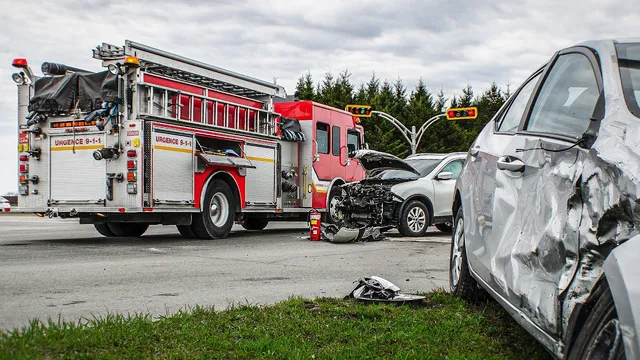
How American Fire Departments are Getting People Killed
Based on Not Just Bikes's video on YouTube. If you like this content, support the original creators by watching, liking and subscribing to their content.
Pedestrian deaths in the US have risen sharply, and street design choices are presented as a key contributor to that trend.
Briefing
Pedestrian deaths in the United States have surged—up 77% since 2010—while other developed nations have not seen the same rise. A major driver, according to traffic-safety advocates, is street design that encourages higher vehicle speeds and more severe crashes. But one institution sits in the way of safer redesigns: fire departments, whose truck size and regulations push cities toward wider roads and traffic patterns that make everyday travel more dangerous.
American fire trucks are described as dramatically larger than those used internationally. That size forces even quiet residential streets to be built wider so the vehicles can fit and turn, despite decades of research linking wider streets to higher speeds and more fatal crashes. The result is a recurring pattern across North America: proposed safety projects—bike lanes, traffic-calming measures, and street narrowing—get delayed, diluted, or canceled after fire-department objections. Baltimore’s planned downtown bike lanes were opposed on the grounds that streets would become too small for trucks; similar resistance appeared in Arlington and Los Angeles. In Peekskill, New York, a car-free street created during the lockdown was opposed when the fire department had the chance to weigh in. In Toronto, fire-department complaints were used to justify removing a protected bike lane.
The core issue goes beyond aesthetics. Less than 4% of fire truck calls are for building fires; a US study cited about 8% for false alarms, while roughly 64% involve medical emergencies or rescue—far more frequent than fires. Yet North American systems still dispatch large trucks to many of these calls, partly because ambulances are less available than fire trucks. The argument is that this “do-everything” approach bloats vehicles with equipment that’s only needed in a small fraction of incidents—like large water supplies and long ladders—so the same oversized truck rolls to emergencies where smaller, faster units could deliver immediate care.
International comparisons are used to challenge the claim that big trucks are necessary for rapid response. The Netherlands is presented as an example where fire trucks are less common on routine streets, while police and ambulances handle many emergencies. Emergency response motorcycles are cited from Daytona Beach, with an average response time of about 3 minutes, compared with about 7 minutes in the rest of the US that relies on large trucks. Advocates also argue that infrastructure built for safer streets can improve emergency access—if cities design for it. Cycling “superhighways” in London are described as intentionally usable by emergency vehicles, and the video claims that enough space and fit-for-purpose design can let smaller vehicles move through faster.
Fire-department resistance is also tied to broader traffic engineering choices. Wider lanes and street parking are said to increase driving demand and speed, raising crash risk. Fire departments are described as opposing roundabouts and other traffic-calming tools, even though roundabouts can reduce injury and fatal collisions substantially and may improve traffic flow. A particularly pointed statistic is that 5.3% of fire truck responses in the US are motor-vehicle crashes—more than building fires—creating a feedback loop: road designs that increase crashes require more emergency response capacity, which then reinforces the demand for larger vehicles and wider streets.
The proposed fix is twofold: change regulations and redesign emergency access so cities can build safer streets without relying on oversized trucks. Suggestions include prepositioned hoses, more on-site pumps or standpipes, sprinklers in more residential buildings, more AED availability for cardiac arrest, and emergency-friendly street grids with designated fire access spaces. Cities could also reduce truck sizes on normal replacement cycles, with examples like San Francisco replacing older trucks with shorter, more maneuverable models that maintain pumping capacity. The overarching message is that public safety improvements—safer streets, less car dominance, and better emergency integration—are achievable, but fire-department policies have too often blocked them.
Cornell Notes
The transcript links rising US pedestrian deaths to street designs shaped by oversized fire trucks and fire-department regulations. It argues that North American fire services dispatch huge vehicles to many medical and rescue calls—despite building fires being a small share of incidents—because ambulances are less available and because trucks are built to carry extensive equipment. Those practices then drive cities to keep roads wide, resist traffic calming, and oppose bike lanes and roundabouts, even when international examples show safer designs can still support emergency response. The proposed path forward combines regulatory change, infrastructure that integrates emergency access (like designated spaces and prepositioned resources), and gradual replacement with smaller, safer trucks.
Why does the transcript claim fire departments are a major obstacle to safer street design?
What call-volume statistics are used to challenge the idea that fire trucks are primarily for fires?
How does the transcript connect truck size to road safety outcomes?
What alternatives to large-truck dispatch does the transcript highlight?
Why does the transcript argue roundabouts and traffic calming can improve safety and possibly emergency response?
What “feedback loop” does the transcript describe involving crashes and fire-truck demand?
Review Questions
- Which specific fire-department policies or requirements does the transcript say lead to wider streets and delayed safety projects?
- How do the transcript’s call-volume numbers (fires vs medical/rescue) support its argument about dispatching large trucks?
- What infrastructure and equipment changes are proposed to maintain emergency access while reducing the need for oversized vehicles?
Key Points
- 1
Pedestrian deaths in the US have risen sharply, and street design choices are presented as a key contributor to that trend.
- 2
Oversized North American fire trucks can force cities to build wider roads, which research links to higher speeds and more fatal crashes.
- 3
Building fires are a small share of fire-department calls, while medical emergencies and rescue make up the majority—yet large trucks are still dispatched frequently.
- 4
Fire-department objections are described as repeatedly derailing bike lanes and traffic-calming projects, including protected lanes and roundabouts.
- 5
The transcript argues that car traffic is the biggest real-world barrier to emergency response, not bike lanes or pedestrian infrastructure.
- 6
Proposed reforms include prepositioned firefighting resources, more on-site water/pumping options, expanded AED availability, and emergency-access street designs that don’t require uniformly wide roads.
- 7
Gradual replacement with smaller, more maneuverable trucks—paired with better emergency integration—could improve safety without halting firefighting capability.