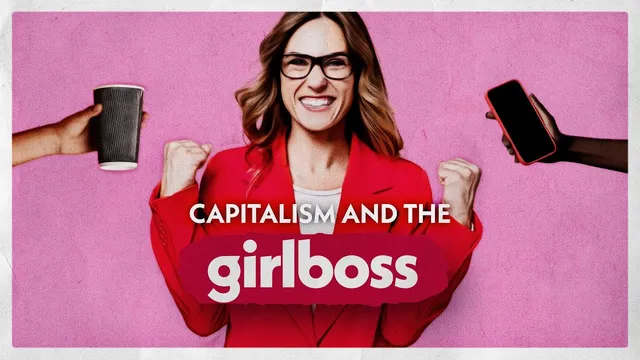
How Capitalism Destroys Feminism
Based on Second Thought's video on YouTube. If you like this content, support the original creators by watching, liking and subscribing to their content.
The transcript argues that neoliberal feminism persists even after “girl boss” branding faded, because it still frames inequality as an individual problem rather than a structural one.
Briefing
“Girl boss” feminism may have faded as a slogan, but the political logic behind it—often labeled neoliberal feminism—still shapes how inequality is explained and what solutions are considered legitimate. The core claim is that this approach shifts feminism away from structural power and collective struggle, replacing them with individual self-improvement, workplace “leaning in,” and the belief that representation at the top will automatically translate into liberation for everyone. That matters because it leaves most women—especially those facing intersecting barriers of class, race, sexuality, disability, and gender identity—without meaningful change while offering benefits primarily to a small, privileged minority.
The transcript traces how “girl boss” became a cultural brand: Sophia Amoruso popularized the term in 2014, it surged into mainstream media, and it was packaged into consumer-friendly status symbols. Over time, the label became associated with toxic workplaces and hypocrisy—women promoting feminist ideals while running environments marked by racism and sexism—leading to a broader backlash. Even when the phrase itself largely disappeared, the underlying politics remained: a version of feminism that treats inequality as a personal deficit rather than a system-level outcome.
Neoliberal feminism is described as highly individualistic. It treats politics as something people cultivate internally and apply to their own lives, rather than something communities fight for together. In this framework, structures of power are treated as obstacles to be overcome, not forces to be abolished. The transcript links this to neoliberal political morality: self-reliance, efficiency, and entrepreneurship are cast as virtues, while welfare and public services are framed as shameful “handouts.” Unemployment, for example, is portrayed as an individual failure even though capitalist economies have incentives to keep labor costs low and maintain job insecurity.
Applied to feminism, this becomes a narrow definition of equality. Using Sheryl Sandberg’s Lean In as the key example, the transcript argues that Sandberg equates equality with female representation in leadership and treats leadership parity as both the goal and the measure of progress. The strategy resembles “trickle-down” logic: once a few women reach high status, the benefits will spread downward. But the transcript says this approach ignores how racism, classism, ableism, homophobia, and transphobia shape who gets access to opportunity. It also argues that the “earned” framing implies that women who don’t reach the top are simply not leaning in enough.
A major consequence, the transcript says, is how neoliberal feminism handles care work and reproductive labor. Because capitalism depends on workers being reproduced and raised, the labor is necessary—but it often cannot generate profit in the same way as market production. Neoliberal feminism, it argues, resolves the contradiction by asking women to “balance” career and family individually, especially in a world where childcare is privatized and unaffordable. The burden of organizing reproductive labor remains on women, even if they can outsource or split tasks.
The transcript also critiques neoliberal feminism’s limits on reproductive freedom. While it emphasizes abortion access in a post-Dobbs context, it allegedly treats other dimensions—like the right to have children without poverty-driven exclusion—as secondary or non-feminist. The argument is that reproductive freedom is inseparable from economic structures: if wages and living conditions are insufficient, “choice” becomes unequal. Ultimately, emancipation is framed as impossible without dismantling the patriarchal, racial heteronormative capitalist system and building solidarity-based feminism rather than an individualist project.
Cornell Notes
The transcript argues that “girl boss” feminism is less about a catchy label and more about a neoliberal political framework that centers individual advancement over structural change. Even after the phrase fell out of fashion, the same logic persists: inequality is treated as a lack of representation and a personal shortcoming, not a product of class, race, and other power systems. Lean In is used as a flagship example, with its focus on leadership parity and “leaning in” framed as a trickle-down model that benefits a small elite while leaving most women behind. The critique extends to care work and reproductive freedom, claiming that neoliberal feminism asks women to balance privately rather than demanding social solutions like universal childcare and shorter work days. The transcript concludes that genuine emancipation requires dismantling the system, not merely subtracting discrimination in isolation.
Why does the transcript treat “girl boss” as a symptom rather than the real problem?
What is neoliberal feminism, as described here, and how does it change what counts as a feminist solution?
How does Lean In’s definition of equality shape the transcript’s critique?
What does the transcript claim neoliberal feminism gets wrong about care work and reproductive labor?
Why does the transcript argue reproductive freedom can’t be reduced to abortion access?
Review Questions
- How does the transcript connect neoliberal morality about welfare and unemployment to its critique of neoliberal feminism?
- In what ways does defining equality as leadership representation lead to the transcript’s “trickle-down” critique?
- What structural changes does the transcript imply are necessary for reproductive freedom and care work beyond individual “balance”?
Key Points
- 1
The transcript argues that neoliberal feminism persists even after “girl boss” branding faded, because it still frames inequality as an individual problem rather than a structural one.
- 2
Neoliberal feminism is described as individualistic, treating power structures as obstacles to overcome instead of systems to dismantle.
- 3
Sheryl Sandberg’s Lean In is used to illustrate a leadership-parity model of equality that prioritizes representation at the top and assumes benefits will spread downward.
- 4
The transcript contends that this model ignores how racism, classism, ableism, homophobia, and transphobia shape access to opportunity, leading to benefits for a small elite rather than most women.
- 5
Care work and reproductive labor are criticized for being treated as an individual “balance” problem, especially in a context where childcare is privatized and unaffordable.
- 6
Reproductive freedom is framed as incomplete when it focuses mainly on abortion access without addressing economic conditions that determine whether people can afford to have and raise children.
- 7
The transcript concludes that emancipation requires collective solidarity and dismantling the patriarchal, racial heteronormative capitalist system, not merely removing discrimination in isolation.