How Capitalism Ruined American Education
Based on Second Thought's video on YouTube. If you like this content, support the original creators by watching, liking and subscribing to their content.
American schools’ decline is linked to long-term underfunding and profit-driven policy choices that prioritize measurable performance over learning, safety, and enrichment.
Briefing
American public education is deteriorating not mainly because of individual bad teachers, but because decades of underfunding and profit-driven policy choices have reshaped schools into test-prep factories while opening the door to ideological branding in classrooms. The result shows up in student experience—high stress, boredom, and overwhelmingly negative emotions about school—alongside a system increasingly judged by standardized scores rather than learning, safety, or enrichment.
A key thread runs through the last 40 years of U.S. politics: as public life moved further right, policymakers and media ecosystems pushed a free-market agenda that treated public services as costs to be cut. In education, that meant shrinking investment in safe facilities and basic supports like school lunches, then using the resulting performance problems as justification for further cuts. The briefing also points to a newer development: right-wing ideology is no longer just influencing curricula indirectly; it is being inserted directly through vendors and classroom materials.
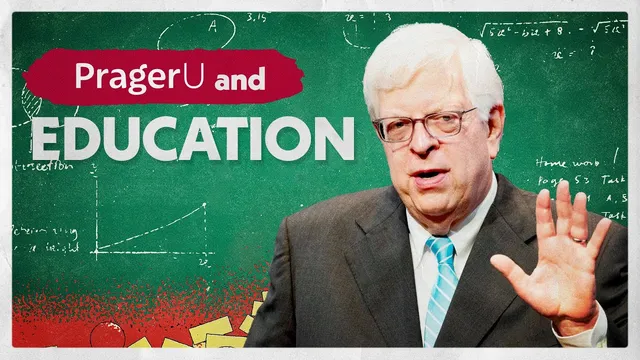
That shift is illustrated by PragerU’s expansion into K-12 settings. PragerU—described as a conservative nonprofit founded by Alan Estrin and Dennis Prager—has built a large online audience with short, highly polished videos and has faced criticism for misinformation and revisionist takes on topics such as climate change, slavery, fascism, and immigration. In 2023, Florida became the first state to accept PragerU as an educational vendor, citing alignment with revised civics standards tied to Ron DeSantis’s agenda of book bans and efforts to remove teachers associated with “woke” content. Oklahoma followed, and Texas—where textbooks have been revised to portray Native Americans as “got up and left”—has been considering approval as well. Teachers in these states are portrayed as pushing back, but the core concern remains: even if schools limit PragerU to videos and worksheets, the presence of branded political content signals where the system is headed.
The ideological vendor push is framed as the latest chapter in a longer policy arc. A major starting point is Reagan-era reform rhetoric, anchored to the 1983 report “A Nation at Risk,” which warned that U.S. education was falling behind global competitors using cherry-picked data. The report is portrayed as providing political cover for a “war” on public education—first by denigrating schools and then by enabling reforms that narrowed learning to what could be measured. Programs and subjects that don’t easily boost test scores—arts, recess, home economics, and after-school activities—were among the first to be cut. Laws like No Child Left Behind and later initiatives are described as continuing the pattern, while blame shifted toward teachers rather than the economic decisions that hollowed out resources.
Underneath both the policy and the culture-war layer is a broader economic claim: capitalism’s profit motive shapes what education is “for.” Historically, industrial capitalism specialized labor so workers could be paid less and replaced more easily; modern economies still reward training that produces compliant service workers rather than broadly educated citizens. With 80% of U.S. jobs described as service-sector roles, the argument says the system has less incentive to fund deep STEM education for everyone. The briefing links this to declining global standing in math and science and to countries like China pursuing longer-term human capital development.
The piece ends with a warning about the stakes: children face a double bind—alienation and violence in a broken system, and ideological gatekeeping from political leaders. If capitalism produces these outcomes, the argument concludes, then the education crisis is also a signal to consider alternatives.
Cornell Notes
American education’s decline is tied to profit-driven underfunding and a decades-long shift toward measuring schools mainly by standardized tests. That approach narrowed learning, cut enrichment and safety supports, and redirected blame toward teachers instead of systemic economic choices. The same political climate has also enabled ideological branding in classrooms, with PragerU gaining approval as an educational vendor in states such as Florida, and being considered in others like Texas and Oklahoma. The broader claim is that capitalism shapes education toward producing compliant service workers rather than broadly trained citizens, which helps explain both student experience and the country’s weaker performance in areas like math and science.
What does the transcript identify as the core driver of American schools’ worsening conditions?
How does PragerU’s entry into K-12 classrooms fit into the broader story?
Why does “A Nation at Risk” matter in the timeline?
What changes in curriculum and school life are linked to the test-score focus?
How does the transcript connect capitalism to what education produces?
What does the transcript suggest about the future stakes for students?
Review Questions
- Which policy mechanism does the transcript say most directly shifted schools toward test-prep, and how did that affect non-tested subjects?
- What specific examples are given of states moving toward approving PragerU as an educational vendor, and what rationale is cited?
- How does the transcript connect the structure of the labor market (industrial specialization and later service work) to the kind of education it claims capitalism favors?
Key Points
- 1
American schools’ decline is linked to long-term underfunding and profit-driven policy choices that prioritize measurable performance over learning, safety, and enrichment.
- 2
Cutting investments in areas like safe facilities and school lunches is portrayed as undermining outcomes, then being used to justify further cuts.
- 3
Right-wing ideology is increasingly entering classrooms through approved educational vendors, with PragerU highlighted as a major example.
- 4
Florida’s 2023 acceptance of PragerU as an educational vendor is tied to revised civics standards associated with Ron DeSantis’s broader push against “woke” content and book bans.
- 5
The transcript traces modern education reform rhetoric to the 1983 “A Nation at Risk” report, which it describes as using cherry-picked data to legitimize a long campaign against public schools.
- 6
Standardized testing is presented as becoming the dominant metric, leading to cuts in arts, recess, home economics, and after-school programs.
- 7
The broader economic claim is that capitalism shapes education to produce workers suited to a profit-maximizing service economy rather than broadly educated citizens.