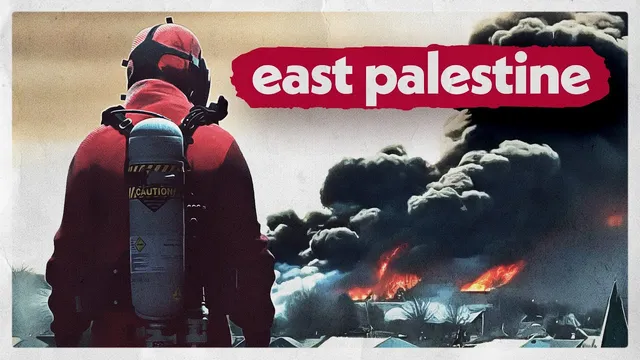
How Corporate Greed Destroyed East Palestine
Based on Second Thought's video on YouTube. If you like this content, support the original creators by watching, liking and subscribing to their content.
East Palestine’s derailment triggered evacuation and a later controlled burn, with vinyl chloride and other hazardous materials at the center of health and environmental concerns.
Briefing
East Palestine’s derailment became a case study in how cost-cutting and regulatory capture can turn a rail accident into a long-running public health and environmental crisis. On February 3, 2023, a Norfolk Southern train carrying high-hazard chemicals derailed in East Palestine, Ohio—about 50 cars came off the tracks and a fire followed. Officials ordered a mass evacuation within roughly a 1-mile radius, while crews later carried out a “controlled burn” to reduce the risk of a larger explosion. The chemicals most emphasized in local accounts were vinyl chloride, described as a known carcinogen, along with other hazardous materials.
Residents reported immediate chaos—sirens, glowing skies, and sudden door-to-door evacuation orders—and then a second wave of fear after people were allowed to return. After the evacuation order was lifted, many described symptoms such as nausea, headaches, rashes, and lightheadedness, alongside ongoing concerns about contaminated water and soil. Local testimony also pointed to dead wildlife in nearby waterways, including an estimated 43,000 fish and other aquatic animals. One resident described a creek near their home with visible film and a strong chemical odor, claiming it was VOC-laden contamination sitting on top of the water. The account also alleges that residents were told to discard certain household items and deep-clean, because volatile organic compounds can cling to fabrics and plastics.
A major theme is distrust in cleanup and monitoring. Norfolk Southern is described as conducting testing that residents say focuses on limited measures—such as oxygen levels rather than comprehensive toxin testing—while residents and advocates push for independent third-party labs. The cleanup approach is also criticized: residents claim air-stripping practices can move vinyl chloride from water into the air, urging people to keep windows closed and avoid exposure near the creek during remediation. Compensation is portrayed as inadequate and insulting relative to the scale of harm. Promised payments—such as inconvenience checks and reimbursement—are described as small, with one resident calling the amounts a “slap in the face,” while a broader donation and fund are framed as negligible when spread across thousands of residents.
The broader explanation ties East Palestine to a decade-long pattern in freight rail: precision scheduled railroading (PSR), a set of business practices aimed at lowering operating ratios and boosting profits. Under PSR, trains run longer and heavier, rail staffing is reduced, and workers face overtime, fatigue risks, and pressure not to report incidents. The transcript links these operational changes to higher derailment risk and to the weakening of safety upgrades through lobbying. It highlights how braking rules and safer technologies like ECP brakes were narrowed or delayed through industry influence, and how chemical and rail interests pushed for definitions that could keep certain high-hazard shipments from triggering stricter requirements.
Finally, the narrative argues that corporate and media incentives shape what the public learns and how long pressure lasts. Residents describe feeling abandoned by coverage and by official messaging that framed the event as manageable. The transcript claims East Palestine received relatively little sustained attention on major U.S. cable networks, and that the resulting vacuum was exploited by far-right messaging that redirected blame away from rail companies. The end position is blunt: as long as profit remains the driver, similar disasters are expected to recur, and meaningful change would require structural reform—up to and including public ownership of rail infrastructure—so safety and environmental protection are treated as non-negotiable costs rather than optional expenses.
Cornell Notes
East Palestine’s derailment is presented as more than an isolated accident: it’s framed as the predictable outcome of profit-driven rail practices and weakened safety enforcement. After the February 3, 2023 derailment and subsequent controlled burn, residents reported ongoing health symptoms, contaminated water and soil concerns, and dead wildlife—especially tied to vinyl chloride. Cleanup and testing efforts are criticized as insufficient or misdirected, including claims that air-stripping can shift contaminants from water into the air. The transcript connects these local harms to Precision Scheduled Railroading (PSR), which emphasizes longer trains, reduced staffing, and cost cutting, while lobbying helps limit safety upgrades. It argues that without structural change, similar derailments will keep happening and communities will keep bearing the risks.
What immediate actions followed the East Palestine derailment, and why did they matter for public health risk?
How do residents describe the contamination problem after the evacuation order was lifted?
What criticisms are made about testing and cleanup methods?
How does the transcript connect East Palestine to broader rail industry practices like PSR?
What role does lobbying and regulation play in the safety narrative?
Why does the transcript say media coverage and compensation shape public accountability?
Review Questions
- What specific post-evacuation symptoms and environmental observations do residents describe, and how are those linked to vinyl chloride or VOC exposure?
- How does PSR change rail operations in ways that could plausibly increase derailment severity or reduce detection and response?
- Which safety regulations or technologies are highlighted as being weakened or restricted, and what consequences does the transcript attribute to that lobbying?
Key Points
- 1
East Palestine’s derailment triggered evacuation and a later controlled burn, with vinyl chloride and other hazardous materials at the center of health and environmental concerns.
- 2
Residents report ongoing symptoms after the evacuation order was lifted, alongside claims of contaminated creek water and dead wildlife in nearby waterways.
- 3
Cleanup and monitoring are criticized for allegedly limited toxin testing and for remediation methods (like air-stripping) that may shift contaminants from water into the air.
- 4
Compensation is portrayed as disproportionately small compared with long-term risks, including health effects and damage to property values and community stability.
- 5
The transcript links the disaster to Precision Scheduled Railroading (PSR), which emphasizes cost cutting through longer trains, reduced staffing, and increased overtime/fatigue risk.
- 6
It argues that lobbying helped narrow or delay safety upgrades such as ECP brakes and restricted how “high-hazard” shipments are defined for stricter requirements.
- 7
The narrative contends that limited sustained media attention and diversionary blame reduce accountability and weaken pressure for structural change.