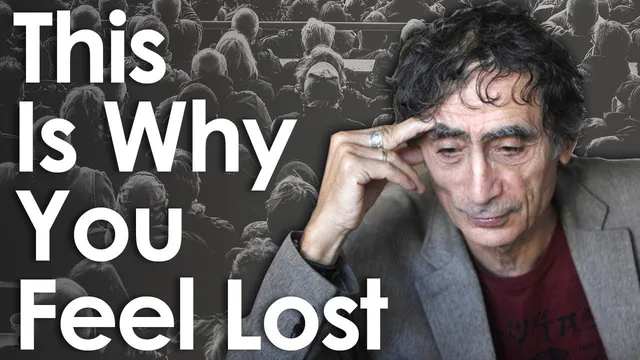
How Culture Makes Us Feel Lost - Dr. Gabor Maté On Finding Your True Self Again
Based on Pursuit of Wonder's video on YouTube. If you like this content, support the original creators by watching, liking and subscribing to their content.
Alienation is framed as four separations—nature, other people, meaningful work, and the self—that together produce mental and physical strain.
Briefing
Culture can make people feel lost by severing four kinds of connection—nature, other people, meaningful work, and ultimately the self—and that breakdown carries real mental and physical costs. Drawing on Karl Marx’s idea of “alienation,” the discussion frames modern life as a system that turns people into strangers to the world around them: when nature is treated as something to destroy rather than inhabit, people become estranged from the physical environment that sustains them. The same pattern shows up in relationships, where reduced trust, intimacy, and belonging leave individuals more isolated—and isolation, in turn, increases the risk of both bodily and psychological illness.
A third layer of alienation comes from work that no longer feels creative or reflective of who someone is. Humans are described as inherently productive and meaning-making; when labor becomes empty, repetitive, or disconnected from personal values, it can produce depression, anxiety, and a pervasive sense of meaninglessness. The fourth and most consequential estrangement is from the self. The talk argues that culture trains people to ignore their inner instincts—those gut-level signals that once felt vivid in childhood—by teaching what is “safe” versus “dangerous,” what is “right” versus “wrong,” and what emotions should be suppressed. Over time, people learn to disconnect from their own instinctive feelings, losing a stable sense of truth and reality.
The emotional mechanism is illustrated through a childhood pattern: infants are portrayed as tightly linked to their instincts, yet many people later recall a moment when they split off from their authentic self because the environment could not tolerate it. Parents’ stress, social pressure, and the need to fit in can unintentionally teach children that being truly themselves is unsafe. Once those instinctive signals are shut down, people often seek substitutes—chasing status, image, possessions, and “success” measured by how others see them—because those alternatives can’t fully replace the missing experience of genuine meaning.
Economically, the argument links this hunger for meaning to markets that profit from distraction. When culture normalizes alienation, it also sells products and activities that temporarily fill the void, allowing the underlying loss of meaning to persist. The result is a cycle: estrangement drives the search for substitutes, and substitutes keep people from reconnecting.
Still, the discussion ends with a recovery claim: humans can rebuild connection to themselves the way they can reconnect to nature. Empathy is presented as an innate human capacity rather than a rare trait—so natural that even animals show empathic responses. The talk cites a lab example in which a mouse experiencing a shock elicits higher stress in an observing mouse than when the observer is shocked itself, suggesting that empathy is deeply wired. The central takeaway is that the culture’s story about people as inherently competitive and harsh is a myth; people are fundamentally capable of empathy, attachment, love, and compassion. Moving forward requires returning to that true nature—hard work, but described as fully possible because the capacity for reconnection already exists within.
Cornell Notes
The discussion frames “feeling lost” as a product of alienation: people become strangers to nature, other people, meaningful work, and finally themselves. Culture teaches children to suppress instinctive feelings by labeling emotions and impulses as unsafe or wrong, which gradually disconnects them from what feels true. When work and relationships lose meaning, people chase substitutes—status, image, and products—yet those alternatives can’t restore authentic purpose. Recovery is possible because empathy and connection are portrayed as innate human traits, supported by examples from animal behavior. Reconnecting to the self is presented as the path back to reality and meaning.
How does the talk use Marx’s idea of alienation to explain modern “lostness”?
Why does the discussion say ignoring instincts leads to a distorted sense of reality?
What role does work play in the loss of meaning?
How does the talk connect alienation to consumer culture and economics?
What evidence is used to support the claim that empathy is innate?
What does “recovery” look like in this framework?
Review Questions
- Which of the four alienations—nature, others, work, self—seems most directly linked to the talk’s explanation of depression and anxiety, and why?
- How does suppressing instinctive feelings change what a person uses to decide what is “real” or “true”?
- What does the mouse shock example suggest about empathy, and how does that support the talk’s view of human nature?
Key Points
- 1
Alienation is framed as four separations—nature, other people, meaningful work, and the self—that together produce mental and physical strain.
- 2
When relationships lose trust and intimacy, isolation grows and increases vulnerability to both psychological and bodily illness.
- 3
Work that fails to be creative or identity-reflective can generate depression, anxiety, and a sense of meaninglessness.
- 4
Culture trains people to ignore instinctive feelings by labeling emotions and impulses as unsafe or wrong.
- 5
People often chase substitutes—image, status, possessions, and products—because those can’t truly replace authentic meaning.
- 6
Consumer economics benefits from meaning loss by offering replacement activities that delay reconnection.
- 7
Empathy is presented as innate and evidence-based (including animal behavior), making reconnection to the self a realistic goal.