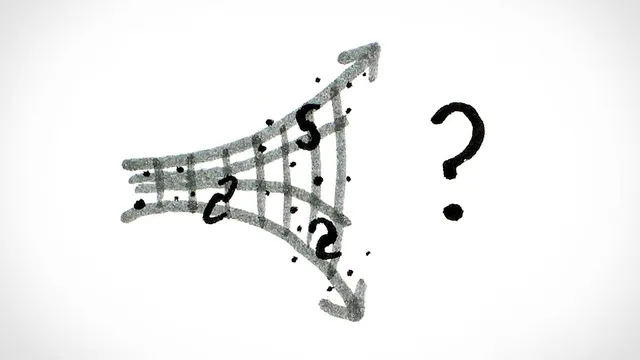
How Do We Know The Universe Is ACCELERATING?
Based on minutephysics's video on YouTube. If you like this content, support the original creators by watching, liking and subscribing to their content.
Astronomers infer cosmic acceleration by measuring recession speeds and distances for many galaxies at different look-back times.
Briefing
The universe isn’t just expanding—it’s expanding faster now than it was in the past, a conclusion reached by tracking how distant galaxies recede over cosmic time. Instead of waiting a million years to re-measure the same galaxy, astronomers compare many galaxies at different distances, using the fact that light takes time to travel. Looking farther out means looking back in time, so different distances act as a rough stand-in for different moments in the universe’s history.
The key measurements come from Type Ia supernovae, which function like standardized cosmic flashlights. Their light is consistently bright—about 5 billion times the Sun’s brightness—and they occur only a few times per galaxy per thousand years, but the sheer number of galaxies makes them observable across large patches of sky. By measuring how bright each Type Ia supernova appears from Earth, researchers infer its distance: dimmer supernovae must be farther away. Meanwhile, the supernova’s light is also redshifted, meaning its wavelength stretches as it moves away. That redshift directly encodes how fast the source is receding, with the amount of reddening tied to the recession speed.
With distances and recession speeds in hand, astronomers can reconstruct the expansion rate as a function of time. If the universe’s expansion followed a simple constant-rate model, the relationship would look like a straight line when plotted over time. A curved trend would indicate acceleration or deceleration. For years, observations were consistent with a roughly straight line or with slowing expansion, but careful measurements of supernovae in very distant galaxies changed the picture.
When astronomers examined supernovae far enough away to represent much earlier epochs, they found that the expansion rate today is higher than it was long ago. In other words, the data require an accelerating expansion: galaxies are not merely moving apart; the rate at which they separate is increasing.
The acceleration points to a component of the universe with unusual gravitational behavior. A leading explanation is “dark energy,” often modeled as an everywhere-permeating vacuum energy with negative pressure. Despite being inferred only through its effect on cosmic expansion—never detected directly—dark energy provides a simple framework for why the expansion speeds up rather than slows down.
Future surveys aim to test whether the acceleration is uniform across space and whether it evolves over time. NASA’s Wide Field Infrared Survey Telescope (WFIRST), planned for launch in the mid-2020s, is expected to survey a wider area of the sky at Hubble-like resolution and reach even farther distances. That expanded dataset should yield more Type Ia supernovae billions of light-years away, tightening constraints on dark energy’s properties and helping determine whether the acceleration is truly constant or changes with epoch or location.
Cornell Notes
Astronomers determine whether the universe is accelerating by measuring how fast distant galaxies recede and how far away they are—then comparing those values across different look-back times. Because light takes time to reach Earth, observing galaxies at different distances effectively samples the universe at different ages. Type Ia supernovae act as standardized candles: their consistent intrinsic brightness lets researchers infer distance from apparent dimness, while redshift reveals recession speed. Plotting recession speed versus distance (over many epochs) shows whether expansion is constant, slowing, or speeding up. Careful observations of very distant Type Ia supernovae indicate the expansion is faster now than it was in the past, implying acceleration and motivating dark energy as a leading explanation.
Why can astronomers study the universe’s expansion history without waiting a million years?
How does redshift translate into recession speed?
How do Type Ia supernovae function as distance markers?
What does the shape of the expansion plot reveal?
What observational result changed the understanding of expansion?
Why does acceleration suggest dark energy?
Review Questions
- How do distance and look-back time relate when using redshift and supernova observations to study cosmic expansion?
- Explain how Type Ia supernova brightness and redshift combine to produce both distance and recession speed measurements.
- What observational pattern would indicate constant expansion, and how does the supernova data differ from that pattern?
Key Points
- 1
Astronomers infer cosmic acceleration by measuring recession speeds and distances for many galaxies at different look-back times.
- 2
Different distances act like different epochs because light takes time to reach Earth.
- 3
Type Ia supernovae provide standardized brightness, enabling distance estimates from apparent dimness.
- 4
Redshift of light encodes recession speed, linking color shifts to how fast galaxies are moving away.
- 5
Plotting recession speed versus distance over many supernovae reveals whether expansion is constant, slowing, or accelerating.
- 6
Measurements of very distant Type Ia supernovae show the expansion rate is faster today than in the past.
- 7
Dark energy—often modeled as vacuum energy with negative pressure—offers a leading explanation for the observed acceleration.