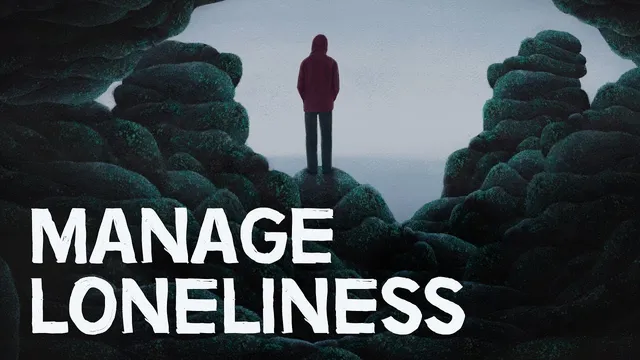
How Do We Manage Loneliness?
Based on Einzelgänger's video on YouTube. If you like this content, support the original creators by watching, liking and subscribing to their content.
Loneliness can appear regardless of external circumstances, including being surrounded by family or a spouse.
Briefing
Loneliness isn’t reliably tied to where someone is or who’s around them; it often comes from how people interpret their situation. People can feel alone in crowded social settings, even with a spouse or family nearby, while others feel no loneliness in solitude. Research on social deprivation—most notably René Spitz’s 1940s separation study with infants raised without consistent maternal contact—suggests that human closeness is crucial for healthy development early in life. But adulthood brings wide variation: some people need frequent contact to function, while others can go weeks without seeing anyone and feel fine. Even so, broader studies tend to link richer social connections with greater well-being, pointing to a real social need—without making loneliness a simple “environmental” problem.
The deeper driver, according to this account, is intellectual: loneliness is shaped by beliefs. Social norms and media portrayals create an “ideal” social life—enough friends, enough interaction, and relationships that look perpetually happy. When real life doesn’t match that template—unhappy relationships, fewer friends, or unconventional needs—people may conclude something is missing and then experience loneliness as a kind of deficit. Buddhism frames that pain as clinging: holding onto expectations about how the present “should” be, or gripping past and future narratives. If someone believes, “I shouldn’t be alone on a Saturday night,” that belief generates a felt lack; with a different mindset, the same circumstances could feel content rather than deficient. The proposed shift is to accept what is happening now and loosen attachment to rigid ideas about completeness.
Stoic philosophy adds a useful distinction between “being alone” and “forlornness” (eremia). Forlornness is described as a sense of being lost or forsaken—feeling cut off even when surrounded by life. Epictetus argues that solitude is part of life and shouldn’t be treated as an emergency that must always be escaped; learning self-sufficiency and the ability to “commune with oneself” reduces dependence on external entertainment, validation, and approval. The practical antidotes distilled from these traditions converge on one theme: change the relationship to loneliness rather than trying to eliminate all solitude. That means becoming self-sufficient, tempering desires for constant companionship, and resisting the urge to reach out simply to fill an emptiness.
In the end, loneliness is treated less like a fixed condition and more like a mental stance toward the present. When people stop demanding that life match an internal script—and instead cultivate acceptance, self-sufficiency, and moderated longing—they can experience solitude without suffering, while still remaining open to connection when it naturally arrives.
Cornell Notes
Loneliness can strike regardless of surroundings: people may feel alone in crowds or even with family, while others feel fine in solitude. Early in life, social deprivation can be damaging, but adult loneliness often depends less on external conditions than on beliefs and expectations. Buddhism links loneliness to clinging—especially the idea that something is missing and the present “should” be different—so acceptance can reduce suffering. Stoicism distinguishes being alone from forlornness and urges self-sufficiency: learning to be at peace with oneself so happiness doesn’t hinge on constant companionship. The practical takeaway is to adjust one’s position toward loneliness, temper desires, and cultivate contentment in the present.
Why can loneliness occur in places that seem socially “safe,” like family gatherings or being with a spouse?
What does social deprivation research add to the discussion of loneliness?
How does Buddhism explain the “intellectual” side of loneliness?
What is the Stoic distinction between being alone and forlornness (eremia)?
What are the practical “antidotes” suggested by these philosophies?
Review Questions
- What evidence is used to argue that social closeness is crucial, and how does that evidence differ from the claim about adult loneliness?
- According to Buddhism in this transcript, how does clinging to expectations transform solitude into loneliness?
- How does Epictetus’s idea of self-sufficiency address the difference between being alone and feeling forlorn (eremia)?
Key Points
- 1
Loneliness can appear regardless of external circumstances, including being surrounded by family or a spouse.
- 2
Social deprivation can harm development in early life, but adult loneliness often depends on beliefs rather than location or company.
- 3
Media and social norms can create an “ideal” social life, making people feel they are lacking when reality doesn’t match.
- 4
Buddhism treats loneliness as discontent rooted in clinging—especially the belief that the present should be different.
- 5
Stoicism distinguishes solitude from forlornness (eremia) and argues that self-sufficiency reduces dependence on others’ validation.
- 6
A core antidote is to change one’s position toward loneliness: accept what is, temper desire, and avoid trying to fill emptiness on impulse.
- 7
Learning to enjoy solitude can make socializing optional rather than necessary, reducing the emotional cost of periods without companionship.