How Hidden Technology Transformed Bowling
Based on Veritasium's video on YouTube. If you like this content, support the original creators by watching, liking and subscribing to their content.
Bowling strikes rely on a controlled skid–hook–roll sequence driven by the interaction between ball spin and lane oil patterns.
Briefing
Bowling’s modern performance hinges less on “throwing straight” than on engineered physics inside the ball and carefully controlled friction on the lane—especially the oil pattern. The core insight is that a strike is essentially a narrow, repeatable geometry problem: pro bowlers aim for an effective entry angle of about six degrees, but they only get the needed margin for error by combining ball design (weight blocks, coverstock, surface finish) with lane conditions (oil thickness and where it dries). Without oil, the same motion tends to send the ball into the left gutter, turning a skilled shot into a near-guaranteed miss.
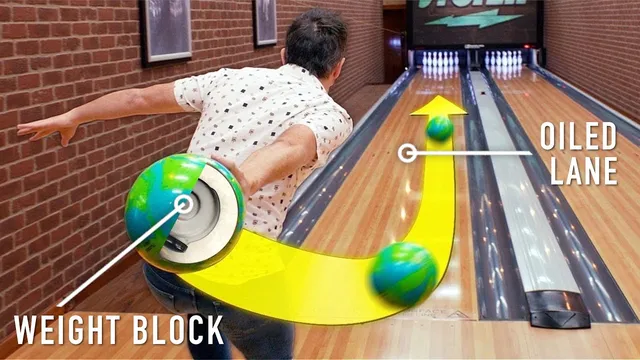
Inside the ball, the hidden technology starts with an asymmetrical weight block. Instead of a perfectly centered, symmetric core, manufacturers embed a dense “weight block” that is intentionally shaped differently along the X, Y, and Z axes, then surround it with a lighter core material made from lightweight glass beads. The result is a ball whose center of gravity is off-center—something confirmed through a 3D x-ray scan and explained by Storm Bowling’s manufacturing process. After the core is formed, different coverstock layers are poured (including a urethane area created via chemical reactions in molds), and the ball is spun and trimmed to become round. Even the final balancing step matters: the ball is set on a cushion of air until it settles with the heavier side down, revealing where its center of mass sits.
That off-center mass doesn’t just change “feel.” It changes how the ball behaves as it travels: skid, hook, and roll. A ball can leave the hand at roughly 20 mph while spinning around 500 RPM (about 10 revolutions per second). During the skid phase, it slides while spinning but not rolling; when it reaches the end of the oil, friction increases and the ball accelerates into a hook. The final roll stage happens when spin and travel direction align as the ball barrels into the pins.
Lane oil is the other half of the equation. Historically, oil was introduced to protect wooden lanes from damage, but it also transformed scoring by changing how balls grip and rotate. Today, lane machines apply specific oil patterns across boards, often extending about two-thirds of the lane (around 40–45 feet) while leaving a dry patch near the pins to trigger traction. The oil pattern is not static: as balls roll, they redistribute oil and strip it from common paths, forcing players to adjust.
Ball surface technology amplifies these effects. Reactive resin—often described as modified polyurethane with a more porous, grippy surface—helps balls catch in oil. Finish roughness matters too: rougher surfaces behave like winter tires, digging into oil for earlier traction, while smoother finishes reduce contact area and can prevent hooking too soon on shorter oil patterns. US Bowling Congress research using a highly consistent robot bowler (Harry, later Earl) found that center of gravity influences ball motion relatively little compared with surface roughness and friction characteristics, with the ball’s surface being the biggest single factor.
All of this helps explain why pro bowling looks like a controlled system rather than a single throw. Players carry multiple balls, select coverstock and weight-block geometry to match the lane’s current oil condition, and tune their axis of rotation so the ball precesses like a gyroscope—creating track flare that improves traction when the ball reaches the dry boards. The sport’s reinvention, from ancient rituals to modern engineered cores and lane machines, is now visible in the details: a strike is built from friction management and precision physics, repeated 12 times for a perfect game.
Cornell Notes
Bowling performance depends on engineered friction and ball dynamics, not just aiming at the headpin. Modern balls use asymmetric weight blocks and reactive resin coverstocks so the ball can skid, hook, and roll in a controlled sequence. Lane oil patterns—applied by specialized machines—create a low-friction zone that lets the ball skid and then a dry patch near the pins that triggers traction. USBC research using a robot bowler found that ball surface properties (roughness, friction on oiled and dry lanes, and oil absorption rate) matter more for ball motion than center of gravity. Together, these factors let pros hit an effective ~six-degree entry angle with enough margin for error to produce frequent strikes and perfect games.
Why does an off-center weight block matter for strikes?
How do skid, hook, and roll connect to lane oil?
What makes the “six-degree entry angle” achievable for pros?
How did lane oil change bowling from a protective measure into a scoring tool?
What did USBC’s ball-motion study conclude about what matters most?
Why do asymmetric cores create “track flare,” and why is that desirable?
Review Questions
- What specific lane condition makes the ball transition from skid to hook, and where does that condition occur along the lane?
- Which ball property did USBC identify as the most influential for ball motion, and how does it differ from the role of center of gravity?
- How do asymmetric cores change the ball’s rotation behavior compared with symmetric cores, and what observable effect does that create on the lane?
Key Points
- 1
Bowling strikes rely on a controlled skid–hook–roll sequence driven by the interaction between ball spin and lane oil patterns.
- 2
Modern bowling balls use intentionally asymmetrical weight blocks so the center of gravity and principal axes of rotation are not centered.
- 3
Lane oil was introduced to protect lane surfaces, but it became essential for scoring by enabling skid and then traction at the dry boards near the pins.
- 4
Specialized lane machines apply oil with varying thickness across boards, typically leaving a dry patch before the pins to trigger rolling without slipping.
- 5
Ball surface finish and friction behavior on oiled vs. dry lane conditions matter more for ball motion than center of gravity, according to USBC research.
- 6
Reactive resin coverstocks and tuned roughness levels help balls grip oil and hook at the right time for the target entry angle.
- 7
Pro bowlers carry multiple balls and adjust mid-game as oil patterns shift due to ball traffic and oil redistribution.