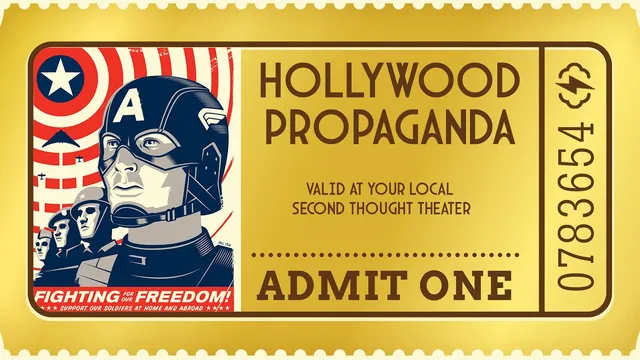
How Hollywood Sells Us War
Based on Second Thought's video on YouTube. If you like this content, support the original creators by watching, liking and subscribing to their content.
The DoD describes formal involvement in Hollywood productions, including rough-cut review tied to script approval before release.
Briefing
Hollywood’s relationship with the U.S. Department of Defense helps keep public support for perpetual war by shaping how the military is portrayed on screen—often in ways that make criticism harder to reach blockbuster audiences. The DoD openly describes a “long-standing relationship” with filmmakers, including production agreements that let officials review rough cuts and require script changes before release. While the department frames this as ensuring “an accurate story,” the transcript argues that the practical effect is a consistent, pro-military image: heroic troops, justified missions, and only limited or sanitized acknowledgment of the realities that make U.S. war-making look worse.
The scale of involvement is presented through publicly accessible, decades-spanning documents listing movies and TV shows where the DoD either contributed to production or denied assistance. The key claim is that access to military equipment and locations—resources that would be expensive for studios to recreate—comes with tradeoffs. According to the transcript, DoD-backed projects receive “cleanup treatment,” including altered dialogue and storyline adjustments, while more critical portrayals can be blocked from the same privileges or face obstacles that reduce their chances of becoming major box-office hits.
Several examples illustrate the alleged mechanism. In “12 Strong,” the transcript describes relatively minor rewrites such as removing homophobic slurs and sanitizing the physical presentation of protagonists. “Lone Survivor” is described as involving more consequential changes, including removing a character’s urge to commit war crimes and murder civilians—an internal moral conflict the transcript says existed in the source material. “Charlie Wilson’s War,” which recounts U.S. arming of the Mujahideen, is described as having edits that remove mention of how U.S. support contributed to the later rise of al-Qaeda and the Taliban. The recurring pattern, as framed here, is that script revisions conceal parts of the truth because the truth “doesn’t look good.”
The transcript also places this modern media influence in a longer U.S. propaganda lineage. It points to World War I-era efforts by the Committee on Public Information, including film-based messaging that helped shift American public opinion toward war. It then connects that history to World War II’s Office of War Information and its Bureau of Motion Pictures, quoting Elmer Davis: entertainment films can smuggle propaganda ideas into audiences without people realizing they are being propagandized.
Finally, the transcript uses a Marxist “superstructure” lens to argue that culture and ideology are not independent of economic power. In a neoliberal, imperial capitalist society where war has been a recurring feature, war becomes culturally central—not only because it sells, but because it helps reaffirm the existing order. Even if critical war narratives exist, the transcript argues they’re structurally disadvantaged when the military can steer resources toward pro-military stories. The result is a cinematic environment where the military is “almost exclusively” depicted as a force for good, weakening the public’s ability to sustain strong critiques of U.S. imperial projects—while major studios benefit from access and production advantages that help pro-war films dominate.
Cornell Notes
The transcript argues that the U.S. Department of Defense shapes Hollywood storytelling through formal review and approval processes tied to access to military resources. DoD production agreements allow officials to review rough cuts and require script changes, which the transcript claims leads to sanitized, pro-military portrayals and makes critical films less likely to reach blockbuster scale. Examples cited include “12 Strong,” “Lone Survivor,” and “Charlie Wilson’s War,” where dialogue or plot elements are described as altered to remove uncomfortable truths. The discussion links this influence to a longer history of U.S. wartime propaganda, including World War I’s Committee on Public Information and World War II’s Office of War Information. A Marxist “superstructure” framework is used to explain why cultural output tends to reinforce the broader economic and political order, especially in a society accustomed to recurring war.
How does the DoD’s involvement in Hollywood work, according to the transcript’s cited sources?
What does the transcript claim is the practical effect of DoD support on which films become big hits?
What kinds of script changes are described in the examples from specific movies?
How does the transcript connect modern film influence to earlier U.S. propaganda efforts?
What does the Marxist “superstructure” framework add to the argument?
What thematic pattern does the transcript claim appears in pro-military blockbuster storytelling?
Review Questions
- What mechanisms does the transcript describe for how DoD review and access translate into changes in film scripts?
- Which movie examples are used to illustrate different levels of script alteration, and what specific alterations are described?
- How does the transcript use “superstructure” to connect economic/political power to cultural messaging about war?
Key Points
- 1
The DoD describes formal involvement in Hollywood productions, including rough-cut review tied to script approval before release.
- 2
DoD support is portrayed as offering studios access to military equipment and locations, reducing costs and increasing the odds of blockbuster success.
- 3
Publicly accessible DoD documentation is used to argue that assistance often comes with altered storylines and dialogue, especially when they conflict with pro-military narratives.
- 4
Examples cited—“12 Strong,” “Lone Survivor,” and “Charlie Wilson’s War”—are presented as cases where uncomfortable or critical elements are removed or softened.
- 5
The transcript links current media influence to earlier U.S. propaganda systems, including World War I’s Committee on Public Information and World War II’s Office of War Information.
- 6
A Marxist “superstructure” framework is used to argue that cultural production tends to reinforce the political-economic order, making critical portrayals structurally harder to sustain.
- 7
The overall claim is that pro-military film dominance weakens public capacity for sustained critique of U.S. war-making and imperial projects.