How I built a $10k/Month Business in my first month (part-time)
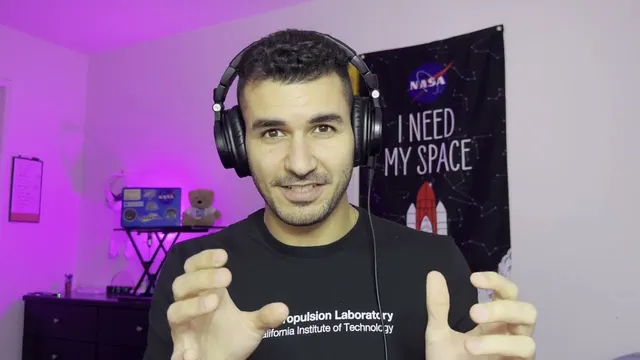
Based on Ali Alqaraghuli, PhD's video on YouTube. If you like this content, support the original creators by watching, liking and subscribing to their content.
Build the business around a clear information offer that solves a real, urgent problem for a specific avatar using a defined mechanism.
Briefing
A part-time information business can reach $10,000 in its first month by locking in one thing first: a compelling offer built around a real problem for a specific type of customer. The strategy centers on selling digital outcomes—courses, coaching, groups, or masterminds—so the work scales without shipping products, hiring fulfillment teams, or managing inventory. The creator’s own proof point: while finishing a PhD and working part-time, he made $11,200 in 21 days by selling to three clients using an offer he built from systems and productivity frameworks learned through engineering environments.
The roadmap starts with “offer,” which the framework treats as the foundation for everything else. The offer must be a clear value proposition: help X achieve Y using Z, where X is a chosen avatar and Y is a measurable outcome tied to an urgent, painful problem. Picking the right problem isn’t framed as a trend-chasing exercise. Instead, the advice is to choose something the builder is genuinely curious about and passionate enough to keep improving—because that motivation drives better execution and differentiation. A personal example: the offer promised to “double your monthly revenue in four to six weeks using three frameworks” drawn from engineering productivity lessons from SpaceX. The early results came quickly—one client went from $9K to $17K in about 3.5 weeks after a $300 proof-of-concept engagement; later clients paid higher fees (around $3.8K and $6.8K for an extended program), reinforcing that the offer resonated.
Once the offer is carved out, the next step is marketing—getting people to find out what it is. The high-leverage approach is either organic content (YouTube, TikTok, Instagram) or paid ads. Organic builds belief over time through valuable posts that lead to a call-to-action, while paid advertising buys access to attention and lets the builder target the right audience directly. The recommended content angle is to create proof and credibility around the mechanism behind the offer—such as reviewing relevant supplements if the offer is about focus, or posting systems-and-process content if the offer is about building a more systematized business.
After marketing brings leads in, sales is treated as communication rather than manipulation. The goal of a discovery or clarity call is to determine whether the prospect has a problem the builder can solve, then move forward with confidence if there’s a fit. Scripts are dismissed; instead, the emphasis is on asking questions, listening for the real pain, and using genuine urgency—solving something that will worsen if delayed—rather than fake countdown tactics.
Fulfillment comes next: delivering on the promised outcome. For early traction, the framework recommends starting with one-on-one coaching so the builder doesn’t need a fully built course before proving results. After working with enough clients, those lessons can be packaged into group coaching or a basic course to buy back time and increase leverage.
Finally, scaling is about compressing fulfillment through efficiency and automation—limiting one-on-one capacity while building scalable delivery systems behind it. The overall message is that the path to $10K part-time is less about clever tactics and more about sequencing: nail the offer, then market, sell, fulfill, and only then scale.
Cornell Notes
The fastest route to $10,000/month part-time in this framework starts with one non-negotiable: build an offer that solves a real, urgent problem for a specific avatar. The offer should be framed as “help X achieve Y using Z,” and it must come from genuine interest so the builder can execute and improve. Marketing then brings attention through either organic content (YouTube/TikTok/Instagram) or paid ads that target the right people. Sales is handled as two-way communication on a discovery/clarity call—no scripts—followed by closing when the prospect’s pain matches the solution. Fulfillment should begin with one-on-one coaching for early proof, then evolve into group coaching or courses to scale efficiently.
Why is “offer” treated as the most important step, and what makes an offer strong in this framework?
How does the framework recommend finding a problem and avatar without chasing trends?
What are the two high-leverage marketing paths, and how do they differ?
What does “sales” mean here, and why is urgency emphasized?
Why start fulfillment with one-on-one coaching, and how does that lead to leverage later?
What does scaling mean in this model, and what’s the main lever?
Review Questions
- What specific elements must an offer include (in the “help X achieve Y using Z” framing), and how does that shape marketing and sales?
- How does the framework distinguish real urgency from fake urgency, and why does that matter for closing?
- What sequence does the model recommend for early execution (offer → marketing → sales → fulfillment → scale), and what changes when moving from one-on-one to group or course delivery?
Key Points
- 1
Build the business around a clear information offer that solves a real, urgent problem for a specific avatar using a defined mechanism.
- 2
Choose problems based on genuine curiosity and passion, not just because a niche is “hot,” since motivation improves execution and differentiation.
- 3
Use high-leverage marketing via either organic content (YouTube/TikTok/Instagram) that builds belief or paid ads that target attention directly.
- 4
Run sales as discovery through communication on a clarity/discovery call, closing only when the prospect’s pain matches the solution.
- 5
Start fulfillment with one-on-one coaching for early proof and learning, then package what works into group coaching or a basic course to gain leverage.
- 6
Scale by compressing and systematizing fulfillment so client growth doesn’t require proportional time increases.
- 7
Treat urgency as real and outcome-based—tied to the cost of delay—rather than manufactured scarcity tactics.