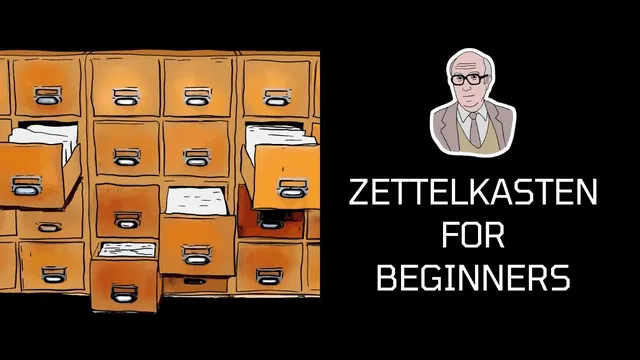
How I created and use my analog Zettelkasten | Step-by-step guide
Based on How To Code's video on YouTube. If you like this content, support the original creators by watching, liking and subscribing to their content.
Build an alphabetical index (A–Z) to serve as a retrieval map for key categories, not as a full inventory of every card.
Briefing
Analog Zettelkasten use hinges on a simple workflow: build an index as a “map,” capture reading notes in a bibliography box (bib cards), then convert only the most durable ideas into main cards that are filed close to related thoughts. The payoff is an analog system that forces selection—writing by hand and revisiting cards after a delay—so the collection becomes a source for output rather than a passive archive.
The setup starts with supplies: index cards (4x6 preferred, 3x5 acceptable), a pen (Micron pens with archival ink are recommended for quick-drying, non-bleeding notes), a storage box, and alphabetical dividers. The box is optional at first, but the dividers become important once the system grows. The core structure has three essential compartments: an index section, a main-card section, and a bibliography (bib) box for notes created while reading. A fourth element—a catalog—is described as optional but useful: it lists and numbers original sources so main cards can cite where each idea came from.
The index is built from 26 cards labeled A through Z and acts like a table of contents. Instead of indexing every single card, the index records key categories and entry points so retrieval stays fast. Main cards are the “heart and soul” of the system: each card contains a single idea, written as a thinking unit, and is filed under a category path that reflects how the idea relates to other cards. The numbering scheme is treated as flexible and changeable; what matters is proximity and the index as the source of truth.
Bib cards support the selection process. While reading a book, notes are written onto bib cards with bibliographic details (author, title, publication date) and page references. The notes include quick descriptions of what appears on each page, plus shorthand conventions (for example, markings to distinguish excerpts or references to footnotes). A key practice is bracketing: readers mark the exact passages in the book so they can jump back to the original context later. After finishing a book, the system recommends waiting—often two weeks to a month—before deciding what becomes a main card. That delay helps filter out ideas that no longer feel valuable.
Main cards are created by revisiting bib cards and then looking up the referenced pages in the book to read the ideas in full context. Before writing a new main card, the system emphasizes deciding where it belongs: the card should be filed as close as possible to the most related existing card. This is where “branching” appears—cards can be linked in a hierarchy using symbols like hyphens to show direct continuation of a thought, while other cards start new branches. The system also stresses purpose: it’s not meant to become personal knowledge management. The analog friction—handwriting, delayed review, and constant re-filing—exists to support producing work such as newsletters, videos, and other outputs.
Finally, the catalog keeps source tracking self-contained inside the box. Each main card can reference a catalog number and page location, tying ideas back to their origins without relying on external tools. The overall method credits Scott Scheeper’s Anti-Zettelkasten as a foundation, while tailoring categories and numbering to personal research needs.
Cornell Notes
An analog Zettelkasten becomes useful only after reading notes are converted into main cards and filed with care. The system uses an alphabetical index (A–Z) as a retrieval map, a bibliography box for bib cards created during reading, and optional catalog cards that number sources so main cards can cite origins. Bib cards capture page-level notes and shorthand markers, but conversion to main cards happens after a delay (often weeks) to filter out ideas that no longer hold value. Main cards are then placed in the main-card section under category paths, using flexible numbering and “branching” to show related continuations. The method prioritizes output over passive storage, with analog handling and constant re-filing improving recall and connection-making.
What are the three essential compartments of an analog Zettelkasten, and what job does each one perform?
How do bib cards work during reading, and why does the system require a waiting period before converting them?
What determines where a new main card should be filed?
How does the system represent related ideas that extend a previous thought?
Why is the numbering scheme treated as flexible, and what role does the index play?
How does the optional catalog prevent loss of source information in an analog-only setup?
Review Questions
- What are the practical steps for converting a bib card note into a main card, and where does the waiting period fit?
- How does the index function as a retrieval tool without indexing every single card?
- What does “proximity” mean in filing main cards, and how does the analog workflow support it?
Key Points
- 1
Build an alphabetical index (A–Z) to serve as a retrieval map for key categories, not as a full inventory of every card.
- 2
Capture reading notes in bib cards with page numbers and brief descriptions, then bracket passages in the book for fast re-access.
- 3
Convert bib notes into main cards only after a delay (weeks), using time as a filter to keep ideas that still matter.
- 4
File each new main card by relationship—place it as close as possible to the most related existing card to preserve conceptual proximity.
- 5
Use flexible numbering and branching conventions (including hyphens) to show continuations versus new concepts; don’t obsess over early numbering perfection.
- 6
Treat the catalog as an optional but powerful analog source tracker by numbering original works inside the box so main cards can cite origins.
- 7
Keep the system oriented toward output: the goal is producing shareable work, not merely storing personal knowledge.