How I got my PhD in 3 years (with 3 papers)
Based on Academic English Now's video on YouTube. If you like this content, support the original creators by watching, liking and subscribing to their content.
Write at least something every day, even if it’s only a paragraph, to maintain momentum and reduce gaps in progress.
Briefing
Finishing a PhD quickly comes down to treating research like a system: daily writing, tight focus, a concrete plan, and rapid feedback loops—while protecting recovery time so burnout doesn’t steal months. The central claim is that a PhD can be completed in about three years with multiple published papers by combining disciplined output with practical constraints on attention and energy, rather than relying on heroic 60-hour workweeks.
A key driver is writing every day, even if it’s only a paragraph. The transcript frames this as the “training” principle: consistent practice beats sporadic bursts, and it prevents the common trap of constantly switching tasks. That leads to a second focus rule—batch work. Instead of juggling writing, lab work, and personal life in the same window, the schedule should separate them into blocks (for example, morning writing followed by a lab block), with nothing else allowed during those periods. Distraction is treated as a measurable productivity tax: regaining focus takes roughly 20 minutes after a break, so even a couple of interruptions in an hour can erase a large chunk of productive time.
The approach also emphasizes where work happens. Staying out of the office is presented as a tactic to reduce interruptions; the recommended alternative is a quiet, distraction-free spot—often at home—where writing and research can be done consistently. Alongside this, the transcript argues against wasting time defending work against supervisor feedback. Criticism is portrayed as an efficiency tool: supervisors have already completed the PhD, and acting on their suggestions improves the thesis faster than debating them.
Planning is the next pillar. Without a plan, the work is likened to navigating the ocean without tools; with it, the PhD becomes a sequence of goals that can be scheduled and tracked. The method starts with clear, achievable targets for the whole PhD, then breaks them into yearly, semester, weekly, and daily tasks—each placed on a calendar as non-negotiable commitments.
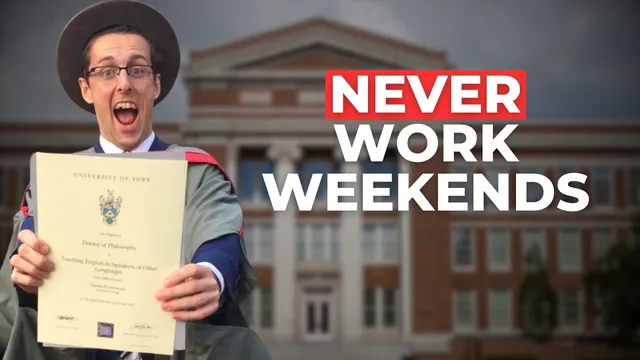
Time protection is equally central. The transcript cites stress and long-hour work as common precursors to burnout and recommends taking weekends off—paired with true disconnection (no phone, no email, no notifications). Exercise is added as a performance lever: regular workouts or even short walks are said to improve stress levels, mental well-being, focus, and job performance.
Finally, the transcript pushes a “good enough” writing philosophy to avoid perfectionism. Draft quickly, get feedback early, apply it, and repeat—so writing improves through iteration rather than waiting for a flawless first version. Because many supervisors may provide feedback only monthly or quarterly, the transcript argues for a writing mentor who can explain paper and thesis writing step by step and provide frequent feedback. The overall message is that speed comes from rapid cycles: produce, get feedback, implement it quickly, and keep moving—because the value of a PhD increasingly depends less on the degree itself and more on publishing multiple papers in high-impact journals.
Cornell Notes
The transcript’s core message is that finishing a PhD fast requires a repeatable system: daily writing, strict focus management, a calendar-based plan, and rapid feedback loops. It recommends batching tasks into dedicated time blocks, minimizing distractions (since focus recovery can take about 20 minutes), and working in a quiet environment to protect deep work. It also stresses protecting recovery time—taking weekends off with real disconnection—and using exercise to maintain focus and reduce burnout risk. For writing, it promotes “good enough is good enough”: draft early, get feedback quickly, implement it immediately, and iterate rather than chasing perfection. When supervisor feedback is infrequent, a writing mentor can provide step-by-step guidance and more regular critique.
Why does daily writing matter more than occasional intense work during a PhD?
How should a PhD schedule be structured to reduce lost productivity from switching tasks?
What role does supervisor feedback play in finishing faster?
Why is a detailed plan—from yearly goals down to daily tasks—considered essential?
How do weekends off and exercise connect to faster research output?
What writing strategy is proposed to avoid perfectionism and speed up publication?
Review Questions
- Which specific scheduling tactics in the transcript are meant to prevent focus loss, and what timing assumptions do they rely on?
- How does the transcript justify acting on supervisor feedback rather than debating it, and what practical effect does it claim this has on thesis progress?
- What combination of writing philosophy and feedback frequency is presented as the antidote to perfectionism?
Key Points
- 1
Write at least something every day, even if it’s only a paragraph, to maintain momentum and reduce gaps in progress.
- 2
Batch tasks into dedicated time blocks (e.g., writing vs. lab) and avoid multitasking to prevent productivity collapse.
- 3
Treat distractions as costly: focus recovery can take about 20 minutes, so reduce interruptions aggressively.
- 4
Accept supervisor criticism and implement it quickly; debating feedback is framed as wasted energy that slows thesis improvement.
- 5
Build a full PhD plan down to daily calendar tasks, then treat those calendar blocks as non-negotiable commitments.
- 6
Protect recovery time by taking weekends off with real disconnection, and use exercise to sustain focus and reduce burnout risk.
- 7
Adopt “good enough” drafting: produce early, get feedback fast, apply it immediately, and iterate instead of chasing perfection.