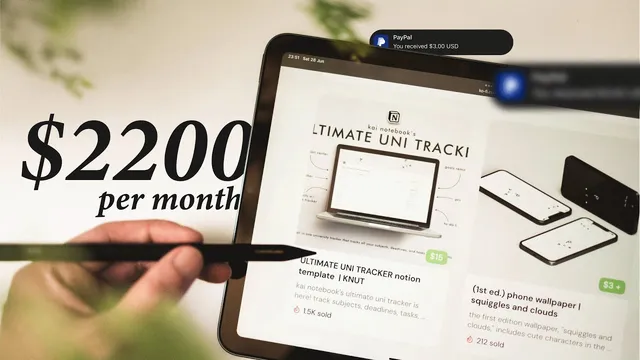
how I make $2200 / month in passive income as a student (realistic advice)
Based on Kai Notebook's video on YouTube. If you like this content, support the original creators by watching, liking and subscribing to their content.
Treat a side hustle like a value-exchange business: solve a real problem and offer something people will pay for.
Briefing
A student can build “passive income” by treating a side hustle like a real business: create or package something people already want, then market it until the right customers pay. The core economic logic is value exchange—businesses exist to solve problems—and the practical path is to sell a skill (as a product or service), build credibility through branding and a portfolio, and then grind through outreach until the 20% of customers who actually need it show up.
The foundation starts with two economics principles: value can be exchanged, and businesses solve problems in return for value, usually money. Netflix is used as a clear example: subscribers pay about $8 to avoid the hassle of going to theaters and buying tickets, getting movies directly on phones and tablets. The same exchange logic is applied to education platforms—time spent learning on Corsera is traded for course instruction and credentials.
From there, the money-making mechanism is framed as offering something worth paying for. A Notion template becomes the example of a product: instead of selling “tracking subjects” as the main benefit, the template sells the time and effort saved by doing the setup work for students. The pitch is simple: pay $15 once and skip the heavy lifting of building a template from scratch, with features already tailored to university life.
The advice then expands to services, where freelancing replaces a one-time product sale. Platforms like Fiverr are referenced as marketplaces where clients pay for skills such as graphic design, voiceovers, editing, or scriptwriting. But the emphasis is less on where to sell and more on how to package value. A key warning targets pricing-only marketing: competing on being the cheapest invites constant undercutting and ignores that “$5” doesn’t mean the same thing everywhere. Instead, the recommended approach is bundling outcomes—offering a packaged solution that helps clients scale or get results, not just a raw task.
To build the ability to sell, the transcript points to skill development through Corsera, highlighting that courses can lead to online degrees and certificates, with structured assignments, quizzes, peer interaction, and portfolio value even if a business attempt fails.
Next comes choosing a channel. For digital products, the advice favors free storefronts like Ko-fi (with Shopify described as more flexible but requiring subscription capital). For services, the recommended route is direct outreach—email or Instagram DMs—paired with portfolio building. Marketing is treated as the differentiator: two sample outreach emails illustrate that a well-designed offer with branding, a logo, a website, and a packaged “done-for-you” plan is more compelling than a bare “I’ll edit for $20” message.
Finally, the “hardest step” is client acquisition: expect rejection, keep iterating, and apply the 80/20 rule—most revenue comes from a small fraction of customers who actually need the solution. Social media is positioned as a low-cost marketing engine: post reels and content to funnel interested people into the service. The transcript closes with a caution about scams, especially phishing-style emails targeting storefronts, urging viewers not to click suspicious links and to stay vigilant.
Cornell Notes
The transcript frames side income as a real business built on economics: value is exchanged, and businesses exist to solve problems. Money comes when someone pays for something useful—either a packaged product (like a Notion template that saves students time) or a service (freelancing skills). Success depends less on being the cheapest and more on packaging outcomes, building branding, and creating a portfolio that makes outreach credible. Client acquisition is expected to be slow and rejection-heavy, so the 80/20 rule matters: keep searching until the small group of customers who truly need the offer shows up. Corsera is presented as a way to develop skills and earn certificates or online degrees that also strengthen a future career portfolio.
What two economics principles are used to explain why a side hustle can work?
How does the Notion template example shift from “features” to “the real problem being solved”?
Why does the transcript argue that pricing alone is a weak marketing strategy?
What role do branding and portfolio materials play in winning clients?
How does the transcript recommend finding clients when outreach doesn’t work immediately?
What platforms are suggested for selling products versus services, and why?
Review Questions
- How does the transcript define “value” and connect it to problem-solving in business?
- What specific changes to an outreach offer would make it more compelling according to the email comparison?
- Why does the transcript emphasize the 80/20 rule during the client-acquisition phase?
Key Points
- 1
Treat a side hustle like a value-exchange business: solve a real problem and offer something people will pay for.
- 2
Package outcomes instead of competing on the lowest price; bundling helps you stand out and reduces undercutting pressure.
- 3
Build credibility through branding (logo, professional-looking materials) and a portfolio that makes outreach feel trustworthy.
- 4
Choose channels based on what’s being sold: use storefronts for products (e.g., Ko-fi) and direct outreach for services (e.g., email/Instagram DMs).
- 5
Expect rejection during outreach and iterate; apply the 80/20 rule to keep searching for the small group of customers who actually need the offer.
- 6
Use skill-building platforms like Corsera to strengthen capabilities and add certificates/online degrees to a portfolio, even if a business attempt doesn’t succeed.
- 7
Stay vigilant against scams and phishing-style emails, especially when setting up or managing online stores.