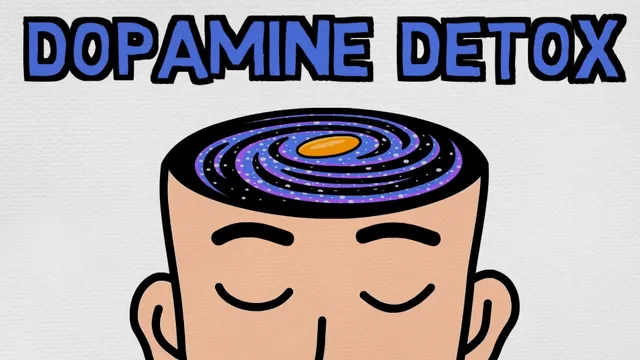
How I Tricked My Brain To Like Doing Hard Things (dopamine detox)
Based on Better Than Yesterday's video on YouTube. If you like this content, support the original creators by watching, liking and subscribing to their content.
Dopamine is framed as a driver of desire based on expected reward, which explains why motivation can track what the brain anticipates will pay off.
Briefing
Motivation for studying, exercising, and building a side project often collapses not because people lack discipline, but because their brains adapt to an environment packed with high-dopamine rewards. Dopamine is framed less as a “pleasure chemical” and more as a driver of desire: it pushes the brain to seek out activities it expects will pay off. When modern life repeatedly delivers quick, unpredictable, or intensely rewarding stimuli—social media feeds, video games, internet pornography, and slot-machine-like app mechanics—dopamine levels and expectations rise. Over time, the brain responds by down-regulating dopamine receptors, creating tolerance. The result is that “normal” low-dopamine activities feel dull, harder to start, and less rewarding, even when they’re objectively beneficial.
The transcript leans on rat experiments to illustrate the mechanism. In one setup, researchers stimulated the rats’ reward system whenever the rats pulled a lever; the animals developed a compulsive craving, pressing for hours until exhaustion and refusing basic needs like eating or sleeping. In a second setup, dopamine release in the reward center was blocked; the rats became so lethargic they wouldn’t even get up for water, and they showed no cravings. Importantly, when food was placed directly into their mouths, they still ate and enjoyed it—suggesting the issue wasn’t enjoyment of the reward itself, but the motivation to work for it. The same logic is applied to humans: if an activity releases too little dopamine, motivation drops; if it releases a lot, the brain wants repetition.
The transcript argues that the biggest modern problem is not that dopamine exists, but that high-dopamine behaviors are delivered constantly and with uncertainty. Random rewards—like the intermittent “hit” of notifications or the potential win in gambling—produce especially strong dopamine responses. That pattern is said to train people into a loop of checking phones and scrolling, chasing the next dopamine spike rather than investing effort in slower payoffs like reading, training, or entrepreneurship.
To counter that adaptation, the transcript recommends a “dopamine detox”: a deliberate break from high-stimulation activities to let dopamine receptors recover. For one full day, it proposes avoiding internet and technology, skipping music, masturbation, and junk food, and removing external pleasure sources to embrace boredom. Allowed activities are low-stimulation: walking, meditation, reflection, and writing ideas on paper. The rationale is behavioral and biological: if high-reward options become the new normal, then plain, low-reward activities feel unappealing; starving the system of those inputs makes boredom rise—and that boredom becomes the lever that makes low-dopamine tasks feel more attractive.
For people who want a less extreme approach, it suggests a smaller weekly detox: pick one high-dopamine behavior (phone checking, gaming, binge TV, pornography, junk food) and remove it for a day. The transcript also offers a practical motivation strategy: use high-dopamine rewards only after completing difficult work. A personal example is given—tracking low-dopamine tasks and rewarding with high-dopamine time at the end of the day (e.g., 15 minutes of high-dopamine behavior per completed hour). The overall message is that motivation can be rebuilt by changing where dopamine comes from, limiting constant high spikes, and making long-term goals the source of reward instead of short-term stimulation.
Cornell Notes
Dopamine is portrayed as a driver of desire and motivation based on expected reward, not just a “pleasure molecule.” High-dopamine activities—especially those with frequent or unpredictable rewards like social media, video games, and pornography—can train the brain to crave those inputs. Over time, the brain adapts through dopamine tolerance by down-regulating dopamine receptors, making low-dopamine tasks (studying, reading, working) feel boring and harder to start. A dopamine detox aims to reverse that adaptation by temporarily removing high-stimulation behaviors so receptors can recover. The transcript also recommends a less extreme weekly version and a “reward after work” system to keep motivation aligned with long-term goals.
Why does the transcript treat dopamine as more than a “pleasure chemical”?
What role does dopamine tolerance play in why low-effort tasks feel unappealing?
Which behaviors are singled out as especially good at triggering dopamine spikes?
What does a dopamine detox involve, and what is the intended biological/behavioral effect?
How does the transcript suggest making difficult work easier without going fully extreme?
What safety caveat is included for people dealing with addiction?
Review Questions
- How do dopamine expectation and dopamine tolerance interact to change motivation for low-reward tasks?
- What mechanisms does the transcript use to justify a one-day dopamine detox, and what activities are allowed versus banned?
- Why does the “reward after work” timing matter, according to the transcript’s motivation logic?
Key Points
- 1
Dopamine is framed as a driver of desire based on expected reward, which explains why motivation can track what the brain anticipates will pay off.
- 2
Frequent high-dopamine inputs can lead to dopamine tolerance via down-regulated dopamine receptors, making low-dopamine tasks feel dull.
- 3
Unpredictable or intermittent rewards (like notifications or slot-machine-style uncertainty) are described as especially potent for dopamine spikes.
- 4
A dopamine detox aims to reduce high-stimulation behaviors long enough for dopamine receptors to recover, using boredom as a tool to reset preferences.
- 5
A weekly “smaller detox” can work by removing one high-dopamine behavior for a day each week rather than cutting everything for 24 hours.
- 6
Motivation improves when high-dopamine rewards come after completing difficult, low-dopamine work, not before it.
- 7
Addiction-related cautions apply: drug addiction requires professional help, and harmful behaviors shouldn’t be used as rewards.