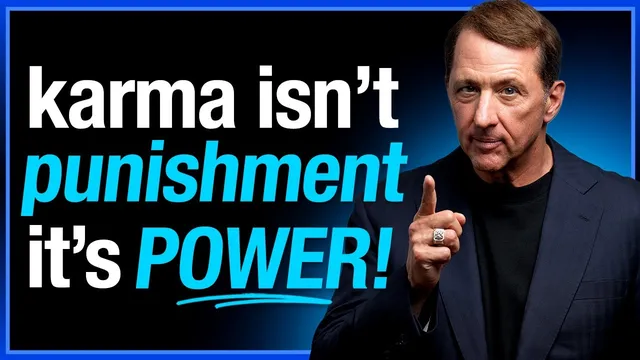
How Karma Really Works (And How the Elites Use it)
Based on The Kevin Trudeau Show: Limitless's video on YouTube. If you like this content, support the original creators by watching, liking and subscribing to their content.
Karma is presented as a hidden causal “battery” behind outcomes, not just a visible action-to-consequence chain.
Briefing
Karma is framed less as a mystical “what goes around comes around” slogan and more as an underlying cause that determines outcomes—so understanding it, and acting on it deliberately, can improve results in money, relationships, and daily interactions. The core claim is that people misread karma as the visible action (“do this, get that”), when the real driver is what sits beneath the action—likened to a car key that won’t start the engine unless the battery is connected. In this view, karma functions like a hidden causal mechanism: the same outward behavior can produce different results depending on the “connection” (the speaker’s term for the deeper cause behind the effect).
To make the idea feel testable, the transcript describes a controlled sales experiment. Multiple salespeople mail the same sales letter to randomly selected groups of 1,000 people each, with identical envelopes, stamps, and materials. The only variable is who sends it. Results reportedly come back consistently higher—10% to 50% better sales for the speaker—suggesting that something beyond the literal mailing piece influences outcomes. That “something” is presented as karma: the sender’s deeper mental/ethical alignment produces measurable differences even when the external inputs match.
The transcript then tackles whether people can control karma. The answer is yes: karma can be “rewritten” and “cleared,” and it’s treated as a debt that can be burned off rather than a life sentence. The explanation traces karma’s roots to Sanskrit and Eastern ethical instruction aimed at persuading ordinary people to avoid harmful actions (like adultery, theft, or violence) by emphasizing consequences. The logic is that actions create multiplied reactions—sometimes framed as returning “times 5, 10, 15, 20, 100”—so wrongdoing is discouraged not only for moral reasons but because it predictably rebounds.
A key mechanism for “burning off” karma is how people respond to negative events. Instead of resisting, denying, or blaming others, the transcript recommends acknowledging what’s happening, accepting it, and learning the lesson—because “what you resist persists.” Blame is portrayed as a way to keep the karmic debt alive, while responsibility is presented as the fastest route to dissolving it. The transcript also argues that thoughts—not just actions—create karma, citing the idea that lustful or adulterous thoughts carry the same moral weight as behavior.
The practical payoff is an “expanded golden rule” presented as a blueprint for generating good karma: (1) think about others as you wish they would think about you, (2) talk about people as you wish they would talk about you, and (3) treat people the way you want them to treat you. The transcript links this to recognition and generosity, and it claims that positive responses to difficult situations produce the strongest returns because they’re the hardest to do.
Finally, the transcript rejects the idea that karma is a tool of oppression. Instead, it portrays religious and governmental moral rules as attempts to curb widespread violence and predation by making consequences clear. The biggest lie about karma is said to be the belief that people are stuck with it; the “second best time” to change is framed as today, because karma is cause-and-effect and can be planted intentionally going forward.
Cornell Notes
The transcript reframes karma as a hidden causal force that determines outcomes, not just a moral slogan about actions leading to consequences. It claims that identical external actions can produce different results depending on the deeper “connection” behind the action, illustrated through a sales experiment where the same mailing materials yield consistently higher sales for one sender. Karma is presented as controllable: people can rewrite or clear it by taking responsibility, accepting negative events, and learning from them rather than resisting or blaming others. An “expanded golden rule” is offered as a practical method—think well of others, speak well of others, and treat others as you want to be treated—to plant positive karmic seeds. The transcript also argues that karma is not meant to enslave people but to encourage ethical behavior through clear consequences.
What does the transcript claim karma actually is, and how is that different from common interpretations?
How does the transcript try to make karma measurable?
Can people control karma, or is it treated as unavoidable?
What is the recommended method for “burning off” karma after something bad happens?
What is the “expanded golden rule,” and how is it supposed to generate good karma?
Does the transcript portray karma as a tool for manipulation by elites or institutions?
Review Questions
- What metaphor does the transcript use to distinguish outward actions from the deeper cause behind outcomes, and what does each part represent?
- According to the transcript, why does blaming others supposedly prevent karma from being cleared?
- How do the three parts of the expanded golden rule (think, talk, treat) connect to the transcript’s idea of planting karmic seeds?
Key Points
- 1
Karma is presented as a hidden causal “battery” behind outcomes, not just a visible action-to-consequence chain.
- 2
Identical external behavior (like the same sales letter) can produce different results depending on the deeper karmic condition of the sender.
- 3
Karma is framed as controllable: it can be rewritten, cleared, and used intentionally rather than treated as an unavoidable fate.
- 4
Negative events are said to burn off karma faster when people acknowledge, accept, and learn—while resisting and denial are portrayed as prolonging the problem.
- 5
Blame is treated as a karmic trap; taking responsibility is portrayed as the mechanism for dissolving karmic debt.
- 6
Thoughts are described as karmically active, meaning internal intentions can create consequences even without outward action.
- 7
The transcript promotes an “expanded golden rule” (think, talk, treat) as a practical method for generating good karma through deliberate daily behavior.