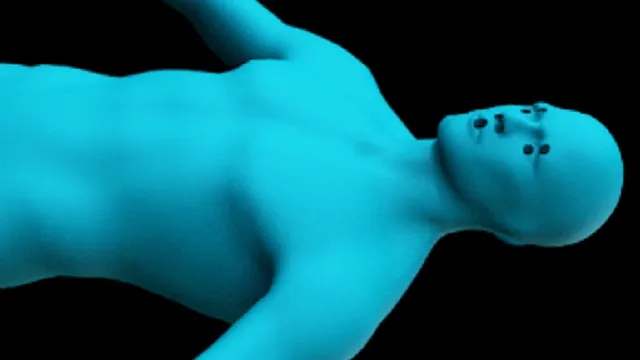
How Many Holes Does a Human Have?
Based on Vsauce's video on YouTube. If you like this content, support the original creators by watching, liking and subscribing to their content.
A “hole” only becomes countable when a minimum size is specified; the transcript uses roughly 60 microns as the threshold.
Briefing
A human body has far fewer “through holes” than everyday anatomy suggests—at a specific minimum size, it behaves like a “seven-hold doughnut” rather than a Swiss-cheese bundle of openings. The key move is setting a measurable threshold for what counts as a hole: around 60 microns wide (about the width of a human hair). At that scale, many common openings—nostrils, ears, pores, nipples, and sinuses—don’t function as continuous passages end-to-end; they mostly dead-end, narrow, or block passage.
The transcript starts by challenging the intuitive “how many holes?” question. At molecular and subatomic scales, “holes” become meaningless because matter is not a solid object with empty space; it’s a constellation of atoms and molecules. Even at the biological scale, not all gaps behave the same. A 60-micron “magic spaceship” could enter certain surface openings, but it would be stopped by structures like capillaries, the eardrum, or the conjunctiva. This distinction leads to two categories: through holes (GI tract-like pathways that connect an entrance to an exit) and blind holes (pores, hair follicles, urethras, sinuses, and other cul-de-sacs that can be entered but not traversed at that size).
From there, the discussion turns philosophical—then turns mathematical. “Hole” is treated as a fuzzy everyday word, illustrated by molding a shape from a glass to a bowl to a plate and watching the “hole-ness” of the object change without any obvious physical pinching or gluing. That ambiguity is resolved using topology, the branch of math focused on properties that persist under continuous deformation. In topology, a doughnut and a coffee cup can be treated as equivalent because one can be stretched into the other without cutting or gluing; such transformations are called homeomorphisms. Under these rules, blind holes can be erased by deformation, but through holes cannot.
Counting through holes becomes a topological exercise: find a homeomorphic shape with an easy-to-count number of through passages. The body’s connected external orifices—mouth, nostrils, and tear ducts—plus the GI tract pathway and related internal connections yield a baseline of seven through holes at the 60-micron scale. The transcript also notes that openings don’t automatically equal holes; a straw, for example, has two “ends” but only one continuous passage, so it’s topologically one hole.
Finally, the count can increase with anatomical variations. Piercings that pass through a through hole add holes; supernumerary lacrimal punctum (extra tear-duct openings) can add additional through holes; and accessory ostia—extra openings connecting sinuses to the nasal cavity—can add more. Most people won’t know their exact total without imaging, but the baseline claim is clear: millions of blind holes (at least five million) and seven through holes at birth, with possible additions depending on individual anatomy and medical history.
Cornell Notes
At a biologically meaningful threshold—about 60 microns wide—a human body has a fixed baseline number of through passages rather than an unlimited number of “holes.” Many surface openings (pores, hair follicles, sinuses, and the ear canal) behave as blind holes at that scale: they can be entered but eventually dead-end due to narrowings or barriers like the eardrum. Topology provides the counting rule: through holes are the features that cannot be removed by continuous deformation (homeomorphisms), while blind holes can. Using that framework, the body is modeled as a “seven-hold doughnut,” with millions of blind holes plus seven through holes at birth. Variations such as extra tear-duct openings, accessory ostia, and certain piercings can increase the through-hole count.
Why does the “how many holes” question depend on scale?
What’s the difference between a through hole and a blind hole?
How does topology make “hole counting” precise?
Why doesn’t a straw count as having two holes just because it has two ends?
What is the baseline through-hole count for the human body, and what can change it?
Why are there “millions of holes” even though through holes are only seven?
Review Questions
- What role does the 60-micron minimum size play in deciding whether an opening counts as a through hole?
- How do homeomorphisms (continuous deformations without cutting/gluing) determine which “holes” are topologically real?
- Give two examples of anatomical variations that can increase the through-hole count beyond seven.
Key Points
- 1
A “hole” only becomes countable when a minimum size is specified; the transcript uses roughly 60 microns as the threshold.
- 2
Most common surface openings function as blind holes at that scale because internal barriers and narrowings dead-end the passage.
- 3
Through holes are the topological features that persist under homeomorphisms; blind holes can be removed by continuous deformation.
- 4
Visible openings do not automatically equal through holes—one continuous passage can have multiple ends (as with a straw).
- 5
Using topology at the 60-micron scale, the body is modeled as having seven through holes at birth.
- 6
Blind holes are far more numerous, with at least five million cited from pores and hair follicles.
- 7
The through-hole total can increase with extra lacrimal punctum, accessory ostia, and certain piercings that traverse through passages.