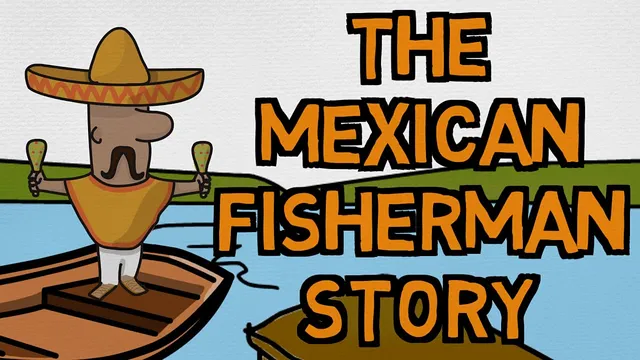
How Much Money Is Enough? The Story Of The Mexican Fisherman
Based on Better Than Yesterday's video on YouTube. If you like this content, support the original creators by watching, liking and subscribing to their content.
The story contrasts maximizing income with defining “enough” through family time, community, and leisure.
Briefing
A Mexican fisherman’s calm, family-centered routine exposes a hard truth about money: chasing “enough” as a distant finish line often turns work into the point, not the means. In the story, an overworked American businessman visits a small coastal village to reset after a doctor’s warning. The first morning brings an unexpected scene at the pier—one fisherman has already docked with several large yellowfin tuna. When the businessman asks why he doesn’t fish longer to earn more, the fisherman answers that he already has enough to support his family and share with friends.
The businessman is puzzled by the fisherman’s apparent lack of ambition. He pitches a classic growth plan: fish longer, buy a bigger boat, expand into a fleet, cut out the middleman by selling directly to consumers, and eventually open a cannery to control processing and distribution. The plan escalates geographically—from the village to Mexico City, then Los Angeles, and finally New York—ending with a public IPO that could make the fisherman “very, very rich.” The fisherman’s key question is simple: how long would all of that take? The businessman estimates 15–20 years.
The fisherman’s response reframes the entire bargain. If the businessman’s path requires years of intensified labor and relocation, the fisherman is already living the life the businessman claims to want at the end: sleeping late, fishing a little, playing with his children, taking a siesta with his wife, and strolling through the village evenings to sip wine and play guitar with friends. The story’s punchline lands on the idea that “retirement” shouldn’t be the only time life feels full. The fisherman’s “busy life” isn’t measured by output or income; it’s measured by time with family, community, and leisure.
That contrast becomes the moral. Many people assume they must work most of their lives to reach a future moment when they can finally live well. The transcript argues that this mindset is a mistake: it encourages people to prioritize work and accumulating more money without a clear end goal. Over time, the chase can become endless—more and more, with no real definition of “enough.”
Money is treated as necessary and hard work as valuable, but the story warns against blindly pursuing higher earnings for their own sake. The practical takeaway is to step back periodically and reevaluate priorities: clarify what the work is for, notice what is already sufficient, and aim to reach a state of “I have enough” in the present rather than postponing it until some far-off milestone. The fisherman’s example functions as a reminder that life extends beyond work and money—and that reflection is how people keep their goals aligned with the life they actually want to live.
Cornell Notes
A Mexican fisherman already has enough to support his family and share with friends, so he fishes only a little and spends the rest of his time with family and community. An American businessman offers a long, high-growth plan—bigger boats, a fleet, direct sales, a cannery, relocation to major cities, and an IPO—promising wealth after 15–20 years of intensified effort. The fisherman’s question (“But what then?”) highlights the tradeoff: the businessman’s “best part” is essentially the same relaxed life the fisherman is living now. The story’s core lesson is that work should serve a clear vision of life, and people should periodically reassess priorities so “enough” doesn’t become a never-ending target.
Why does the American businessman think the fisherman is “wrong” about fishing time?
What does the fisherman do with the rest of his time, and why is that central to the story?
How does the businessman’s “wealth plan” end up reinforcing the fisherman’s current lifestyle?
What is the transcript’s critique of the common “I’ll live later” mindset?
What practical habit is suggested to keep priorities aligned?
Review Questions
- What specific steps does the American businessman propose to transform the fisherman’s small operation into a large enterprise, and what is the promised timeline?
- How does the fisherman’s definition of a “busy life” challenge the businessman’s assumptions about success?
- What does the transcript identify as the risk of chasing money without a clear end goal, and what reflection practice is offered as a remedy?
Key Points
- 1
The story contrasts maximizing income with defining “enough” through family time, community, and leisure.
- 2
A long growth plan can delay the very lifestyle people claim to want, turning “retirement” into a postponed life.
- 3
Chasing more money without a clear end goal can become endless and distort priorities.
- 4
Money is treated as necessary, but pursuing it blindly can crowd out what work is supposed to serve.
- 5
Periodic reflection helps people reassess what they’re working for and whether their current life already meets their needs.
- 6
A clear vision makes it more realistic to reach “I have enough” before a distant milestone.