How Much Money is LOVE Worth?
Based on Vsauce's video on YouTube. If you like this content, support the original creators by watching, liking and subscribing to their content.
“Love” is narrowed to passionate love (limerence) and then contrasted with committed long-term love, because each is treated differently in measurement and outcomes.
Briefing
Love can’t be bought—but if it could be priced, the value depends on what kind of love is being measured. The discussion draws a sharp line between everyday affection and lust, then focuses on “passionate love,” the intense, early-stage attachment where people become fixated on a specific person. Psychologists use the term “limerence” for this state, and they point to survey-based tools—especially the Passionate Love Survey—as a way to quantify it through related behaviors. Using that approach, men and women are said to experience similar levels of passionate love in relationships, while men tend to fall into it faster and sooner than women.
Once love is defined, the transcript turns to money by translating emotional impact into dollar equivalents. A UK study is cited in which hearing “I love you” for the first time produced happiness levels comparable to what gamblers feel when they win large sums; the happiness boost is estimated at the level of receiving $267,000. The comparison then shifts from short-lived passion to committed, long-term love—where the practical benefits of marriage are framed as financial value. An estimate is offered that tax breaks and health care cost advantages together make being married roughly equivalent to an extra $100,000 per year.
The argument also challenges the idea that more wealth automatically means more happiness. Evidence from wealthier countries is used to note that people report feeling respect more often and eating tastier foods more frequently, but a key pattern emerges: happiness rises with income only up to a point. The “hedonistic treadmill” is invoked to describe diminishing returns, with the transcript placing the U.S. threshold at about $75,000 per year—beyond which additional income yields smaller gains in well-being.
Still, love is presented as a factor that correlates with longer life, and that’s where the money analogy tightens. Wealthier circumstances can extend life expectancy, but so can love. People who form lifelong pair bonds are said to live, on average, 15% longer. The transcript then offers a non-hard-science translation: for those not already extremely wealthy, finding a relationship that lasts for life is framed as roughly equivalent to an extra $30,000–$40,000 per year.
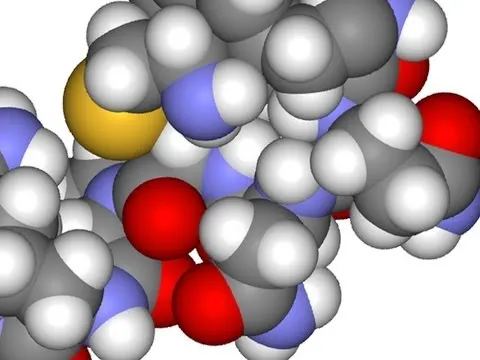
At the biological level, the transcript points to oxytocin and vasopressin—chemicals associated with committed relationships—and notes that higher levels are linked to resolving conflicts faster. It also claims that people can increase these chemicals by looking into someone else’s eyes, likening eye contact to administering a psychoactive, addictive drug. The payoff, in the transcript’s framing, is not just romance but measurable downstream outcomes: faster conflict resolution and longer life.
Cornell Notes
The transcript distinguishes passionate love (limerence) from lust and from long-term committed love, then uses surveys and studies to attach emotional and practical value to each. Hearing “I love you” for the first time is compared to the happiness of winning big, estimated at $267,000. Marriage is framed as financially beneficial through tax and health care effects, estimated at about $100,000 extra per year. Beyond money, committed pair bonding is linked to longevity—lifelong pair bonds correlate with about 15% longer life—leading to a rough equivalence of $30,000–$40,000 per year for those not already very wealthy. Oxytocin and vasopressin are presented as biological mechanisms, with eye contact described as a way to raise these chemicals.
How does the transcript define “love” for the purpose of measuring its value?
What tool is used to quantify passionate love, and what findings come from it?
How is love translated into dollar equivalents in the transcript?
Why doesn’t more money automatically mean more happiness?
What is the biological mechanism proposed for long-term love, and how is it connected to outcomes?
How does long-term pair bonding connect to longevity and the money analogy?
Review Questions
- What distinguishes limerence (passionate love) from lust and from committed long-term love in the transcript’s framework?
- How do the cited studies convert emotional experiences and marriage-related benefits into dollar equivalents?
- What role do oxytocin and vasopressin play in the transcript’s explanation of why long-term relationships may improve outcomes like conflict resolution and lifespan?
Key Points
- 1
“Love” is narrowed to passionate love (limerence) and then contrasted with committed long-term love, because each is treated differently in measurement and outcomes.
- 2
A Passionate Love Survey is used to quantify passionate love through related behaviors, with claims that men and women report similar levels while men fall faster.
- 3
Hearing “I love you” for the first time is estimated to produce happiness comparable to winning about $267,000, based on a UK study comparison.
- 4
Marriage is framed as financially valuable through tax breaks and health care cost advantages, estimated at roughly $100,000 per year.
- 5
Happiness gains from income show diminishing returns after about $75,000 per year in the U.S., consistent with the hedonistic treadmill.
- 6
Committed long-term pair bonding correlates with about 15% longer life, which the transcript translates into a rough $30,000–$40,000 per year equivalence for many people.
- 7
Oxytocin and vasopressin are presented as biological drivers of long-term bonding, with eye contact described as a way to raise these chemicals.