How Much Money is There on Earth?
Based on Vsauce's video on YouTube. If you like this content, support the original creators by watching, liking and subscribing to their content.
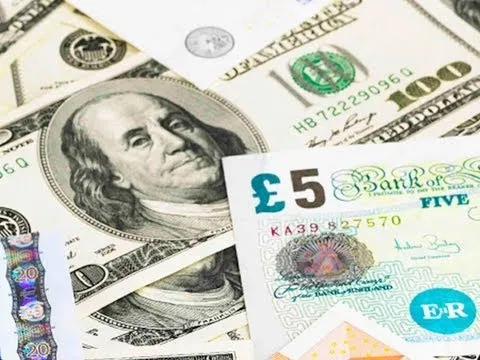
Worldwide physical cash (coins and banknotes) totals just over the equivalent of 5 trillion US dollars (M0), but it’s under 10% of the money people can spend right away.
Briefing
Earth’s physical cash—coins and banknotes—adds up to a staggering amount, but it’s only a small slice of the money people can actually spend. The total value of all coins and banknotes worldwide, known as M0, is estimated at just over the equivalent of 5 trillion US dollars. Even that huge number represents less than 10% of humanity’s immediately spendable money, because most money exists in forms created through banking and credit rather than as hand-to-hand cash.
The transcript starts with turnover to underline how widely cash moves: an average piece of currency changes hands about 55 times a year, roughly once a week. That circulation matters not just economically but socially and even criminally—statistically, a small fraction of notes would be touched by people who later commit serious crimes. From there, it narrows to where cash is stored. Bank vaults can hold anywhere from tens of thousands of dollars to millions for larger institutions, while household cash is harder to measure. UK estimates put the average person at about £14.15 lying around, and US Treasury estimates suggest a typical household has roughly $90–$100 in loose cash; pooled across America, that would total about $15 billion.
To scale from households to the planet, the discussion uses money-supply categories. M0 counts only coins and banknotes. M1 expands the definition to include cash plus money quickly accessible through checking accounts. M1 is estimated globally at about 25 trillion US dollars. M2 goes further by including savings accounts and CDs (under $100,000), reaching roughly 60 trillion US dollars worldwide. M3 is the broadest measure mentioned, incorporating checking, savings, small and large deposits; the US Federal Reserve no longer reports it, but the global equivalent is estimated around 75 trillion US dollars.
The transcript then shifts from accounting to how money is created. Central banks can increase the money supply by making purchases—described with a hypothetical central banker—and commercial banks can expand money through fractional reserve banking. When a depositor places money in a bank, the bank is legally required to keep only a fraction in reserve, allowing it to lend more than it holds. That lending enables multiple people to spend overlapping sums, effectively creating new money beyond the original deposit.
Cash also comes with physical downsides. It’s dirty: studies cited report that flu viruses can survive on cash for 1 hour to 2 days, and about 7% of cash carries viable dangerous bacteria, with banknotes contaminated by traces of illegal drugs—often cocaine—at rates as high as 99% in London. Removing those traces is difficult, and drug-sniffing dogs can trigger legal complications, including court orders returning confiscated cash.
Finally, the discussion explains why money works at all. Commodity money has intrinsic value (like gold), while fiat money derives value from collective belief and government authority. Fiat’s worth can be erased by force—an invading country could refuse a currency—whereas commodities remain valuable because of scarcity and usefulness. The transcript closes by invoking the Tinkerbell effect: some realities depend on belief, and in a “reverse Tinkerbell” twist, increasing belief can sometimes make outcomes worse, such as with overconfidence in driving safety or the perceived impact of voting.
Cornell Notes
The transcript distinguishes between the physical cash on Earth and the broader money people can spend. Worldwide coins and banknotes total about 5 trillion US dollars in value (M0), but that’s under 10% of the money supply available for spending right away. Money expands through fractional reserve banking and central bank actions, which create spendable balances beyond physical currency. The discussion then broadens to M1 (~25 trillion), M2 (~60 trillion), and M3 (~75 trillion) to show how deposits and near-cash assets dwarf banknotes. It also connects money’s physical reality (contamination and germs) to money’s conceptual basis: fiat value depends on belief and authority, unlike commodity value.
Why is M0 (cash in circulation) only a small part of the money people can actually use?
How do fractional reserve banking mechanics create money beyond the original deposit?
What do M1, M2, and M3 include, and how large are they globally?
What physical risks and contamination issues are associated with cash?
How does fiat money differ from commodity money in where its value comes from?
Review Questions
- What distinguishes M0 from M1, and why does that difference matter for estimating how much money people can spend?
- Describe how fractional reserve banking can increase total spendable money beyond the amount initially deposited.
- Why can fiat money’s value be reduced by political force, while commodity money’s value is harder to erase?
Key Points
- 1
Worldwide physical cash (coins and banknotes) totals just over the equivalent of 5 trillion US dollars (M0), but it’s under 10% of the money people can spend right away.
- 2
Cash turnover is high—an average piece of currency changes hands about 55 times per year—so notes circulate widely through everyday life.
- 3
Household cash estimates vary, but US figures suggest typical households hold roughly $90–$100 in loose cash, while UK estimates put the average person around £14.15.
- 4
Money supply categories expand quickly: M1 is about 25 trillion US dollars globally, M2 about 60 trillion, and M3 about 75 trillion (as described).
- 5
Fractional reserve banking allows banks to lend a fraction of deposits, enabling multiple people to spend overlapping sums and creating money beyond physical cash.
- 6
Cash is physically contaminated: cited studies report survival of flu virus on currency, viable bacteria on a portion of notes, and frequent traces of illegal drugs.
- 7
Fiat money depends on collective belief and government authority, making it vulnerable to being devalued or rejected by force in a way commodity money is not.