How People Disappear
Based on Vsauce's video on YouTube. If you like this content, support the original creators by watching, liking and subscribing to their content.
Target’s internal algorithms can infer sensitive life events from purchasing patterns, sometimes before family members know.
Briefing
A Target algorithm flagged a pregnant teenager before her father knew—an early example of how digital systems can “notice” life changes faster than families do. That incident sets up a broader, unsettling question: in a world saturated with CCTV, cookies, GPS, fingerprinting, and DNA analysis, how do people still vanish, and how could someone disappear without anyone realizing?
In the United States, more than 2,000 people disappear each year and are never found again dead or alive. Some cases fit familiar patterns: unsolved crimes, accidents, or suicides where bodies never surface. But other disappearances follow a different logic—people may be alive and simply start over, cutting ties with old friends, family, debts, and obligations. The timeline for notice can be surprisingly long. In many jurisdictions, after roughly five to seven years with no contact, courts can declare a person dead in absentia, turning absence into legal finality.
The transcript illustrates how that legal mechanism can erase someone’s identity in real time through the story of French astronomer Guillaume Le Gentil. After leaving Paris in 1760 to observe the transit of Venus, he was delayed by storms and British occupation in Pondicherry. He waited for the next transit window, but when he finally returned 11 years later, he had already been declared dead—his wife remarried, his belongings were plundered, and his Royal Academy of Sciences position went to someone else. The episode underscores a key point: disappearance isn’t only about vanishing physically; it can also be about being treated as gone.
The transcript then pivots to cases where people are effectively “missing” even when no one is looking. Janet Veal died in an apartment in Ringwood, Hampshire, but large parts of her body were eaten by pet cats before she was discovered weeks later. Joyce Carol Vincent was found dead on a sofa in Wood Green years after death, with her television still on. And in the Oklahoma City bombing, a severed leg surfaced with no known owner; DNA later linked it to Lakesha Levy, but she had already been buried with both legs, forcing authorities to dig up her body and still leaving uncertainty about the swapped leg’s origin.
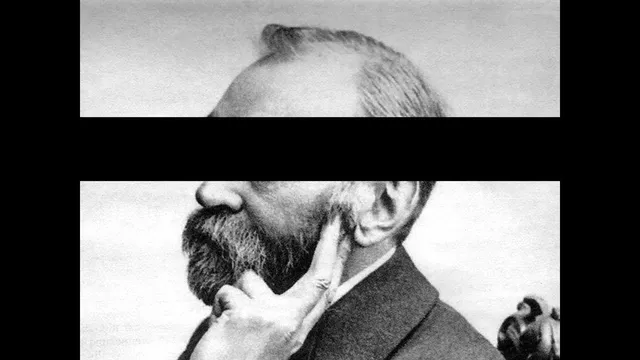
Even more striking are errors in public records and identity systems. Premature obituaries can be published for people who are still alive—CNN’s website once exposed draft obituaries for living individuals. Alfred Nobel’s legacy was briefly shaped by mistaken obituaries calling him “the merchant of death,” while Marcus Garvey reportedly died after reading a negative obituary that had been published too early.
The transcript also highlights “missing missing”: people who are missing but never get officially reported. It cites the FBI’s National Crime Information Database holding about 50,000 reported missing children, while Outpost For Hope estimates more than a million children in America are missing without anyone knowing to file a report—such as children of homeless mothers, people living illegally, or estranged family members.
Finally, it argues that disappearing isn’t automatically illegal for adults who choose to vanish, but the belief that nobody would notice is “ridiculous and unscientific.” The closing thought ties notice to human networks and information gaps: each year, millions of new people are born, and no one knows everything immediately. The implication is clear—someone is likely to miss you, even if the systems around you fail to register it in time.
Cornell Notes
Digital tracking can detect life changes quickly, yet disappearances still happen at scale. The transcript links missing cases to multiple causes: crimes, accidents, suicides, or people choosing to start over. It also shows how legal and informational systems can treat someone as gone—such as courts declaring death after years of no contact, or premature obituaries published for living people. Beyond the reported missing, “missing missing” refers to people who are missing without an official report, including children in unstable situations. The takeaway: being “unnoticed” is often a data and social-network failure, not a guarantee that no one cares.
How can a person be “missing” even when they are alive and not officially searched for?
Why does the legal system sometimes convert absence into death?
What kinds of incidents show how bodies can remain unidentified or misattributed?
How do premature obituaries create a different kind of disappearance—identity erasure through records?
What does the Target coupon story suggest about digital systems and privacy?
Can someone legally choose to disappear, and does that mean nobody will notice?
Review Questions
- What mechanisms besides physical disappearance can lead to someone being treated as dead or missing (legal timelines, obituaries, identity errors)?
- How does the concept of “missing missing” change how you interpret statistics about missing persons?
- Which examples in the transcript show failures in identification, and what role did time delays play?
Key Points
- 1
Target’s internal algorithms can infer sensitive life events from purchasing patterns, sometimes before family members know.
- 2
In the U.S., more than 2,000 people disappear each year and are never found dead or alive, with causes ranging from crime to voluntary restart.
- 3
Many jurisdictions allow a death-in-absentia declaration after roughly five to seven years of no contact, turning absence into legal finality.
- 4
Late discovery and misidentification can leave families and investigators without answers, even when DNA testing is used.
- 5
Premature obituaries and record mistakes can effectively erase living people from public perception.
- 6
“Missing missing” describes people who are missing without an official report, including children in unstable circumstances, and it can dwarf reported missing-child counts.
- 7
Even if disappearing isn’t illegal for adults, the belief that nobody would notice conflicts with how social networks and information flow work.