How Philosophers Handle Rejection (Diogenes, Schopenhauer, Epictetus & Zhuangzi)
Based on Einzelgänger's video on YouTube. If you like this content, support the original creators by watching, liking and subscribing to their content.
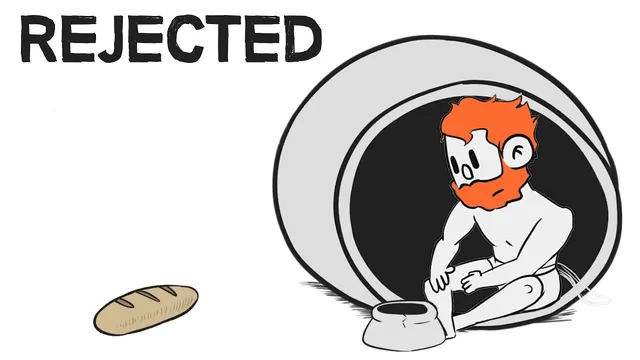
Diogenes treated refusal as a skill to practice, using indifference to denial as a way to keep asking for what one needs.
Briefing
Rejection hurts most when it’s treated as proof of personal inadequacy—but several philosophers offer ways to reframe it so it loses its power. Diogenes, living in extreme poverty, practiced being turned down as a survival skill: he begged in front of a statue and answered that he did it “to get practice in being refused.” The point wasn’t to enjoy humiliation; it was to train indifference to denial. When rejection becomes expected and emotionally “trained out,” asking for what one needs becomes possible again rather than paralyzing.
That training matters because modern rejection often isn’t just about losing a specific opportunity—it’s about what people think it means. Humans crave belonging, and belonging usually depends on other people’s approval: children get sorted into games, lunch tables, and social circles; adults get filtered into jobs, groups, and even romantic prospects. Rejection can be logically grounded—like an applicant in a wheelchair pursuing professional soccer, or someone without relevant skills trying to become CEO of Google—yet it can also feel arbitrary, driven by superficial judgments such as clothing, looks, or physical features. Even when the reasons are flimsy, the emotional hit often lands as shame: being rejected by someone romantically interested can feel like evidence that one isn’t good enough, and repeated denials can harden that belief.
Arthur Schopenhauer challenges the premise that other people’s judgments deserve heavy weight. His view is that what goes on in others’ minds is “a matter of indifference,” and that honoring their opinions too much effectively grants them authority they don’t deserve—especially given how narrow, mean, and error-prone most judgments are. Stoicism offers a more psychological mechanism. For Epictetus, the pain of rejection comes from a wrong attitude toward desire: rejection threatens not a neutral outcome, but the approval one wanted. The remedy is to adjust desire and aversion—want things to happen “as they happen”—so disappointment doesn’t follow denial. A related Stoic move is to treat the “approach” itself as the goal. If someone is approached without expecting extra rewards, then refusal can’t truly “take away” what was already achieved; further benefits are “preferred indifferents,” nice but not required for happiness. Amor Fati pushes this further: embracing fate means one’s well-being isn’t hostage to another person’s response.
Taoist thinking adds a different angle: rejection can be intelligent feedback about what fits. In Zhuangzi’s story, a large crooked tree is spared because loggers refuse to chop it—since it can’t be used for planks. That “uselessness” preserves it, and it may even become sacred. The same logic can apply to personal setbacks: being turned down for shallow reasons might protect someone from a future built on mismatch; missing opportunities can reduce burdens that come with status; and being rejected from one path can redirect a person toward a more suitable life. The crooked tree’s survival suggests a practical takeaway: denial doesn’t always signal failure. Sometimes it signals protection, redirection, or a different purpose waiting to be discovered.
Cornell Notes
Rejection becomes most painful when it’s treated as a verdict on personal worth. Diogenes responded by practicing refusal until denial no longer controlled his emotions. Schopenhauer argued that other people’s inner judgments are largely indifferent and often superficial, so granting them too much authority is a mistake. Stoicism, via Epictetus, reframes rejection as a consequence of how desire is managed: if someone wants outcomes “as they happen,” refusal stops feeling like a catastrophe. Taoist Zhuangzi adds that rejection can be protective and even purposeful—like a crooked tree spared because it can’t be used for planks—suggesting that “uselessness” to others may preserve life and point toward a better fit.
Why did Diogenes beg in front of a statue, and what does that practice accomplish?
What does Schopenhauer’s view of other people’s judgments change about rejection?
How does Epictetus connect rejection to desire, and what is the Stoic fix?
What does it mean to treat the “approach” as the goal rather than the outcome?
How does Zhuangzi’s crooked tree story turn rejection into something potentially beneficial?
How can rejection sometimes indicate a mismatch of purpose rather than a personal failure?
Review Questions
- Which parts of rejection are “facts and logic,” and which parts are driven by superficial judgments—and how should each type be handled differently?
- How do Diogenes’ training in refusal and Epictetus’ approach-as-goal strategy each reduce the emotional impact of denial?
- What does Zhuangzi’s crooked tree imply about the relationship between being “useful” to others and long-term well-being?
Key Points
- 1
Diogenes treated refusal as a skill to practice, using indifference to denial as a way to keep asking for what one needs.
- 2
Belonging often depends on other people’s approval, which makes rejection feel like evidence of inadequacy even when reasons are irrational.
- 3
Schopenhauer argues that other people’s judgments are frequently superficial and should not be granted excessive authority over one’s self-worth.
- 4
Stoicism reframes rejection as a byproduct of how desire is managed; wanting outcomes “as they happen” reduces the sting of denial.
- 5
Treating the action you control (like making an approach) as the goal prevents rejection from stealing something already achieved.
- 6
Stoics classify extra outcomes as “preferred indifferents”—nice to have, not required for happiness—so fate, not others, determines results.
- 7
Taoist thinking uses Zhuangzi’s crooked tree to suggest rejection can protect, redirect, or reveal a better fit for one’s purpose.