How Remote Work Will Let Millions of People Relocate
Based on @levelsio's video on YouTube. If you like this content, support the original creators by watching, liking and subscribing to their content.
Remote work is enabling international and seasonal relocation, with “Zoom towns” emerging as hubs where remote workers rent short-term housing and cluster socially.
Briefing
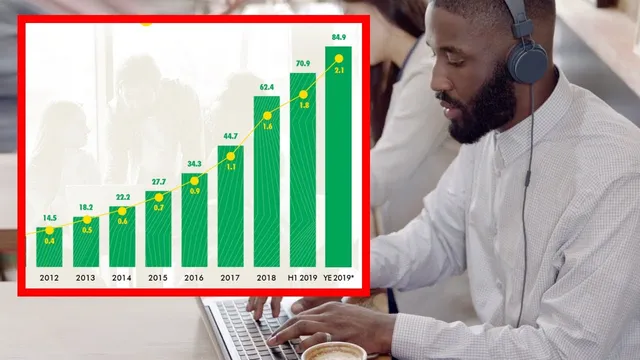
Remote work is accelerating a mass relocation trend that could plausibly reach “one billion” digital nomads by 2035, and the shift is already visible in the rise of “Zoom towns”—small cities and resort areas where remote workers rent short-term housing and build temporary communities. The definition of digital nomad in this conversation is narrower than the stereotype of constant city-hopping; it’s remote work away from one’s home country for part of the year. Cheaper air travel, more freelancers, better internet, and the normalization of remote work among startups and mainstream companies are pushing that pattern forward.
The relocation isn’t just about lifestyle. It’s also about where people can find community while living away from home. That idea sits at the core of Nomad List’s city-ranking approach: instead of relying on traditional “quality of life” metrics like Scandinavian stability, it prioritizes factors that matter to remote workers—internet reliability, safety, and livability—then increasingly adds “social data” such as whether other nomads are actually present to form friendships, relationships, and day-to-day support networks. The guest’s own path—from working remotely in Amsterdam, then moving through cities in Southeast Asia, and later proving the model in the U.S.—is framed as a transition many remote workers undergo: office-to-home remote becomes “fun,” and then some people realize they can relocate to different cities or countries while keeping their income.
That transition is showing up unevenly, with San Francisco described as experiencing an exodus as rents fall and residents move to places like Austin, Denver, Tulum, and other nomad-friendly hubs. While the percentage of people making the leap may be higher than the conservative estimate of 5–10%, the key point is that remote work creates the conditions for relocation at scale—especially when entire cohorts (students on online programs, for example) can live and study together in short-term rentals.
For companies, the evolution is less smooth. A “half-remote” culture—some employees in offices, others remote—creates social and cultural fractures that are hard to bridge online. The emerging view is that organizations either commit to a physical office culture or go fully remote; otherwise, remote workers get excluded from informal gatherings and the shared context that builds cohesion.
Beyond logistics, the conversation turns to what people actually want from this new mobility. The strongest drivers are purpose, community, and meaningful work—not the aesthetic pleasures marketed online. Infinity pools, beaches, and curated “dream life” posts are treated as unreliable happiness engines; what sustains people is social connection, fulfilling work, health, and relationships. That same theme shapes the “unsolved problems” for the next wave of nomadism: education systems and healthcare that can travel with families, plus the persistent challenge of building community across changing locations.
Finally, the guest argues that attempts to engineer new “villages” or closed communities often run into the same conflicts that exist in society at large. A more practical approach is to iterate on existing places—improving co-working spaces, cafes, schools, and local services so remote workers integrate rather than transplant an idealized utopia. The overall picture is a relocation revolution driven by work flexibility, constrained by culture, and ultimately judged by whether people can find belonging and purpose wherever they land.
Cornell Notes
Remote work is pushing a new relocation wave where people live away from their home country for part of the year, forming “Zoom towns” in smaller cities and resort areas. The guest’s updated prediction keeps the door open for reaching roughly one billion digital nomads by 2035, driven by cheap travel, better internet, and remote work becoming standard for startups and increasingly for mainstream companies. Nomad List’s city rankings increasingly incorporate social signals—whether other nomads are present—because community is treated as the real constraint, not just cost or climate. For companies, mixed office/remote cultures are described as unstable; teams tend to need either a fully physical culture or a fully remote one. The next major gaps are education and healthcare for mobile families, plus practical ways to build community without trying to invent utopian villages from scratch.
What counts as a “digital nomad” in this discussion, and why does that definition matter?
Why does Nomad List treat community as a ranking factor, not just “quality of life”?
What is the “transition” path from remote work to nomadism?
Why is “half-remote” culture portrayed as a problem for companies?
What are the biggest unsolved needs for the next wave of nomadism?
Why does the conversation push back on building new “villages” as a solution?
Review Questions
- How does the conversation’s definition of “digital nomad” change the way you estimate the potential size of the trend?
- What specific factors does Nomad List add beyond traditional quality-of-life metrics, and why?
- What organizational tradeoff does the discussion suggest between fully remote and half-remote company cultures?
Key Points
- 1
Remote work is enabling international and seasonal relocation, with “Zoom towns” emerging as hubs where remote workers rent short-term housing and cluster socially.
- 2
Digital nomadism is framed as working remotely away from one’s home country for part of the year, not constant weekly city-hopping.
- 3
City selection for nomads increasingly depends on social reality—whether other remote workers are present—because community is treated as a core need.
- 4
Companies face cultural instability when they try to run a “half-remote” model; remote workers can become socially excluded from the office culture.
- 5
Remote-work mobility creates new pressure points for education and healthcare systems that aren’t designed for families moving across borders.
- 6
Attempts to build closed, idealized “villages” are viewed as fragile; incremental improvements to existing local infrastructure may work better.
- 7
Happiness and meaning are portrayed as coming more from relationships, meaningful work, health, and community than from curated lifestyle pleasures.