How Secure is Your Password? And 21 Other DONGs
Based on Vsauce's video on YouTube. If you like this content, support the original creators by watching, liking and subscribing to their content.
howsecureismypassword.net estimates how quickly a PC could guess a password, turning security into a time-based risk.
Briefing
A password-checking site is the centerpiece of a broader tour of playful, web-based “DONGs” (odd online diversions), with the central takeaway that security often comes down to how quickly a computer can guess what people type. howsecureismypassword.net estimates how long it would take for a PC to crack a given password, turning an abstract security concern into a concrete, time-based risk. The implication is immediate: weak passwords aren’t just “less secure”—they’re guessable within a measurable window, which should push users toward stronger, less predictable choices.
That security moment sits inside a fast-moving list of interactive sites that treat the internet as both game board and information engine. amiawesome.com gamifies self-assessment by letting users “ask the Internet” whether they’re awesome, then routes that awesomeness into The Wiki Game—an online contest that races through topics ranging from the U.S. Constitution to South India. Other sites translate curiosity into visuals and prediction: a “future sky” tool shows how constellations like the Big Dipper will appear tens of thousands of years from now as Earth, the solar system, and the galaxy keep moving.
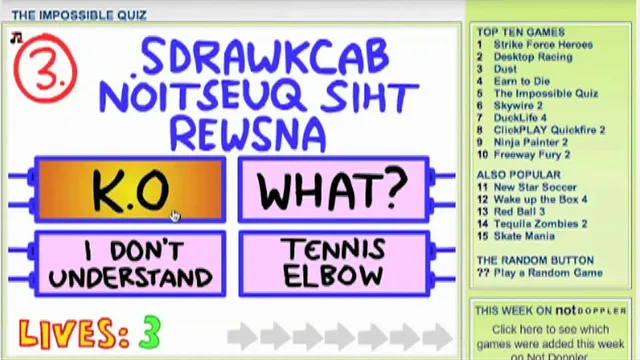
Several destinations lean into wordplay and social interaction. thedisagreeinginternet.com is framed as a place where the internet constantly “shakes its head,” while The Impossible Quiz tests whether players can outthink multiple-choice traps. The list also includes image-driven experiences such as a depository of giant pictures (with rules-based safety and a “disobey” twist), plus games that mix resource management and risk, like Motherload (burrow, jump, collect rock, upgrade, and refuel) and Stealing the Diamond (make choices and see outcomes).
Not all diversions are competitive. Some are pure novelty: thebest404pageever.com delivers bizarre clip surprises; thisissand.com turns relaxation into a sand-based play experience; and the “hug parade” at Hissandpixels offers endless fullscreen videos of people hugging. For creativity and momentum, techonyoursix generates random plot scenarios when writer’s block hits, while RangerForceful’s Last Square Standing challenges players to avoid touching anything as long as possible.
The roundup also includes pointer-based interaction (Pointer Pointer, which uses a giant reservoir of images to show where someone’s pointer is) and a periodic doomsday check at hasthelargehadroncolliderdestroyedtheworldyet.com, which keeps tabs on whether the world is still intact. Even the opening detour—flipacoin.com—sets the tone: the internet’s value isn’t only in utility, but in turning everyday questions into immediate, interactive feedback loops. In that sense, the password test matters most because it’s the one feedback loop that directly affects real-world safety.
Overall, the collection uses games, predictions, and oddball experiments to keep attention—then anchors the experience with a practical security metric that reframes “password strength” as something measurable and actionable rather than vague and abstract.
Cornell Notes
The password-focused site howsecureismypassword.net estimates how quickly a computer could guess a password, making security risk measurable in time. That practical warning appears amid a rapid tour of interactive websites: games like The Impossible Quiz and Last Square Standing, curiosity tools like amiawesome.com and a future-sky constellation viewer, and novelty experiences like thisissand.com and Hissandpixels. Several sites turn learning into play—The Wiki Game races through topics from the U.S. Constitution to South India—while others emphasize creativity or decision-making, such as techonyoursix and Stealing the Diamond. The overall effect is to treat the internet as an engine for instant feedback, with password strength as the most consequential example.
Howsecureismypassword.net turns password security into what kind of information, and why is that useful?
What does The Wiki Game do, and what range of topics does it connect?
How does the future-sky site illustrate motion in space?
What kinds of gameplay mechanics show up in Motherload and Stealing the Diamond?
Which sites in the list focus on novelty or relaxation rather than challenge?
What is the purpose of hasthelargehadroncolliderdestroyedtheworldyet.com in the roundup?
Review Questions
- What does howsecureismypassword.net measure, and how does that measurement change how a user should think about password strength?
- Choose one interactive site from the list and describe how it turns curiosity or decision-making into an immediate user action.
- How do the future-sky and The Wiki Game examples differ in what they teach: prediction of physical change versus navigation-based learning?
Key Points
- 1
howsecureismypassword.net estimates how quickly a PC could guess a password, turning security into a time-based risk.
- 2
Weak passwords are not just “bad”—they can be cracked within a measurable window, making stronger passwords an immediate priority.
- 3
amiawesome.com gamifies self-assessment by letting users “ask the Internet” whether they’re awesome.
- 4
The Wiki Game turns learning into competition by racing through Wikipedia links against opponents worldwide.
- 5
Several sites translate curiosity into interactive prediction, such as showing how constellations will look tens of thousands of years in the future.
- 6
Games like Motherload and Stealing the Diamond add strategy through resource management, upgrades, refueling, and choice-driven outcomes.
- 7
The roundup mixes challenge, creativity, relaxation, and novelty—ending with practical reassurance via a periodic Large Hadron Collider status check.