How Stoics deal with jerks, narcissists, and other difficult people
Based on Einzelgänger's video on YouTube. If you like this content, support the original creators by watching, liking and subscribing to their content.
Stoic coping starts with expecting friction in shared environments, then committing to inner calm as the real objective.
Briefing
Dealing with jerks, narcissists, and other “difficult people” becomes far more manageable when Stoicism shifts the goal from controlling others to controlling one’s own mind. The core move is simple but demanding: treat irritating behavior as something you can expect in certain social settings, then keep attention trained on what remains under personal control—calm judgment, moral purpose, and (when necessary) the willingness to leave.
Epictetus, writing from the Stoic tradition, frames everyday environments—like Roman bathhouses or crowded public transport—as places where unpleasant conduct is built into the activity. Bathhouses were social hubs in the Roman Empire, full of friends, politics, and relaxation, yet they also attracted people who splashed water, pushed others, shouted, stole, or acted as if the space belonged to them. The Stoic response isn’t denial. Before going, people should mentally rehearse what the setting can bring, then commit to a second priority: keeping the mind “in a state conformable to nature.” If hindrances arise, the point is not to lose control, but to remember that the real intention included inner steadiness.
That same two-part approach applies to modern irritations like commuting. Public transport rarely delivers perfect comfort: delays happen, seats don’t always exist, and fellow passengers may be rude, smelly, fare-dodging, or oblivious to shared space. Stoics are urged to contemplate these realities in advance and, during the ride, focus on staying calm rather than trying to fix other people’s behavior.
Marcus Aurelius—an emperor shaped by Stoic discipline—offers a sharper example of how far this mindset can go. In his writings, he tells himself not to be irritated by others’ foul odors or bad breath, arguing that the source of the smell is predictable and that the real question is whether irritation is worth it. Even with authority, an emperor cannot fully control subjects; at most, one can point out a problem clearly. If someone refuses to change, the remaining choice is whether to keep suffering.
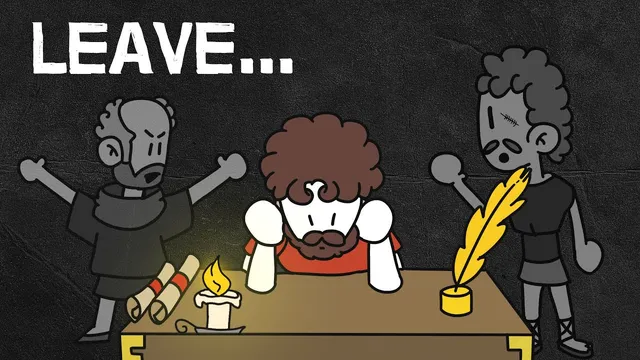
The Stoic toolkit also includes perspective work. Epictetus describes a “two handles” method for dealing with unfair relatives: grasp the situation through the handle that you can bear—such as the fact that the person is your brother and you were raised together—rather than clinging to the handle that won’t help, like the other person’s unfairness. But there are limits. When harm becomes too severe, Stoic thought allows for exit. A personal account illustrates this boundary: after years of escalating manipulation, boundary violations, lying, and self-destruction attributed to narcissistic traits, the narrator cut off contact with their father for more than five years.
Finally, Stoicism challenges revenge. Epictetus treats revenge as self-harm because true good and evil hinge on moral purpose. If someone “injures” you by wrongdoing, the Stoic logic runs: don’t injure yourself by committing wrongdoing in return. The sweetness of revenge is often short-lived, and the outcome depends on factors outside control—especially the target’s reaction. In practice, Stoicism deals with difficult people by expecting friction, guarding inner conduct, re-framing what can be borne, leaving when necessary, and refusing to trade one’s own virtue for retaliation.
Cornell Notes
Stoic advice for difficult people centers on one shift: stop trying to control other people and instead control your own mind and moral purpose. Epictetus recommends “preparing” for predictable unpleasantness in shared spaces—like Roman bathhouses or crowded transit—then committing to keep inner calm as the real goal. Marcus Aurelius extends the idea to bodily annoyances, urging himself not to be irritated by others’ smells because irritation is a choice, not a requirement. When relationships become toxic beyond tolerable limits, Stoic thinking supports leaving rather than enduring ongoing harm. Revenge is treated as futile and self-injurious because wrongdoing in response damages one’s own virtue.
What is Epictetus’s two-part method for handling unpleasant situations like bathhouses or commuting?
Why does Stoicism treat other people’s behavior as largely uncontrollable?
How does the “two handles” idea help with unfair family members or persistent irritations?
When does Stoic thinking allow someone to leave a relationship or situation?
Why does Epictetus treat revenge as self-harm rather than justice?
Review Questions
- How does “preparing for the nature of the activity” change a person’s reaction to rude behavior in public spaces?
- Explain the difference between grasping a situation by the “unbearable handle” versus the “bearable handle” using Epictetus’s example.
- According to Epictetus, why does revenge risk harming the person seeking it, even when the target deserves blame?
Key Points
- 1
Stoic coping starts with expecting friction in shared environments, then committing to inner calm as the real objective.
- 2
Epictetus recommends mental rehearsal before leaving home: anticipate delays, rude conduct, and discomfort so irritation doesn’t come as a surprise.
- 3
Marcus Aurelius’s approach to foul odors highlights a choice point: irritation is optional even when the trigger is unavoidable.
- 4
Other people’s behavior is not fully controllable; at most, one can point out issues clearly and then accept what cannot be changed.
- 5
Perspective reframing—Epictetus’s “two handles”—can reduce the mind’s tendency to magnify someone’s worst traits into a total identity.
- 6
When harm becomes intolerable, Stoic thought supports leaving rather than enduring ongoing damage.
- 7
Revenge is treated as futile and self-injurious because moral purpose, not external retaliation, determines true good and evil.