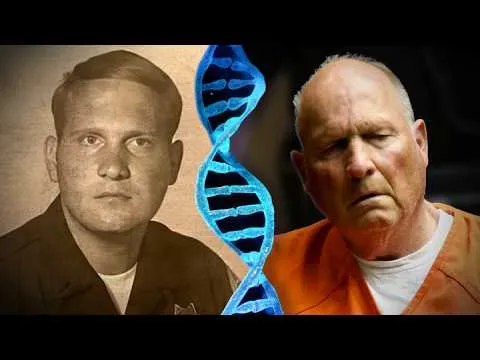
How They Caught The Golden State Killer
Based on Veritasium's video on YouTube. If you like this content, support the original creators by watching, liking and subscribing to their content.
The Golden State Killer was identified as Joseph James DeAngelo after decades by combining modern DNA profiling with genealogy-based relative matching.
Briefing
Joseph James DeAngelo—known for decades as the Visalia ransacker, the East Area Rapist, and the Original Night Stalker—was finally identified as the “Golden State Killer” after a DNA trail that survived years of investigative dead ends. The breakthrough hinged on a shift in genetics: investigators could no longer rely on fingerprints or the original crime-scene evidence alone, but instead used modern DNA profiling and genealogy to connect an unknown offender to relatives in searchable databases. The case matters because it turned a notorious cold case into a template for solving thousands of other crimes using DNA left at scenes—often long before DNA databases existed.
DeAngelo’s crimes spanned Northern and Southern California between 1976 and 1986, escalating from burglaries in Visalia to more than 50 sexual assaults across Northern California and then killings in Southern California. Investigators believed the same person committed the series based on modus operandi: break-ins involving a gun, victims tied up, threats to kill if “plates” moved on the victim’s back, and sexual assault followed by theft and careful departure. He also wore a mask and gloves, which helped explain why traditional fingerprint evidence never produced an arrest.
For decades, the case resisted DNA matching because the offender’s DNA wasn’t in a way that could be linked to a known suspect. The turning point came when DNA technology matured and investigators could extract usable genetic material from older evidence. Paul Holes, a long-time investigator, tracked DeAngelo’s identity by obtaining DNA from sexual assault kits tied to the case. But the unknown profile still needed a match to a known sample.
That match became possible through CODIS, the FBI’s Combined DNA Index System, which stores DNA profiles from convicted offenders and persons of interest using short tandem repeats (STRs). CODIS initially used 13 genetic locations and later expanded to 20; even so, the Golden State Killer’s profile produced no hits for years, including attempts to search international databases. The reason was partly technical—CODIS contains limited genetic markers—and partly strategic: DeAngelo’s DNA wasn’t connected to a database entry.
As sequencing and consumer genetics advanced, investigators gained a new pathway. Private tests examine hundreds of thousands of SNPs (single nucleotide polymorphisms) rather than the small set of CODIS STR loci. Family Tree DNA’s “Family Finder” approach, for example, measures around 710,000 SNP positions on a microarray. While law enforcement generally can’t search consumer sites like 23andMe or Ancestry.com directly, investigators used GEDmatch, where users can upload raw genetic data from major testing companies to find distant relatives.
The search produced distant matches—often third cousins—too weak for CODIS-style kinship analysis but strong enough to start building family trees. Investigators then combined genetic clues with traditional genealogy records (census data, obituaries, newspaper archives, and findagrave.com) to identify a common ancestor and map descendants. With constraints on the offender’s likely birth years, height, sex, and California locations, the family-tree work narrowed to a small set of male suspects.
The final confirmation came from collecting DNA from a Sacramento-area Hobby Lobby store visit—sampling DNA from a car door handle and then matching it to evidence from a crime scene. DeAngelo’s arrest followed, and the case accelerated a broader shift: DNA-enabled cold-case solving has since expanded rapidly, raising both hopes for victims and concerns about privacy.
The broader lesson is that genetic databases don’t just expose the person who uploads data; they can illuminate relatives many degrees away. With millions of people testing and sharing data, investigators can find leads even when an offender never directly submits a sample. That reality has pushed the debate over consent, privacy, and public safety into the open—especially as technology outpaces existing law and may eventually require courts to define the boundaries of genetic searching.
Cornell Notes
The Golden State Killer was identified as Joseph James DeAngelo after decades of failure, largely because DNA evidence became usable and because modern genetics enabled family-based searching. Investigators first relied on CODIS, the FBI’s STR database, but the case produced no matches for years due to limited genetic markers and the offender’s careful avoidance of fingerprints. The breakthrough came when investigators used consumer-genetics-style SNP data through GEDmatch, finding distant relatives (often third cousins) and then building family trees using public records until a suspect was narrowed. A final DNA sample collected from a Sacramento-area Hobby Lobby store visit confirmed the match. The case shows how DNA left at crime scenes can be linked to relatives, not just to direct suspects, reshaping cold-case investigations and privacy debates.
Why did fingerprint evidence fail, and how did investigators still connect multiple crimes to one person?
What role did CODIS play, and why didn’t it solve the case earlier?
How did consumer-style SNP testing change what investigators could do?
Why were GEDmatch matches described as “third cousins,” and why did that still help?
What was the final step that turned a suspect into a confirmed arrest?
What privacy concern is raised by family-based DNA searching?
Review Questions
- How do STR-based CODIS profiles differ from SNP-based consumer tests, and why does that difference matter for identifying distant relatives?
- What specific modus operandi details helped investigators link the Visalia, East Area, and Night Stalker crimes to one offender despite fingerprint avoidance?
- In the GEDmatch approach, how does identifying a common ancestor translate genetic similarity into a narrowed suspect list?
Key Points
- 1
The Golden State Killer was identified as Joseph James DeAngelo after decades by combining modern DNA profiling with genealogy-based relative matching.
- 2
CODIS STR profiles produced no hits for years, partly because CODIS uses a small number of genetic loci and the offender’s DNA wasn’t tied to a known sample.
- 3
The case advanced when investigators used GEDmatch to search for distant relatives using consumer-style SNP data rather than CODIS STR markers.
- 4
Family-tree construction used genetic matches plus public records to find a shared common ancestor and then map descendants until suspects were narrowed.
- 5
A final DNA collection from a Sacramento-area Hobby Lobby store visit provided confirmatory evidence that matched crime-scene DNA.
- 6
Family-based DNA searching raises privacy concerns because one person’s upload can expose relatives who never opted in.
- 7
The broader impact is a rapid increase in DNA-enabled cold-case solving, alongside growing debate over consent, database access, and legal limits.