How to actually set SYSTEMS instead of goals
Based on Ali Alqaraghuli, PhD's video on YouTube. If you like this content, support the original creators by watching, liking and subscribing to their content.
Define a goal first, because systems exist to achieve something; no goal means no meaningful system.
Briefing
Building systems in life isn’t about locking in a schedule and hoping it holds. The core insight is that durable systems are designed around a goal and an identity—and they include a plan for what happens when the system breaks—so setbacks become diagnostic feedback instead of discouragement.
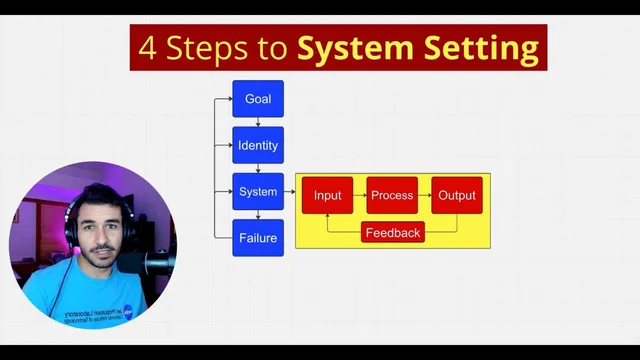
The framework starts with a goal, but it rejects the common “systems vs. goals” framing. Systems exist to achieve goals; without clarity on what success looks like, there’s no reason to build a system at all. The next step is identity work: before constructing routines, the person who would achieve the goal “effortlessly” is mapped out through traits and behaviors. For example, someone trying to grow a part-time business while working a full-time job needs high energy and time management, plus habits that protect focus and stamina (like exercising and eating clean). The emphasis is on self-acceptance—shaping behaviors from self-love rather than self-hatred—so the identity shift feels robust instead of punishing.
Once goal and identity are defined, the method turns to inputs, processes, and outputs. A key distinction is made between a process and a system. A process is a linear sequence of steps (step one, step two, step three). A system is self-sustaining: it includes feedback that keeps it running and adapting. In the business example, inputs might be allocating one hour per day to the venture, broken into sub-inputs like market research, defining an offer, and planning content. The process then specifies what the hour looks like in practice—phone away, tabs organized, calendar ready, and a clear flow for executing the work. After that comes outputs: the measurable results of the effort.
Feedback is treated as the first critical feedback loop. If outputs don’t match expectations—videos don’t get views, ads don’t perform, weight doesn’t drop, or family time slips—the response shouldn’t be quitting. Instead, the person should examine whether the inputs and process are wrong, whether impatience is distorting interpretation, or whether the system needs refinement. A comparison to SpaceX engineering culture is used to underline this mindset: engineers intentionally create conditions for failure so they can learn what went wrong and iterate.
The most neglected step comes last: anticipating the failure of the entire system. When routines collapse—when the person forgets the plan or stops entirely—the situation becomes an opportunity to diagnose the root cause across three areas: the goal, the identity, or the system. If the goal doesn’t genuinely motivate, it may be the wrong target or the wrong time horizon (too far away to feel real, or too close to feel trivial). If the identity is unrealistic—like expecting someone who hasn’t done push-ups in years to suddenly adopt an extreme daily standard—the identity needs to shift toward gradual, believable change. If goal and identity hold, then the system itself may be poorly supported by the environment: missing reminders, too many distractions (phone, computer), or toxic social influences.
The takeaway is an antifragile approach to habits: expect breakdowns, use failure and feedback to iterate, and treat setbacks as fuel for improvement rather than proof of personal failure.
Cornell Notes
The framework links goals, identity, and systems into a feedback-driven loop designed to survive breakdowns. First, a clear goal is required because systems exist to achieve something. Next, the identity of the person who would achieve the goal is mapped through traits and behaviors, with an emphasis on self-love rather than self-hatred. Then inputs, a step-by-step process, and outputs are defined, with feedback used to refine inputs and execution when results lag. Finally, the method anticipates the system failing entirely and diagnoses whether the problem is the goal, the identity, or the system/environment—turning setbacks into learning instead of discouragement.
Why can’t someone skip straight from “goal” to “system” in this approach?
What’s the practical difference between a process and a system here?
How should someone respond when outputs don’t match expectations?
What does “failure of the entire system” mean, and why is it emphasized?
How do you diagnose whether the goal, identity, or system is the problem?
Review Questions
- What are the three components that must be defined before building a self-sustaining system, and what role does feedback play?
- When a routine collapses entirely, what are the three diagnostic categories to check first?
- How does the approach distinguish between unrealistic identity goals and gradual identity change?
Key Points
- 1
Define a goal first, because systems exist to achieve something; no goal means no meaningful system.
- 2
Map the identity of the person who would achieve the goal through traits and behaviors before designing routines.
- 3
Treat a system as self-sustaining by building feedback loops that connect outputs back to inputs.
- 4
When outputs underperform, refine inputs and process rather than quitting; interpret failure as information.
- 5
Anticipate that the entire system may fail and plan to diagnose the cause instead of reacting with discouragement.
- 6
Diagnose breakdowns across goal, identity, and system/environment: motivation and timing, realism of identity change, and external supports like reminders and distraction control.