How to actually stop procrastinating
Based on Ali Alqaraghuli, PhD's video on YouTube. If you like this content, support the original creators by watching, liking and subscribing to their content.
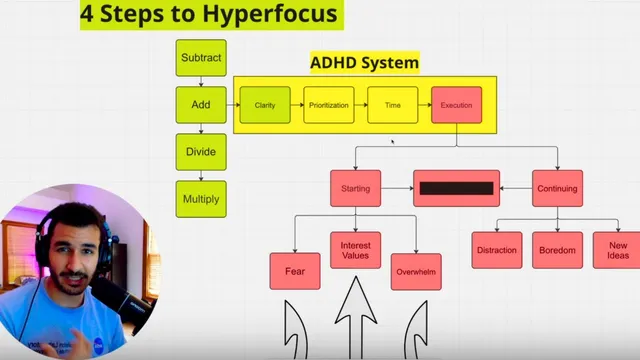
Procrastination is often a starting failure inside a broader productivity system that requires goal clarity, prioritization, and task selection before execution.
Briefing
Procrastination often isn’t a motivation problem—it’s a misdiagnosed problem of execution, and the fix depends on the specific reason someone stalls. Ali Alqaraghuli frames procrastination as the last step in a broader productivity system: clarity about goals, prioritization, and choosing the right task come first, while the “sticking point” usually shows up when starting. For many people—especially those on the ADHD spectrum—continuing and starting break down for predictable reasons, which he groups into three buckets: fear, misalignment with values/interests, and overwhelm.
Fear shows up when the task carries real stakes, such as a major project, a business presentation, a YouTube video, or a dissertation. The mental loop isn’t about small chores like grabbing mail or getting food; it’s about internal self-talk that the outcome might be “not good enough,” effort might be wasted, or failure might reflect badly on the person. Misalignment with values or interests is different: someone may avoid work not because they fear the result, but because the task feels wrong or unenjoyable. Alqaraghuli illustrates this with his consulting business experience—he could learn from a coach, but the required “salesy” ad-writing style didn’t fit his preferred direct, honest approach, so he kept postponing writing the ads. Overwhelm is the third common driver, particularly for ADHD: the mind reacts to a big task with panic-like urgency—“I have to start this huge thing”—often because the person hasn’t broken it into manageable steps.
Once the reason is identified, the response should match the cause rather than relying on generic productivity tips. For overwhelm, the prescription is to think only about the first step. Instead of telling oneself “I have to write a proposal” or “I have to make a video,” the task becomes “write an outline” or “start with the first small action.” That reduces the mental load and creates momentum—turning on the ring light, setting up the microphone, and continuing once the process is underway.
For values or interest conflicts, the approach is either to reconsider the task or make it more engaging. If the work is truly incompatible with personal values, procrastination can be a signal to stop doing it. If the issue is boredom, he recommends finding ways to add enjoyment—such as using music to enter a flow state while doing otherwise unpleasant work, or recruiting a partner to work alongside.
For fear of failure, he recommends lowering the stakes through “V0” style iterations. Before committing to a real deliverable, create a low-consequence version that proves the process can start: do setup and dry-run steps without actually publishing or recording the final product. He describes a “V0/V0” mindset where the goal is to test the environment (desk, lights, camera, microphone) and complete the bare minimum so fear can’t attach to a high-stakes outcome. If the person later chooses to ship, they can move from V0 to V1; often V1 is good enough, and if not, iteration continues.
Finally, he adds a practical amplifier: accountability. External pressure—from friends, family, coaches, or a community—can help people follow through consistently, especially for those who struggle with people-pleasing or lack intrinsic urgency. The core takeaway is that stopping procrastination starts with diagnosing which of the three engines—fear, misalignment, or overwhelm—is driving the delay, then applying the matching countermeasure.
Cornell Notes
Procrastination is treated as a starting problem inside a larger productivity system: clarity on goals and prioritization come first, but the breakdown usually happens when initiating the task. Alqaraghuli groups most procrastination into three causes: fear of failure, misalignment with values/interests, and overwhelm from an unbroken “big task.” The solution depends on the cause: overwhelm improves by focusing only on the first step; values/interests issues improve by reconsidering the task or making it more enjoyable; fear improves by using low-stakes “V0” iterations that remove the possibility of “failing” at the real deliverable. Accountability can further increase follow-through by adding external pressure.
How can someone tell whether procrastination is driven by fear, values/interests, or overwhelm?
What’s the practical fix for overwhelm procrastination?
How does misalignment with values or interests create procrastination—and what should be done?
What does “V0” mean in the context of fear of failure?
Why does accountability matter even after addressing fear, values, or overwhelm?
Review Questions
- When you procrastinate, what specific internal cues would point to fear rather than overwhelm?
- Give one example of a “first step” that could replace a larger task statement for someone with ADHD.
- How would you design a V0 process for a deliverable you’re currently avoiding?
Key Points
- 1
Procrastination is often a starting failure inside a broader productivity system that requires goal clarity, prioritization, and task selection before execution.
- 2
Most procrastination can be diagnosed into three main causes: fear of failure, misalignment with values/interests, or overwhelm from an unbroken big task.
- 3
When overwhelm is the driver, reduce the task to the first step only (e.g., outline first, then record) to create momentum.
- 4
When values or interests are misaligned, either reconsider the task or make it more engaging (for boredom, add enjoyment like music or a work partner).
- 5
When fear of failure drives avoidance, use low-stakes “V0” iterations that remove high-consequence outcomes (setup and dry-run without publishing/recording the final deliverable).
- 6
Accountability from other people—friends, family, coaches, or community—can provide the external pressure that helps follow-through.
- 7
Matching the solution to the diagnosed cause matters more than generic productivity advice.