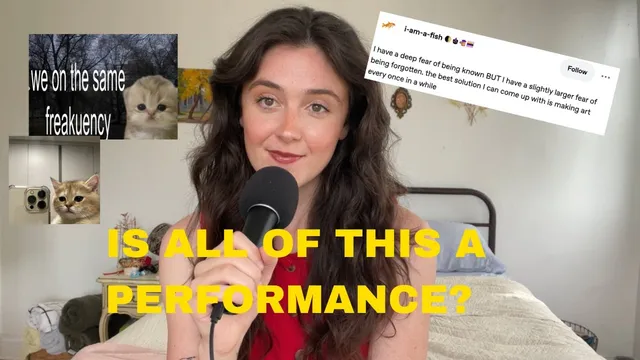
How to Be An Artist Without Selling Your Soul on the Internet
Based on Anna Howard's video on YouTube. If you like this content, support the original creators by watching, liking and subscribing to their content.
Online visibility pressures artists to share personal material, but vulnerability and exploitation depend on boundaries, audience, and context—not just content.
Briefing
Online artistry doesn’t require “selling your soul,” but it does demand constant boundary-setting as personal life, audience expectations, and platform incentives blur together—especially for women. The central tension is parasociality: when artists share enough of themselves to build connection, that vulnerability can become exploitation, and repair becomes harder when the relationship is one-sided. The stakes feel higher in a media environment that rewards intimacy as a marketing asset and punishes women when they inevitably fall short of the public’s ideal.
The discussion begins with a practical reality: making a living as an artist often comes with an “annoying inevitability” of maintaining an online presence. That pressure clashes with a desire for privacy. A key line comes from theater maker Mark Ravenh Hill: good artists must be the most truthful people in the room. The internet, however, isn’t one room—it’s a crowd with an appetite for personal detail. Sharing work online can turn personal disclosure into something that audiences treat as fair game, even when the artist’s intent is simply honesty.
Personal writing becomes the case study. The creator starts a Substack as a therapeutic outlet for confessional essays, initially keeping it private and even hiding it from family members. Comfort with sharing increases when the audience is “complete strangers,” not people who know her in real life—an early sign that vulnerability and exploitation aren’t only about content, but about who holds it and how it might be used. She also describes how posting personal snippets on her podcast drew unusually warm responses, including comments that she shouldn’t qualify her writing. That feedback highlights a risk unique to intimate art: if someone misreads or challenges personal feelings, it can feel invalidating.
The conversation then widens into a gendered critique of what “authority” looks like online. Kate Bugos argues that young women are rarely granted expertise; instead, they’re expected to offer vulnerability as proof of authenticity. Parasocial bonds become a career requirement: audiences must “buy into” the writer as a person, not just the work. That dynamic encourages trauma and intimacy to be displayed for internet “voyers,” while the public’s love can flip quickly into hate.
To counter that, the creator leans on a different standard: “Be on your own side.” Sophia Theories’ idea is that writing honestly doesn’t mean spilling unprocessed secrets to strangers who can’t hold them with the same care as friends or therapists. The creator adds another lens from Rain Fisherwan: women often editorialize their lives through the stories they consume, sometimes romanticizing neurosis to make experiences legible to an audience. Yet she pushes back against a simplistic “stop consuming” message. Instead, she argues that intentional engagement with art and writers can deepen expertise and improve one’s work.
Her final “barometer” for the vulnerability/exploitation line is personal agency: sharing should make her more of the person she wants to be, not exploit her personhood. The goal is to keep returning to the question “Is this for me?”—both before posting online and in private moments when performance instincts creep in. In her view, the internet’s imaginary audience can be managed, not obeyed, and art can remain generative without becoming self-betrayal.
Cornell Notes
The discussion centers on how artists—especially women—navigate parasocial pressure when personal life becomes part of the product. Online visibility can reward intimacy, but it also raises the risk that vulnerability turns into exploitation and that repair becomes difficult once strangers feel entitled to personal details. Through her own Substack and podcast experience, the creator treats “personal writing” as therapeutic and meaningful, while still questioning where oversharing ends. She draws on critiques (Kate Bugos) that young women are pushed to be “authorities” only through vulnerability, and on guidance (Sophia Theories) to stay “on your own side” by not sharing unprocessed secrets. Her practical test for the vulnerability/exploitation line is whether sharing makes her more of the person she wants to be—rather than eroding her boundaries.
Why does the internet make “truthfulness” feel riskier for artists than in a normal room?
What does the creator’s Substack experience reveal about privacy and audience type?
How does Kate Bugos’ critique connect parasociality to career incentives for women?
What does “on your own side” add to the vulnerability/exploitation debate?
How does Rain Fisherwan’s idea of performance complicate the “just stop consuming” message?
What “barometer” does the creator use to decide whether sharing crosses the line?
Review Questions
- What factors besides the amount of personal detail determine whether disclosure feels like vulnerability or exploitation?
- How do Kate Bugos’ and Sophia Theories’ perspectives differ in what they consider “safe” honesty?
- In what ways can parasocial relationships both improve creative work and also create psychological pressure?
Key Points
- 1
Online visibility pressures artists to share personal material, but vulnerability and exploitation depend on boundaries, audience, and context—not just content.
- 2
Parasocial relationships can make repair harder because the connection is one-sided and the public’s interpretation can shift quickly from praise to hate.
- 3
Privacy choices (like keeping family members from seeing personal writing) can be a practical way to protect agency while still sharing art.
- 4
Gendered expectations often treat women’s “authority” as coming from vulnerability rather than expertise, increasing incentives to display intimacy.
- 5
“Be on your own side” supports a rule of not sharing unprocessed secrets with strangers who can’t hold them with the same care as close relationships or therapy.
- 6
A workable personal test for the vulnerability/exploitation line is whether sharing makes the creator more of the person she wants to be, not less.
- 7
Before posting—or when private life starts to feel like performance—returning to “Is this for me?” helps resist algorithm-driven self-betrayal.