How to build your DREAM SaaS business in 2026
Based on Simon Høiberg's video on YouTube. If you like this content, support the original creators by watching, liking and subscribing to their content.
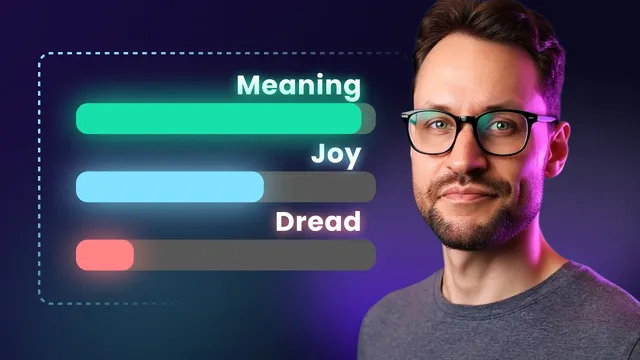
Sort every business task into suck, joy, or magic buckets and aim for ≤20% suck, ≤30% joy, and ≥50% magic work.
Briefing
Building a SaaS business in 2026 isn’t just about squeezing more revenue out of every week—it’s about protecting the one metric that keeps founders from burning out: whether the work still feels worth doing. The core prescription is a “50/30/20” style balance, split into three buckets of effort. A small “suck bucket” holds necessary but draining tasks—taxes, legal compliance, server crashes, and angry customer issues. A “joy bucket” includes energizing but lower-impact work, like activities that feel fun yet may not directly move the business. The “magic bucket” combines meaning and fun with high business impact. The target ratio is strict: no more than 20% suck work, no more than 30% joy work, and at least 50% magic work. The warning is aimed at two extremes. Hustle culture can push founders to treat everything as suck work—optimizing for revenue while optimizing for misery. Indie hacking can swing the other way, turning the business into a hobby by coding nonstop and delaying marketing until “later,” which never arrives. The practical takeaway is that founders must deliberately design their weeks so at least half the time goes to work that is both profitable and enjoyable; otherwise they don’t have a business they love, but either a fun hobby or a job they’ll eventually hate.
That balance only works if it’s scheduled in a way that prevents two common failure modes. One is the “context switcher,” the founder who tries to be CEO, CTO, CMO, and support all in the same day—leading to shallow output, buggy code, and generic marketing because the brain never fully leaves “debug mode.” The other is the “comfort worker,” who stays locked in product building and keeps postponing marketing and growth, slowly letting the business die while adding features. To break both patterns, the framework uses a four-week rotation schedule with themed weeks. Week one is “build week,” focused on deep product work and shipping features with social media shut off. Week two is “marketing week,” a full shift into growth tasks so marketing gets real attention rather than being treated as a chore between coding sessions. Week three is “ops week,” dedicated to the suck bucket—automation, documentation, and streamlining repetitive operations so founders don’t keep paying the same tax every week. Week four is “Slack week,” a planned recovery period meant to create mental space for strategy and creativity, arguing that the best ideas often arrive away from the code editor and the content grind.
Even with buckets and scheduling, setbacks are inevitable: losing a major customer, shipping a damaging bug, or getting a comment that derails a morning. The final rule is a protocol for emotional recovery. Borrowed from sales experience, it’s a “45-second” (or timer-based) rule: allow a short window to feel fully frustrated—anger, self-pity, even cursing—then force a reset when the timer ends. The point isn’t to suppress emotion; it’s to prevent a bad moment from turning into a bad week that harms the next deal, call, or decision. Together, the message is clear: design your work mix, rotate your focus, and build a fast emotional off-ramp so the business stays profitable without stealing the joy of running it.
Cornell Notes
The framework centers on keeping founders alive—mentally and emotionally—by ensuring at least half their work is both profitable and enjoyable. Activities are sorted into three buckets: a small “suck bucket” of necessary but draining tasks (target ≤20%), a “joy bucket” of energizing but lower-impact work (target ≤30%), and a “magic bucket” that combines meaning/fun with major business impact (target ≥50%). To make that ratio realistic, a four-week rotation schedule prevents two traps: constant context switching and hiding in comfort-zone product work. Build week focuses on shipping, marketing week concentrates on growth, ops week automates and streamlines, and Slack week provides recovery and strategic clarity. When setbacks hit, a timer-based “45-second” rule limits how long frustration lasts so negativity doesn’t spill into future performance.
What does the “50/30/20” bucket system actually mean for day-to-day work?
Why does the bucket ratio fail when founders don’t change how they schedule?
How does the four-week rotation schedule address both the context switcher and the comfort worker?
What’s the strategic purpose of “Slack week” if hustle culture says founders shouldn’t take time off?
What is the “45-second” rule, and how does it prevent business damage after setbacks?
Review Questions
- If a founder’s week is 60% coding, 30% marketing, and 10% admin, which bucket(s) are likely being misclassified—and what would need to change to reach at least 50% “magic bucket” work?
- How would a four-week rotation schedule differ for someone who is primarily a “comfort worker” versus someone who is primarily a “context switcher”?
- After a major customer loss, what specific behavior does the timer-based frustration protocol require, and why does it matter for the next business interaction?
Key Points
- 1
Sort every business task into suck, joy, or magic buckets and aim for ≤20% suck, ≤30% joy, and ≥50% magic work.
- 2
Treat marketing and sales as necessary growth work, not optional “later” tasks that quietly become never.
- 3
Use themed weeks to prevent constant context switching that leads to shallow output and lower-quality execution.
- 4
Dedicate a full ops week to automation, documentation, and streamlining so repetitive pain doesn’t keep consuming the week.
- 5
Plan a recovery-focused Slack week to create mental space for strategy and idea generation, not just rest.
- 6
Adopt a timer-based emotional reset after setbacks so frustration doesn’t spill into future calls, decisions, or performance.