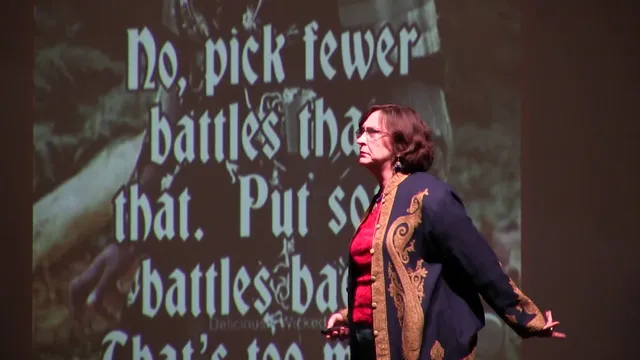
How to edit other people's content without pissing them off - Ingrid Towey
Based on Write the Docs's video on YouTube. If you like this content, support the original creators by watching, liking and subscribing to their content.
Align edits with the customer’s goals, not internal preferences, because readers scan and leave quickly when answers aren’t easy to find.
Briefing
Editing other people’s documentation without triggering defensiveness comes down to one practical shift: treat edits as customer-focused improvements made in partnership, not as corrections delivered from above. Ingrid Towey, a senior technical editor and writer at Red Hat, frames the goal as keeping writers “happy” with the outcome—because trust and diplomacy determine whether feedback lands as help or as insult.
Towey ties that approach to a long detour from her earlier career as a technical writer and usability specialist in the early 1990s. After homeschooling her children for 15 years, she found she became a better writer and editor than before—largely because teaching writing forced her to be both effective and tactful. You can’t “throw edits over the wall” and hope they work; learners need context, patience, and guidance that respects their intent. From that experience, she crystallizes four principles for editing and peer review.
First, everyone is on the same side: the customer side. Instead of debating internal preferences, editors should align with what readers need to accomplish. Towey emphasizes how modern online readers behave—often scanning rather than reading. She cites research suggesting users may have only seconds before leaving, form an opinion in about 50 milliseconds, and read roughly 28% of a page. The implication is blunt: documentation must surface answers quickly and help readers find what they need. She also illustrates how audience understanding can overturn assumptions. A diagram designer animated a systems diagram to make it engaging, and many internal stakeholders loved it—until usability testing with systems administrators showed they wanted the whole picture at once, because they think model-first.
Second, editing is not an edict. Edits should be collaborative and reversible, not a power play. Towey argues that editors don’t need to fix every comma or impose every stylistic preference; the job is to improve usefulness. She also warns against making changes that can introduce technical errors—especially when editors lack domain knowledge.
Third, explain why the edit was made. Towey recommends backing up changes with objective authorities and evidence: readability tests (like Flesch-Kincaid grade level and Flesch Reading Ease), usability testing, and established writing standards. She walks through a real example where a dense, technical paragraph scored at a grade level around 24.7 and was rewritten into bullet-based, shorter sentences, improving readability to a grade-level score around 9.3.
Fourth, get help. Editing doesn’t have to be a solo act; peer review groups, co-op support, and structured meetings can distribute expertise and reduce blind spots. Towey offers meeting guidelines: focus on a few high-impact areas (like headings and customer focus), agree on writing principles in advance, use kind feedback (often framed as “positive feedback first”), appoint a meeting leader to prevent domination, and ensure quieter participants are heard. Ultimately, the edits that stick are the ones built on relationships—writers trust editors who show care, competence, and positive intent, and that trust makes feedback easier to accept and act on.
Cornell Notes
In technical editing, the fastest path to “edits that don’t piss people off” is to treat feedback as customer-centered collaboration. Ingrid Towey’s four principles are: (1) align with the customer side, (2) make edits instead of issuing commands, (3) explain the rationale behind changes using evidence like readability tests and usability testing, and (4) get help through peer review and structured group editing. She supports the customer-first approach with online-reading research showing users scan quickly and may leave within seconds. She also demonstrates how rewriting for clarity and structure can dramatically improve readability scores. The practical takeaway: trust, transparency, and measurable usefulness turn editing into a shared effort rather than a confrontation.
How does “customer side” change what an editor should prioritize during peer review?
What does “edit not edict” look like in practice, beyond tone?
Why does explaining the “why” matter, and what kinds of evidence can support it?
What’s the role of usability testing when editing documentation?
How can peer review meetings be structured so they improve writing without derailing into nitpicks?
What’s the relationship between trust and edit acceptance?
Review Questions
- Which reader behaviors (speed, scanning, partial-page reading) should influence your editing priorities, and how would you change headings or structure accordingly?
- Pick one edit you’ve made recently. What objective evidence (readability test, usability observation, or style standard) could you cite to explain the “why” to the writer?
- How would you design a peer review meeting agenda that focuses on high-impact issues while preventing comma-level nitpicking and dominance by a single participant?
Key Points
- 1
Align edits with the customer’s goals, not internal preferences, because readers scan and leave quickly when answers aren’t easy to find.
- 2
Treat editing as collaboration: make changes reversible and avoid fixing everything just because a preference is available.
- 3
Explain the rationale behind edits using objective evidence such as readability tests (Flesch-Kincaid, Flesch Reading Ease) and usability testing results.
- 4
Use audience understanding to validate design choices; features that delight some stakeholders can fail with the actual end users.
- 5
Get help through peer review groups and structured meetings rather than editing in isolation, especially when domain knowledge varies.
- 6
Run peer review with clear focus areas, agreed writing principles, kind feedback, and a meeting leader to keep discussion productive.
- 7
Build trust by demonstrating competence, care, and positive intent—writers accept feedback more readily when relationships are strong.