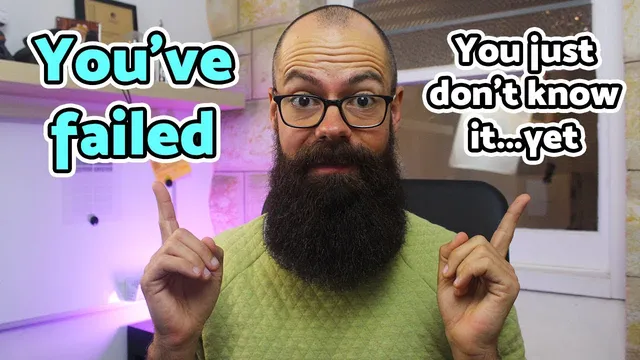
How to fail a PhD without realising it! 4 worrying self checks...
Based on Andy Stapleton's video on YouTube. If you like this content, support the original creators by watching, liking and subscribing to their content.
Replace last-minute, sprint-based work habits with consistent daily effort that builds foundations early in the PhD.
Briefing
Failing a PhD often doesn’t look like a dramatic collapse—it looks like slow drift caused by habits that once helped a student succeed but now undermine long-term research progress. The core warning is to identify the behavioral patterns carried in from earlier academic life (how work gets done, how anxiety is managed, how ambition is framed) and deliberately replace the ones that no longer serve. A PhD demands sustained commitment across years, so “starting strong and finishing strong” depends less on occasional bursts of effort and more on consistent daily work—often just a couple of hours at a time—while building foundations early so later speed becomes possible.
Several self-checks follow from that premise. One is to audit old study behaviors such as leaving assignments until the night before or revising only days before exams. Those tactics may have worked in undergraduate settings, but they clash with the PhD’s multi-year timeline and its need for early groundwork. Another is to watch how fear and anxiety—sometimes fueled by grade-focused motivation—can grow into an unmanageable force once the PhD replaces grades with uncertainty and delayed feedback. A third is to challenge “thinking too small”: staying inside a comfortable knowledge bubble and aiming only for incremental improvements rather than setting a bigger target, such as becoming a world leader in a specific aspect of the field.
The next failure mode is clinging to an idea that won’t go anywhere. Research in a PhD is built on repeated failures and “interesting results,” but the path to a real contribution requires accepting failure as daily life and using it to filter what’s worth pursuing. A practical approach described is to apply the 80/20 (Pareto) mindset early: sow multiple “seed” experiments, track what produces the majority of useful outcomes, and then narrow focus toward the few lines that generate the most interesting results. The emotional trap is that failed attempts feel disheartening in the trenches; the counter is to treat failures as sieving—discarding rubbish while keeping what shows promise.
Procrastination is singled out as the biggest self-sabotage mechanism. It’s framed as a warm, exciting detour from looming deadlines—social media, partying, or other “fun” tasks—that temporarily protects the ego from the risk of not being good enough. The recommended fix is not glamorous but direct: be tough when needed, sit down and do the work until it’s finished, even if it means unappealing tasks like lab prep or weekend catch-up. The goal is to reduce the mental load and regain momentum through focused output.
Finally, students can fail by becoming passengers of their supervisors’ research rather than driving their own thesis direction. Early on, learning from a supervisor is appropriate, but by the second year students should generate and defend their own ideas and gradually earn more autonomy. By the third year, the supervisor’s role should shift toward safeguarding scientific integrity rather than steering every decision. The thesis is the student’s responsibility at the finish line, so the relationship should empower independent research rather than keep students trapped in someone else’s agenda.
Cornell Notes
A PhD can derail quietly when earlier academic habits—especially procrastination, anxiety-driven behavior, and small-minded goals—carry over into a multi-year research process. The key is to run self-checks: drop tactics that rely on last-minute effort, manage fear before it becomes a destructive force, and aim beyond incremental work toward a clear, ambitious contribution. Research progress also depends on accepting frequent failure while using it to filter ideas; applying a Pareto-style approach helps identify which experiments produce most of the useful results. Procrastination is treated as ego-protection through “fun” distractions, and the remedy is disciplined, sometimes unglamorous focus. Autonomy matters too: students should move from learning under a supervisor to driving their own thesis direction by the second and third years.
Which undergraduate-style behaviors are most likely to sabotage a PhD once the timeline stretches out?
How does anxiety tied to grades become a problem during a PhD?
What’s the recommended way to handle repeated research failures without getting stuck?
Why does procrastination count as self-sabotage in this framework, and what does the fix look like?
What does “being a passenger of a supervisor’s research” look like, and when should students change course?
Review Questions
- Which early PhD habit from undergraduate life would you most need to replace to support consistent, multi-year progress?
- How would you apply a Pareto-style “seed and sieve” approach to your current research problem to decide what to keep and what to drop?
- What signs suggest you’re becoming a passenger in your supervisor’s agenda, and what concrete step could you take this month to increase autonomy?
Key Points
- 1
Replace last-minute, sprint-based work habits with consistent daily effort that builds foundations early in the PhD.
- 2
Treat anxiety—especially anxiety tied to grades—as a potential long-term destabilizer rather than a harmless motivator.
- 3
Aim bigger than incremental improvements by defining a world-leading contribution target within the field.
- 4
Accept frequent research failure as normal, then use it to filter ideas and focus on the lines that generate most useful results.
- 5
Use an 80/20 (Pareto) mindset early by running multiple seed experiments and narrowing to the few that produce the majority of promising outcomes.
- 6
Confront procrastination as ego-protection: redirect attention back to the unglamorous work until tasks are finished.
- 7
Shift from learning under a supervisor to driving your own thesis direction by the second and third years, while keeping scientific integrity as the supervisor’s main safeguard role.