how to fall down a curiosity rabbit hole & reconnect to your creativity
Based on Anna Howard's video on YouTube. If you like this content, support the original creators by watching, liking and subscribing to their content.
Rabbit holes are treated as curiosity signals, not distractions, when they’re guided by what feels resonant rather than by algorithms.
Briefing
Rabbit holes aren’t distractions—they’re a signal from curiosity that can rebuild creativity and deepen how people relate to the world. The core claim is that “research as leisure” works best when it’s driven by personal fascination rather than productivity pressure, and that this kind of self-directed inquiry strengthens a person’s sense of wonder, specificity, and creative momentum.
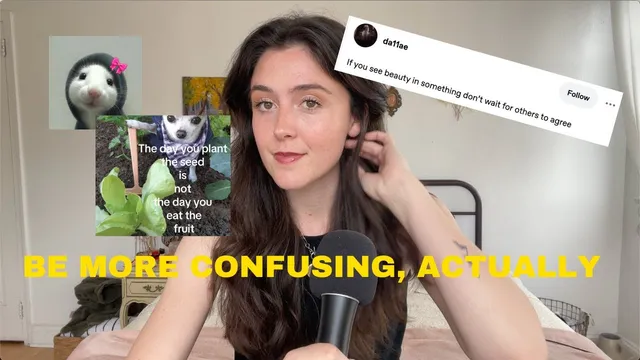
A major thread runs through the episode: online advice to “niche down” and package a personal brand into a neat, instantly understandable box can flatten real personality. Instead of aiming to be universally legible (the kind of messaging that could be summarized by an AI), the episode argues for embracing idiosyncratic, project-based lives—messy combinations of interests that don’t obviously connect. A quoted essay by Michelle Pellezon Lepsitz describes “magnetic” people as confusing in the best way: they pursue strange, unjustifiable endeavors, like shifting from medieval brewing to learning to code, or collecting vintage toasters before pivoting to classical Greek. The point isn’t that contradictions are a strategy; it’s that specificity and lived curiosity create texture that generic content can’t.
That project-based mindset is then scaled down into practical guidance. Projects don’t have to be big public launches; they can start as small side quests that train attention and make curiosity feel doable. Examples include line dancing, learning Spanish, and casually researching ancient Greek lamentation—prompted by a historical detail about lamenting being outlawed at the start of democracy in ancient Greece. Another example is learning all the words to Nicki Minaj’s verse in “Monster.” The episode frames these as exercises in following what feels resonant, even when it won’t immediately pay off.
From there, the episode pivots to how to actually fall into rabbit holes. The workflow described is intentionally two-stage: first, collect and save sources tied to a question using Arena (a tool for saving links, PDFs, and images into categorized “channels”); second, return to those sources later in a note-taking system (referenced via the earlier “digital gardening” approach) to do the deeper synthesis. The episode credits “Research as Leisure Activity” by Selene Gian for articulating what makes research feel like play: it begins with questions, relies on evidence, requires understanding the history and practices of a discipline, and often advances ideas beyond today’s headlines.
Crucially, the episode doesn’t romanticize the process as always fun. Rabbit holes can bring frustration, confusion, and uncertainty—yet the goal is presence and wonder, not constant enjoyment or self-improvement. It also argues that independent research needs community, especially when dense material or unfamiliar references appear; treating those moments as invitations to dig deeper turns obstacles into new pathways.
Finally, the episode offers a starting mechanism for people who feel curiosity has been dulled: browse “random” internet rabbit holes via Cloudhiker.net, then bookmark anything that sparks fascination. Sites highlighted include friendlola.com (recreational software), pudding.cool (visual essays), NeoCities (free personal websites), and aa.toys (archived fashion magazines like Milk Bar). The takeaway is simple: listen for the flippant “I want to learn about…” moments, take them seriously, and build projects around hyper-specific obsessions—because that’s where creativity comes back to life.
Cornell Notes
Rabbit holes are portrayed as curiosity-driven pathways that rebuild creativity and deepen engagement with the world. The episode argues that “niche down” and personal branding advice often pushes people toward generic, AI-like legibility, while magnetic creativity comes from specificity and project-based lives—sometimes with interests that don’t obviously connect. Small, voluntary projects (like researching ancient Greek lamentation or memorizing lyrics from “Monster”) help train attention and make curiosity feel actionable. A practical workflow pairs source-dumping in Arena with later note-taking and synthesis, turning questions into sustained inquiry. The process isn’t always fun—confusion and frustration are part of the work—but the aim is wonder and presence, not constant productivity.
Why does the episode treat “rabbit holes” as a creative asset rather than a distraction?
How does the episode challenge mainstream “niche down” personal branding advice?
What does “project-based life” look like when scaled down to everyday practice?
What workflow turns curiosity into sustained research?
What criteria define “research as leisure activity,” and why do they matter for independent learners?
How does the episode address the emotional reality of rabbit holes (including frustration)?
Review Questions
- What’s the difference between “algorithmic rabbit holes” and curiosity-driven rabbit holes, and how does the episode suggest building a path back to the latter?
- How does the episode use the concept of “magnetic” people to critique generic personal branding advice?
- Describe the two-stage workflow involving Arena and later note-taking. Why does separating source collection from synthesis help?
Key Points
- 1
Rabbit holes are treated as curiosity signals, not distractions, when they’re guided by what feels resonant rather than by algorithms.
- 2
Generic “niche down” branding can flatten personality; creativity tends to grow from specificity and project-based, sometimes non-obvious combinations of interests.
- 3
Start small: micro-projects (like researching a niche historical topic or learning a specific song verse) help train attention and make curiosity sustainable.
- 4
Use a two-stage research workflow: dump relevant sources into Arena under a guiding question, then return later to synthesize them in a note-taking system.
- 5
“Research as leisure activity” is defined by questions, evidence, disciplinary context, and often community—especially important for independent learners facing dense material.
- 6
Rabbit holes aren’t always fun; confusion and frustration are normal, and the goal is wonder and presence rather than constant productivity or self-improvement.
- 7
If curiosity feels dulled, browse random internet rabbit holes via Cloudhiker.net and bookmark anything that sparks fascination for later follow-up.