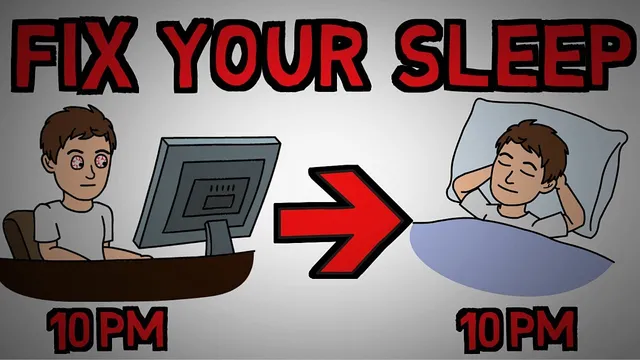
How To Fix Your Sleep Schedule - Reset Your Sleep Pattern (animated)
Based on Better Than Yesterday's video on YouTube. If you like this content, support the original creators by watching, liking and subscribing to their content.
Avoid all-nighters as a sleep-reset strategy because sleep pressure builds continuously and caffeine only delays the crash.
Briefing
Resetting a sleep schedule by pulling an all-nighter is a high-risk shortcut that often backfires—Mike’s attempt shows why. Staying awake for 37 hours sounds like a way to force an earlier bedtime, but sleep pressure builds relentlessly in the brain. Even with coffee, energy drinks, and video-game distraction, Mike hit a sudden energy crash after about 26 hours, took a “quick” nap, and accidentally slept for eight hours—pushing his wake time into the night and worsening the problem.
The core lesson is that sleep timing is governed by two interacting systems: the circadian rhythm (the body’s internal 24-hour clock) and sleep pressure (the accumulating drive to sleep). Circadian rhythm controls when the body releases melatonin in the evening (sleepiness) and cortisol in the morning (alertness). That clock isn’t perfectly 24 hours on its own—researchers who spent 32 days in Mammoth Cave, Kentucky, in complete darkness found a repeating cycle of roughly 15 hours awake and 9 hours asleep, with a slightly longer-than-24-hour period (about 24 hours and 15 minutes on average). In everyday life, sunlight resets the clock back to a precise 24-hour rhythm; without it, the schedule drifts.
Mike’s mistake wasn’t just staying up late—it was relying on a one-day disruption while ignoring the daily “reset cues” that keep circadian timing stable. A better approach is to shift the entire routine gradually, not just bedtime. Moving the schedule earlier by about 15 minutes each day can work, but the body may feel restless in bed if the circadian system hasn’t caught up. That’s why timing cues matter: exercise earlier, eat meals earlier, and—most importantly—get sunlight immediately after waking. Sunlight is the most reliable environmental signal for the internal clock, though other consistent cues (food timing, temperature changes, exercise, and regular social interaction) can also help.
Modern life complicates this with artificial light. Indoor lighting can mimic enough of the sun’s effect to disrupt circadian rhythm, especially when used at the wrong time. The guidance is to dim lights in the evening and avoid screens—TV, computers, and smartphones—because blue light can suppress melatonin and increase daytime-alert hormones like cortisol. Apps such as Twilight and f.lux can reduce blue light, but the stronger recommendation is to stop screen time at least one hour before bed (ideally two).
Sleep pressure explains the caffeine trap. Adenosine accumulates during waking and eventually turns on sleep-promoting brain regions; caffeine blocks adenosine receptors, masking sleepiness while adenosine keeps building. When caffeine wears off, a “caffeine crash” can arrive with the full, delayed sleep pressure. Caffeine also has a half-life of roughly 5 to 8 hours, so the advice is to avoid caffeine about 8 hours before bedtime (including sources beyond coffee, such as tea, dark chocolate, and even fat loss pills and ice cream). Finally, chronic fatigue can mean the body isn’t clearing adenosine due to insufficient sleep quantity or quality—so getting enough sleep becomes the foundation for any schedule reset.
Cornell Notes
Attempting to reset a sleep schedule with an all-nighter is unreliable because sleep pressure builds continuously while caffeine only masks it. Circadian rhythm sets the timing of melatonin (evening sleepiness) and cortisol (morning alertness), and it naturally runs slightly longer than 24 hours without light cues. Daily sunlight—especially right after waking—resets the clock back toward a 24-hour cycle, while evening artificial light and screens can push it the wrong way. A successful reset shifts the whole routine earlier in small steps, pairs that with morning sunlight, reduces night light exposure, and avoids caffeine roughly 8 hours before bed. If someone needs more and more caffeine to function, it’s a sign sleep quantity/quality is insufficient and adenosine isn’t clearing properly.
Why does an all-nighter often make a sleep schedule worse instead of fixing it?
What controls when the body feels sleepy versus awake?
What did the Mammoth Cave experiment reveal about circadian rhythm?
How should someone shift an out-of-sync schedule without relying on extreme sleep deprivation?
Why are evening screens and artificial light a problem for sleep timing?
How does caffeine affect sleep pressure and why does timing matter?
Review Questions
- If circadian rhythm runs slightly longer than 24 hours without light cues, what daily input most directly corrects that drift?
- Explain how caffeine can both improve alertness and worsen sleep later, using adenosine and the idea of a caffeine crash.
- What combination of circadian cues and sleep-pressure management would you recommend to move bedtime earlier by 15 minutes per day?
Key Points
- 1
Avoid all-nighters as a sleep-reset strategy because sleep pressure builds continuously and caffeine only delays the crash.
- 2
Reset success depends on both circadian rhythm (melatonin/cortisol timing) and sleep pressure (adenosine accumulation).
- 3
Shift the entire daily routine earlier in small increments (about 15 minutes per day), not just bedtime.
- 4
Get sunlight immediately after waking to anchor the circadian clock to a 24-hour cycle.
- 5
Reduce evening artificial light and especially screen exposure; blue light can suppress melatonin and raise cortisol.
- 6
Stop caffeine about 8 hours before bed to prevent delayed sleepiness and a caffeine crash.
- 7
If caffeine keeps increasing or mornings feel unrefreshing, prioritize improving sleep quantity and quality so adenosine clears properly.