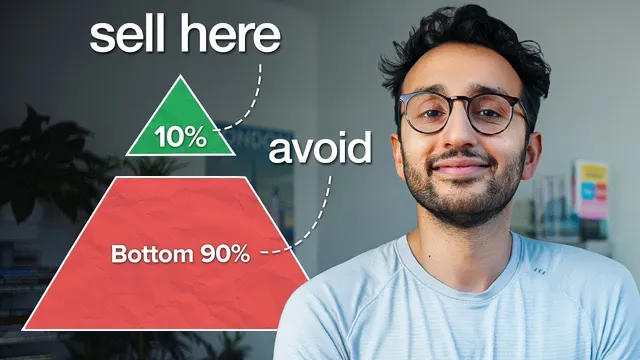
How to Get Rich on Easy Mode
Based on Ali Abdaal's video on YouTube. If you like this content, support the original creators by watching, liking and subscribing to their content.
Wealth-building “easy mode” centers on helping other people make money and making that impact measurable.
Briefing
Getting rich “on easy mode” comes down to one rule: help other people make money—and tie your work to measurable revenue. The core claim is that capitalism routes value upward, so the most reliable path to wealth is building, selling, or performing in ways that increase someone else’s profits. Romantic “hard mode” stories—struggling artists, passionate entrepreneurs, and service providers who rely on goodwill—are framed as emotionally compelling but financially inefficient because they depend on convincing people with limited disposable income to spend on things they may not need.
The argument starts with a pyramid-style view of the economy: value is generated at the bottom and captured at the top, meaning money tends to flow upward. That makes consumer-facing work inherently harder for wealth-building, since consumers are often debt-laden and budget-constrained. Amazon is used as an example of how the public-facing business can look like the main event while profits actually come from enabling other businesses to earn more. Likewise, Google and Meta are described less as consumer apps and more as advertising engines: businesses pay large sums to run ads because those ads produce customers and revenue that exceed ad spend. Even banks are portrayed as wealth generators not from individual deposits, but from facilitating transactions and services that help other businesses grow.
From there, the transcript lays out four practical principles for turning “helping others make money” into a strategy—whether someone is employed, freelancing, or starting a business.
First, tie work directly to revenue. Many employees perform tasks that feel like busywork (emails, meetings, support tickets), but pay ultimately depends on whether the work helps the company earn more than it costs. A “revenue audit” is recommended: identify how the role affects revenue and whether it can be quantified. In customer support, the measurable impact is framed as revenue retention—preventing churn. In customer success, the high-value work is upselling existing customers.
Second, sell to people who actually have money, typically businesses (B2B) rather than consumers (B2C). Businesses buy with spreadsheets and ROI logic, while consumers buy with emotion and financial stress. The transcript also suggests targeting offers in the $2,000–$20,000 range so fewer customers are needed to reach viability.
Third, price based on value, not time. Hourly billing caps income and can even reward slower delivery. A rule of thumb is offered: charge about one-tenth of the value created (e.g., if a service helps a client make an extra $100,000, charge roughly $10,000).
Fourth, build skills close to money. Sales and revenue-linked marketing are treated as “print money” skills because they connect directly to earnings. By contrast, skills like generic graphic design or creative writing are often lower paid unless they’re tied to revenue outcomes—such as writing sales copy that drives purchases.
The transcript then confronts exceptions: teachers, social workers, and many doctors may deliver major societal value but often struggle to get rich because their market value doesn’t map cleanly to revenue generation. The closing message is not a call to abandon those roles, but a push to reframe career moves and side hustles around revenue impact—like shifting from public teaching to corporate training, or reframing a website service from “design” to conversion-rate optimization that increases sales.
Cornell Notes
The transcript argues that wealth-building “easy mode” is available when someone helps others make money and can connect their contribution to measurable revenue. It frames capitalism as a system where value flows upward, making consumer-facing work harder and B2B or revenue-enabling work easier. Four principles follow: tie your work to revenue (do a revenue audit), sell to customers with money (prefer B2B and ROI buyers), price by value rather than time (use a value-based rule of thumb), and develop skills close to money (sales and revenue-linked marketing over less directly monetized skills). The message also acknowledges that societal-value jobs can pay less because their market value doesn’t track revenue, so career pivots and side hustles should emphasize revenue impact.
Why does the transcript claim “hard mode” is financially inefficient, even when the work feels meaningful?
How does the transcript justify the idea that money is made by helping others make money?
What does “tie your work directly to revenue” look like in a job?
Why does the transcript prefer B2B over B2C for wealth-building?
How should pricing work under the “value, not time” principle?
What does “skills close to the money” mean, and what are the examples?
Review Questions
- If someone’s job involves tasks that feel unrelated to revenue (e.g., admin, support, HR), what specific steps does the transcript recommend to connect their work to measurable revenue outcomes?
- How would you redesign a side hustle offer so it sells to customers with money and is framed around ROI rather than the deliverable itself?
- What pricing approach would you use if you could quantify the financial impact of your work, and how does the transcript’s “one-tenth of value” rule guide that decision?
Key Points
- 1
Wealth-building “easy mode” centers on helping other people make money and making that impact measurable.
- 2
Consumer-facing work is often harder for wealth because buyers typically have tighter budgets and higher financial stress.
- 3
A revenue audit helps employees translate day-to-day tasks into revenue retention, upsells, or other CFO-relevant metrics.
- 4
B2B sales are framed as easier than B2C because businesses buy with ROI logic and can justify larger invoices.
- 5
Pricing should reflect value created rather than time spent; hourly billing caps income and can distort incentives.
- 6
High-earning skills are those that sit close to revenue, such as sales and revenue-linked marketing or copywriting.
- 7
Jobs with major societal value may still pay less when market value doesn’t map cleanly to revenue generation, so career pivots should emphasize revenue impact.