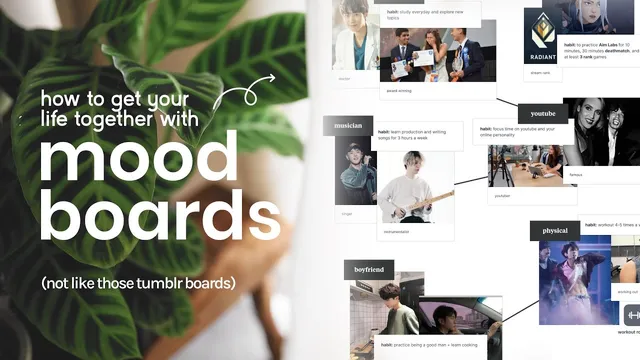
how to get your life together using mood boards (not like those tumblr boards)
Based on Kai Notebook's video on YouTube. If you like this content, support the original creators by watching, liking and subscribing to their content.
Build a mood board with five goal categories—career, health, relationships, hobbies, and materialistic aspirations—to create a clear life direction.
Briefing
A mood board can be more than aesthetic inspiration: it’s a structured way to regain direction when life feels scattered—by turning future goals into a visual map, then translating that map into daily habits and a realistic system.
The method starts with building a “dream board” that organizes life goals into five categories: career, health, relationships, hobbies, and materialistic aspirations. Images and text are placed together to make the future feel tangible—like collecting pictures of the medical field, a favorite musical artist, fitness and skincare cues, competitive gaming goals, and aspirational home or car styles. A key constraint keeps the board grounded: goals should be reachable. The creator warns against loading the board with fantasies that don’t match current circumstances (for example, aiming for Harvard despite financial reality), and instead suggests using goals that imply the work needed—such as study routines or academic preparation.
Once the collage is assembled, the next step is converting each category into a set of processes—specific daily actions that move the person toward the goal. For career ambitions in the medical field, the board gets habits like using effective study methods, spending time studying, or practicing active recall. For music, the habit must be concrete: “practice singing and producing music at least two to three hours per week” is more actionable than a vague “study music.” The same specificity principle applies to any habit: ambiguous intentions don’t translate into behavior, while measurable targets (minutes, frequency, tools) make follow-through easier.
The board then gets sharper by identifying bad habits that block the good ones. The creator distinguishes relaxing from procrastination: resting is fine, but phone use becomes a problem when it obstructs required work. The practical test is whether the break supports the day or replaces the work.
Finally, the categories are linked so the board reflects cause-and-effect, not just wish lists. Material goals like a house or car are connected to career success, because income and stability are prerequisites. The creator also cautions that some goals—like being “good at a video game”—may not actually move the needle toward the broader future unless they connect to the life priorities already on the board.
After the mood board exists as a reminder, the “hard part” begins: implementing habits through an actual workflow. The creator’s example system uses tools such as a habit tracker/to-do list (Tic), Notion for preparation and revision tables, GoodNotes for note-taking and mind maps, and Anki for active recall. The closing guidance is pragmatic: streaks will fail, and perfection isn’t the point. Consistency over time beats a short flawless run—two to three habits done reliably each week matters more than a perfect 30-day streak that collapses after one day.
Cornell Notes
The core idea is to use a mood board as a planning tool, not just decoration. Goals are organized into categories (career, health, relationships, hobbies, materialistic aspirations), then each category is paired with specific daily or weekly processes that build habits. The board also forces accountability by listing bad habits that block progress and by distinguishing productive breaks from procrastination. Linking categories shows what truly matters—like connecting material goals to career success—so the board becomes a cause-and-effect map. Finally, habits must be implemented through a real system using tools for tracking, preparation, note-taking, and recall, with an emphasis on consistency over perfect streaks.
How does a mood board turn “directionless” feelings into something actionable?
Why does the creator insist goals should be realistic?
What makes a habit “work” in this system?
How are “bad habits” different from “relaxing” in the creator’s framework?
What does it mean to “link” categories on the mood board?
How should the mood board be used after it’s created?
Review Questions
- What are the five goal categories used to structure the mood board, and why might each one require different types of habits?
- Give one example of how you would rewrite a vague habit into a specific, measurable process.
- How would you decide whether a behavior is a “productive break” or a “bad habit” using the criteria described?
Key Points
- 1
Build a mood board with five goal categories—career, health, relationships, hobbies, and materialistic aspirations—to create a clear life direction.
- 2
Keep goals realistic and within reach; avoid wish lists that ignore current constraints and instead include actions that imply the path.
- 3
Under each category, write specific processes (measurable daily/weekly habits) rather than vague intentions.
- 4
Identify bad habits that block progress, and treat phone use as a reward rather than a default substitute for work.
- 5
Link categories to show cause-and-effect (e.g., material goals depend on career success) so priorities stay coherent.
- 6
Use a practical tool-based system to execute habits—tracking, preparation, note-taking, and active recall—so the board becomes behavior.
- 7
Prioritize consistency over perfect streaks; failing occasionally is expected, but returning to the plan matters most.