How to Make a Hero
Based on Vsauce's video on YouTube. If you like this content, support the original creators by watching, liking and subscribing to their content.
Heroism is defined as selfless action taken at personal risk without expecting reward, not as a dramatic rescue fantasy.
Briefing
Heroism isn’t a cape-and-spotlight personality trait—it’s a set of choices shaped by ethics, social pressure, and training. The through-line is that people become “heroes” when they act selflessly despite personal risk, whether that means stopping a harmful experiment or stepping in during an everyday crisis. That matters because the same social forces that enable cruelty can also suppress intervention, making courage less about temperament and more about what people do when they’re watching.
The Stanford Prison Experiment is used as the cautionary starting point. In 1973, Philip Zimbardo’s study assigned students to roles as guards and inmates, but the role-playing quickly turned into real domination, hostility, humiliation, and fear. The experiment was halted after six days—far short of the planned two weeks—because someone pushed back against what felt wrong. Zimbardo later reframed heroism as action driven by concern for others, taken at personal risk and without expecting reward, not as dramatic rescues.
That definition leads to a harder question: where do heroes come from, and can ordinary people learn to be one? The transcript pivots to whistleblowing as a real-world test of bystander behavior. Daniel Ellsberg’s leak of the Pentagon Papers, along with Chelsea Manning and Edward Snowden’s disclosures of classified information, are presented as cases where individuals risked safety and reputation to expose wrongdoing—yet were also treated as traitors by others. A Zimbardo-led survey found that over 95% of participants said they would disobey an unethical boss and blow the whistle, but the gap between intention and action becomes the focus.
To probe that gap, a staged “whistleblower test” at a community college recruits temporary employees who believe they’re helping run a psychological study on ten days of isolation and sensory deprivation. The ethics board rejects the study, but the “researcher” pressures recruits to keep calling potential participants and to downplay risks. In the resulting calls, most subjects rationalize, bend the truth, or outright lie about dangers—despite knowing the project is considered harmful. When later given a chance to report the misconduct to an ethics review board, none of the subjects blow the whistle except one, who agrees to go on the record. The exercise underscores how loyalty to authority, fear of social consequences, and situational pressure can overwhelm moral judgment.
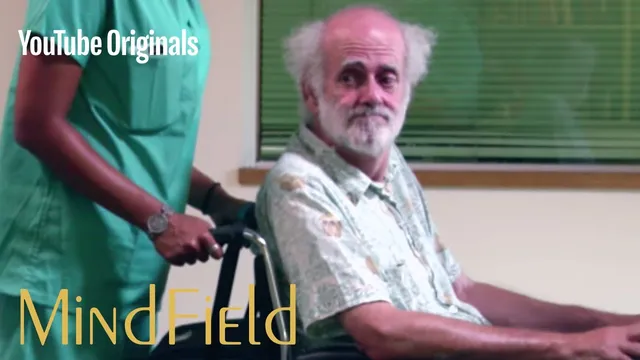
The transcript then shifts from whistleblowers to everyday intervention, using brain scans of kidney donors at Georgetown University to connect altruism with heightened emotional responsiveness in the amygdala. But the key claim is practical: heroism can be taught, at least partly. Zimbardo’s Heroic Imagination Project (HIP) runs seminars built around social psychology principles, especially the bystander effect—where more witnesses reduce the likelihood of help. In a follow-up simulation, HIP students are tested in a church setting during a staged crisis involving bullying and an elderly man asking for water. Some trained participants intervene quickly, while others hesitate, and some non-trained people still act heroically. The final takeaway is nuanced: training helps, but individual background and context still shape outcomes. The best path toward heroism is incremental—start with small acts of kindness, then take larger steps when opportunities arise—because courage, like a muscle, strengthens through repetition.
Cornell Notes
Heroism is framed as selfless action taken at personal risk, not as a rare personality type. The Stanford Prison Experiment illustrates how quickly ordinary people can become harmful under social roles, and how intervention can stop that slide. A whistleblower simulation shows a sharp gap between what people say they would do and what they actually do when pressured to lie or conceal risks; only one out of five subjects agreed to report wrongdoing. Zimbardo’s Heroic Imagination Project (HIP) uses social-psychology lessons—especially the bystander effect—to encourage people to “be the first” to help. In staged crisis tests, HIP training increased intervention for some participants, but results varied, suggesting both training and individual background matter.
What does the Stanford Prison Experiment reveal about how “evil” can emerge from ordinary behavior?
How does the transcript test the difference between moral intention and moral action in whistleblowing?
Why are whistleblowers like Daniel Ellsberg, Chelsea Manning, and Edward Snowden treated as both heroes and villains?
What biological clue links altruism to emotional processing in the transcript?
What is HIP’s central strategy for turning bystanders into helpers?
What do the staged “water” and “elder abuse” simulations suggest about whether heroism can be taught?
Review Questions
- In the whistleblower simulation, what specific pressures were used to test whether participants would lie, and how did the outcomes differ from survey intentions?
- How does the bystander effect explain why “being the first” can be crucial in emergency intervention?
- What evidence in the transcript supports both the possibility of training heroism and the limits of training it?
Key Points
- 1
Heroism is defined as selfless action taken at personal risk without expecting reward, not as a dramatic rescue fantasy.
- 2
Role-based social pressure can rapidly turn people from observers into harmful actors, as shown by the Stanford Prison Experiment’s escalation.
- 3
A major gap exists between stated willingness to blow the whistle and actual willingness to report wrongdoing under authority pressure.
- 4
Whistleblowing cases (Daniel Ellsberg, Chelsea Manning, Edward Snowden) demonstrate that the same act can be labeled heroism or treason depending on perspective.
- 5
The bystander effect reduces intervention when many witnesses are present, so training often targets the difficulty of being the first helper.
- 6
HIP’s simulations suggest training can increase helping behavior, but outcomes vary with individual background and context.
- 7
Heroism is presented as a skill built through incremental practice—small acts of kindness followed by larger steps when needed.