How to Make Big Decisions
Based on Ali Alqaraghuli, PhD's video on YouTube. If you like this content, support the original creators by watching, liking and subscribing to their content.
Classify decisions by reversibility; irreversible or hard-to-undo choices require the full algorithm, while reversible ones can be tested with less friction.
Briefing
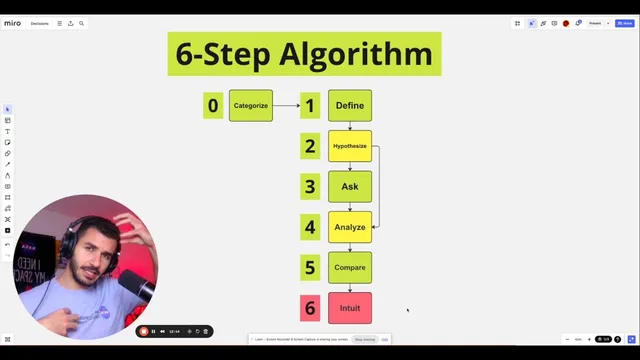
Big decisions don’t have to be mystical—they can be handled with a repeatable process that blends structured thinking with a final gut-level judgment. The core claim is that the best outcomes come when people (1) treat irreversible, hard-to-reverse choices with extra rigor and (2) use a five-step information-and-logic cycle before letting intuition make the final call. That matters because most people either overthink reversible choices or outsource judgment on high-stakes ones, then regret the result when it goes wrong.
The framework starts by sorting the decision itself. Drawing on Jeff Bezos’s distinction, reversible choices (like what to wear) can be tried with minimal downside, while irreversible or difficult-to-undo decisions—tattoos, college paths, PhD decisions, starting a business, and even marriage—require deeper attention. The algorithm is designed for the latter category: commitments that can lock in years of life and are costly to reverse.
Step one is clarity: define exactly what decision is on the table. Ali Alqaraghuli gives examples from career crossroads—choosing a major, deciding on a PhD, or choosing between a corporate path and graduate study—and points to Elon Musk’s early fork between continuing a Stanford PhD and joining the internet boom. Step two is inward hypothesis-building: assume there’s no outside input and reason from personal knowledge and logic. In Alqaraghuli’s case, the fear of boredom and the risk/reward tradeoff pushed him toward a PhD despite financial uncertainty; Musk’s own knowledge suggested the internet opportunity was the better bet.
Step three is targeted consultation: seek out experts who have achieved the outcomes you want, not random people whose backgrounds don’t match the problem. Alqaraghuli describes interviewing 31 NASA engineers during a JPL internship, repeatedly asking why they chose their paths and what they would do in his situation. Musk is cited as similarly relentless about asking mentors and professors, including discussions around deferring Stanford admission.
Step four is critical analysis of what experts say. Advice should not be accepted at face value; it must be tested against logic, first principles, and personal reasoning. Alqaraghuli criticizes the habit of outsourcing thinking to coaches or gurus, arguing that even authoritative guidance can be wrong for a specific person.
Step five compares the analyzed external input back to the original hypothesis. People should synthesize and “average” the guidance, then ask whether it confirms, challenges, or changes the initial assumption—often using reflective downtime like walks or late-night drives.
The “plot twist” is the final decision rule: intuition. The process ends with a gut feeling, but not a raw impulse. Intuition is portrayed as calibrated by prior reasoning, desire, and emotional priorities. Alqaraghuli argues that the mind and heart work together: do the intellectual work first, then follow the calm, right-feeling signal. He adds practical calibration tips—sleep, diet, and avoiding exhaustion—because poor rest can turn intuition into impulsivity. The payoff is fewer regrets: even when a choice is wrong, it remains the person’s own decision rather than a mistake made by deferring to someone else’s judgment.
Cornell Notes
The decision-making method centers on hard-to-reverse choices and ends with a gut-level call that’s grounded in prior reasoning. First, classify the decision as reversible or irreversible; the algorithm targets the irreversible category where mistakes are costly. Then define the decision precisely, build an initial hypothesis using personal logic, and consult experts who have achieved the outcomes you want. Analyze expert advice critically and compare it back to your original hypothesis. Finally, act on intuition—described as a calm, calibrated feeling shaped by deep thinking and personal desire, not impulsivity—while sleep and diet help keep that intuition reliable.
Why does the framework start by classifying decisions as reversible vs. irreversible?
What does “define the decision” mean in practice?
How should someone form the initial hypothesis before asking others?
What’s the rule for who to ask, and what’s the danger it avoids?
Why isn’t expert advice treated as final?
How does intuition fit after all the analysis?
Review Questions
- Which steps in the algorithm are meant to reduce the risk of irreversible mistakes, and how does each one do that?
- How would you decide whether to treat a choice as reversible or irreversible before applying the framework?
- What would it look like to “analyze advice” using first principles rather than accepting it from an expert?
Key Points
- 1
Classify decisions by reversibility; irreversible or hard-to-undo choices require the full algorithm, while reversible ones can be tested with less friction.
- 2
Define the decision with precision so the comparison is explicit (e.g., option A vs. option B), not a vague life direction.
- 3
Build an initial hypothesis using only personal knowledge and logic before seeking outside input.
- 4
Consult experts who have achieved the outcomes you want, and ask them what they would do in your specific situation.
- 5
Treat expert advice as raw input: analyze it critically and test the reasoning rather than accepting it at face value.
- 6
Synthesize and compare external guidance back to the original hypothesis to see whether it confirms, challenges, or changes the plan.
- 7
Make the final call using calibrated intuition, and protect it with basics like adequate sleep and a clean diet to avoid confusing intuition with impulse.