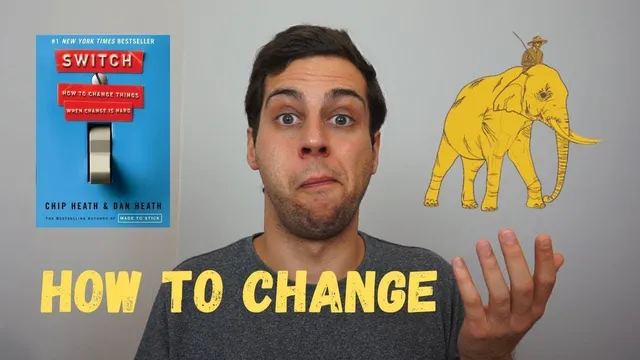
How to Make Change Easier: Switch by Chip and Dan Heath
Based on Dan Silvestre's video on YouTube. If you like this content, support the original creators by watching, liking and subscribing to their content.
Lasting change requires coordination between the rider (direction) and the elephant (emotion), not just better planning.
Briefing
Change sticks only when both parts of the mind get what they need: the rational “rider” for direction and the emotional “elephant” for motivation. Chip and Dan Heath’s Switch framework treats most failed change attempts as a coordination problem—plans without emotional buy-in stall, while strong feelings without a clear route wander. The practical takeaway is a three-part recipe: direct the rider with crystal-clear strategy, motivate the elephant with emotional engagement, and shape the path by adjusting conditions so the new behavior becomes easier to choose.
Directing the rider starts with strategy that reduces confusion and decision overload. Bright spots are the first tool: identify what’s already working, then replicate it. The “miracle question” helps surface those signals by asking what the first small sign would be that the problem is gone—if success by a few could be scaled to many, that’s a bright spot worth copying. Next comes scripting the critical moves. Too many options create decision paralysis, so change needs fewer, clearer actions. Ambiguity is especially exhausting for the rider because it tries to steer the elephant; when the road is uncertain, the elephant defaults to the easiest path. Finally, point to the destination using a “destination postcard”—a vivid image of the end state that makes the future reward feel real now. For running a 10k, that might mean imagining the finish in detail or using a tangible cue like buying a medal in advance or writing and rereading a description of what finishing feels like.
Motivating the elephant is about emotion, not just analysis. The elephant hates ambiguity, gets spooked by daunting tasks, dislikes change, and can be demoralized quickly. Progress—no matter how small—matters, and motivation is tied to identity. Switch offers three strategies: find the feeling (change happens in the order of see → feel → change, so excitement helps people start even when data doesn’t), shrink the change (lower the bar so early wins are inevitable; the “five-minute rescue” reframes overwhelming chores by setting a timer and starting with the worst spot for just five minutes), and grow your people (make the change part of “who you are” by using identity-based decision making: who am I, what kind of situation is this, and what would someone like me do?).
Shaping the path makes the desired behavior feel more automatic by redesigning the environment. Tweak the environment by removing temptations and making the right actions easier—dieting is the classic example: if chocolate is in the house, cravings tend to win. Build better habits with action triggers that piggyback on routines you already do (pair journaling with morning coffee) and use checklists to make sequences consistent. Rally the herd adds social reinforcement: humans follow cues from others, so immerse yourself in communities where the behavior is normal. For running, that could mean following runners on social media or watching documentaries and other content that signals the behavior is acceptable and widely practiced. The framework’s core promise is straightforward: effective change requires coordinated direction, motivation, and environmental support—so the new path wins by design, not willpower alone.
Cornell Notes
Switch frames lasting change as a coordination problem between two mental systems: the rider (rational planning and direction) and the elephant (emotional energy and motivation). Effective change requires three moves: direct the rider with bright spots, scripted critical moves, and a vivid destination postcard; motivate the elephant by finding the feeling, shrinking the change into small wins, and growing identity through “who am I” decision rules; and shape the path by tweaking the environment, building habits with action triggers and checklists, and rallying the herd through social cues. This matters because plans without emotional engagement stall, while emotion without clear routes defaults to the easiest option.
What does it mean to “direct the rider” in the Switch framework, and why does ambiguity derail change?
How does “destination postcard” help someone change behavior like running a 10k?
Why does Switch emphasize emotion for initiating change, and what are the three elephant-motivating strategies?
What is “shrink the change,” and how does the five-minute rescue work as a motivational tactic?
How do environment tweaks, action triggers, checklists, and “rally the herd” work together to make behavior more automatic?
What is the identity-based decision-making model used to “grow your people”?
Review Questions
- If you had to apply Switch to a goal that keeps failing, what would you do first: identify bright spots, script critical moves, create a destination postcard, or shrink the change? Explain your choice.
- Give an example of how ambiguity could cause default behavior in your own routine, and propose a scripted critical move that removes that ambiguity.
- Design a “rally the herd” plan for a behavior you want to adopt. What specific communities or cues would you seek, and how would you measure whether they’re working?
Key Points
- 1
Lasting change requires coordination between the rider (direction) and the elephant (emotion), not just better planning.
- 2
Use bright spots to find repeatable successes, guided by the “miracle question” about the first small sign the problem is gone.
- 3
Script the critical moves and reduce options to prevent decision paralysis and to eliminate ambiguity.
- 4
Create a destination postcard—an emotionally vivid end-state cue—to make future rewards feel real in the present.
- 5
Motivate the elephant with excitement (find the feeling), early wins (shrink the change), and identity framing (grow your people).
- 6
Shape the path by tweaking the environment, using action triggers and checklists to build habits, and using social cues to rally the herd.