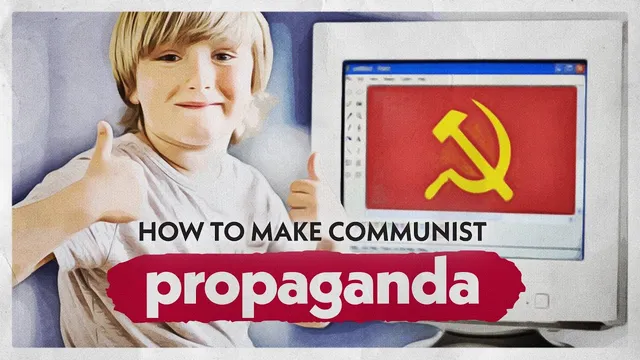
How To Make Communist Propaganda
Based on Second Thought's video on YouTube. If you like this content, support the original creators by watching, liking and subscribing to their content.
Treat “unbiased media” claims as unreliable; build trust through transparency about political perspective and by linking sources for fact-checking.
Briefing
Communist propaganda, in practice, is less about slogans and more about disciplined video craft: pick a topic you can source and visualize, write a script that hooks early and stays conversational, record with audio and lighting that don’t undermine the message, then edit for clarity using tight cut timing and efficient workflows. The central takeaway is that effective political persuasion depends on production fundamentals—because even the strongest argument fails if the audience can’t comfortably watch and listen.
The process begins with topic selection. Creators are encouraged to start from real expertise or organizing experience—explaining how to unionize a workplace, breaking down climate science trends, or translating local labor logistics into a broader political frame. If specialization isn’t available, topic generation can be passive: scan what’s being covered online, identify “bad coverage,” and ask how the issue connects to capitalism. The guidance is pragmatic: there’s no inherently bad topic, but some subjects are easier to illustrate than others. When visuals are scarce—like niche history events—planning matters more, not less.
Writing is treated like a repeatable recipe. The script should open with a striking first sentence that grabs attention, followed by general facts or trends to build credibility without drowning the audience in statistics. Lists are highlighted as persuasive tools, and the structure often moves from problem to urgency to a “ray of hope” that invites viewers to keep watching. The script should be written for narration: use simple language, avoid words that are hard to say, keep sentences short, and design lines with on-screen visuals in mind. Bracketed cues indicate which lines are intended for on-camera delivery. Persuasion still follows basic writing fundamentals—clear thesis, argument paragraphs, and a conclusion that restates why the thesis matters.
Production focuses on what can’t be fixed later: audio and lighting. The guidance ranks priorities bluntly—great audio and lighting in 480p beats a 4K image with poor sound. For on-camera setups, two-point lighting (key and fill lights at roughly 45-degree angles) is presented as the baseline, with softboxes or umbrellas to avoid harsh bare bulbs. Background cleanliness matters more than Hollywood sets; a single presentable wall is enough.
On the audio side, multiple tiers are offered: a lavalier mic into a phone, a shotgun mic like a Rode Videomic into the camera, or a portable recorder such as a Zoom H5 with a shotgun attachment, with the highest quality achieved by using a proper shotgun mic into an audio recorder via XLR. Recording delivery can rely on chunk memorization or, preferably, a teleprompter that keeps eye contact with the lens. Before recording, the workflow includes setting levels (aiming around -12), starting both devices, clapping to sync audio, and accepting that mistakes require multiple takes.
Post-production centers on syncing and cutting. After importing into an editor (Adobe Premiere is used, but alternatives like DaVinci Resolve are recommended for beginners), the clap spike is used to align tracks, then the redundant audio is removed and the remaining tracks are linked. Editing efficiency is emphasized through keyboard shortcuts—binding Z to add edit and X to ripple delete—so bad takes can be removed quickly. For pacing, the advice is to avoid stock footage clips longer than about four seconds unless the scene is inherently active, and to cut on syllables rather than pauses to prevent a slideshow feel. Stock footage sourcing is handled through services like StoryBlocks, with tools like clipgrab for downloading specific clips when needed.
Overall, the message is that propaganda production is learnable through basics and iteration: spend time mastering the fundamentals, then improve the “last 20%” through ongoing practice, research, and feedback—while consistently pushing socialist perspectives into public debate.
Cornell Notes
Effective communist propaganda is built through repeatable video production fundamentals: choose a topic you can source and visualize, write a script that hooks immediately and stays conversational, record with strong audio and lighting, then edit for rhythm and clarity. Topic selection can come from local organizing expertise, relevant education, or passive scanning of online coverage to find gaps and connect issues to capitalism. Scriptwriting should prioritize narration-friendly language, clear thesis structure, and visual cues for on-screen elements. Production guidance stresses that audio and lighting matter more than camera resolution, with teleprompters and clap-sync simplifying delivery and post-production. Editing advice focuses on efficient syncing, removing bad takes quickly, and cutting stock footage on syllables while keeping clip length tight to avoid a slideshow.
Why does the guidance insist there’s no such thing as unbiased media, and how does that connect to making political videos?
How should a creator pick a video topic if they don’t have deep specialization?
What makes an effective script introduction in this workflow?
What production priorities are emphasized for beginners, and why?
How does the recording workflow reduce common mistakes during takes?
What editing techniques are recommended to keep pacing from feeling like a slideshow?
Review Questions
- What specific elements make the script introduction persuasive, and how does the guidance balance urgency with hope?
- How do audio and lighting priorities change purchasing decisions for a beginner camera setup?
- Which editing shortcuts and timing rules are recommended to speed up removing bad takes and maintaining pacing?
Key Points
- 1
Treat “unbiased media” claims as unreliable; build trust through transparency about political perspective and by linking sources for fact-checking.
- 2
Generate topics by combining real-world organizing or expertise with passive scanning for coverage gaps, then connect issues to capitalism.
- 3
Write scripts for narration: conversational language, short sentences, a clear thesis, and an introduction that hooks with urgency plus credible context.
- 4
Prioritize audio and lighting over camera resolution; two-point lighting and soft diffusion are presented as a baseline, with clean backgrounds to reduce distraction.
- 5
Use teleprompters and clap-sync to keep delivery consistent and simplify post-production alignment.
- 6
In editing, sync tracks via the clap spike, link the correct audio to video, and use keyboard shortcuts (Z for add edit, X for ripple delete) to remove bad takes quickly.
- 7
Keep stock footage tight and rhythmic: avoid long clips (around four seconds) unless the scene is active, and cut on syllables rather than pauses.