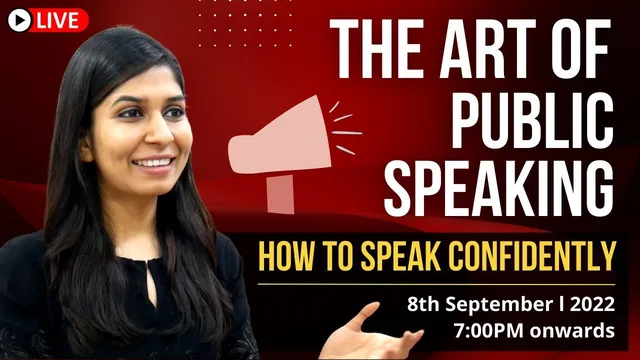
How to master PUBLIC SPEAKING! 🔥
Based on WiseUp Communications's video on YouTube. If you like this content, support the original creators by watching, liking and subscribing to their content.
Treat public speaking like script preparation: plan what to say on each slide and research the topic thoroughly before speaking.
Briefing
Public speaking confidence doesn’t come from “talent” or memorizing lines—it comes from deliberate preparation, audience-focused delivery, and repeated practice in increasingly larger settings. The core message is straightforward: build certainty before you speak, keep your delivery engaging (especially through eye contact and slide design), then train your voice and body until the nerves shrink.
The session first frames why public speaking matters. Mastering it builds confidence that carries into everyday professional moments—starting conversations, leading discussions at work, and presenting ideas without freezing. It also supports career growth by improving performance in group discussions and interviews, where articulating thoughts clearly creates a professional impression.
From there, the guidance turns practical. Preparation comes first: public speaking should be treated like script work, not just slide work. Instead of relying on a presentation deck as a crutch, speakers should know what they want to say on each slide and research the topic thoroughly—especially for product pitches and group discussions—so confidence is grounded in familiarity.
Delivery technique is the next pillar. Cue cards are workable but can break eye contact, which risks disengaging the audience. Reading from slides is even worse: it turns the speaker’s body away from listeners, encourages verbatim reading, and can irritate an audience that can read the slide themselves. The recommended approach is to glance briefly at a slide, check the next point, then look back at the audience and explain it. Slides should avoid full sentences; bullet points and key phrases reduce the temptation to read.
Storytelling and clarity round out the content strategy. Personal anecdotes and personal references are presented as an engagement tool—sharing real experiences helps audiences connect and stay attentive even during longer talks. At the same time, language should be kept simple. Short sentences and straightforward vocabulary make speeches easier to follow, even if academic-style complexity looks impressive in writing.
Voice habits and non-verbal signals get equal attention. Filler words like “um,” “yeah,” “okay,” and “you know” can be reduced by recording practice sessions (audio or video) to spot patterns, then replacing them with pauses when the next thought isn’t ready. Non-verbal communication is treated as a major driver of impact, with eye contact highlighted as the priority. For large audiences, the method is to segment the room into three zones (right, front, left), make eye contact with one person in each zone, and deliver a couple of sentences before moving on.
The session also emphasizes physical delivery: hand gestures can make points land, with the “steeple pose” suggested as an easy, confidence-signaling option. Gestures can also clarify structure—showing “three things,” or mapping stages in sequence.
Finally, confidence is built through a stepwise practice plan: start with two to three people, then expand to groups of five to ten, then larger audiences, until speaking to 150+ becomes manageable. Practice is framed as iterative improvement—recording and reviewing performance, then correcting mistakes. A community-based course is promoted as the practice platform, with live sessions and weekly practice designed to train both spoken and written communication scenarios, from interviews and group discussions to impromptu speaking and formal emails.
Cornell Notes
Public speaking confidence is built through preparation, audience-centered delivery, and repeated practice that scales from small groups to large audiences. Speakers are urged to prepare a script-like plan for each slide, research the topic deeply, and use bullet points (not full sentences) so they can glance at slides and maintain eye contact. Engagement improves with personal anecdotes, while clarity improves with simple language and short sentences. Filler words can be reduced by recording practice and using pauses instead. Non-verbal communication—especially eye contact (segmented across the room) and purposeful hand gestures—plays a major role in how messages land.
Why does preparation come before delivery tactics in building public speaking confidence?
What delivery habits reduce audience disengagement during presentations?
How should slides be designed to support better speaking?
How do personal anecdotes and simple language work together to keep an audience engaged?
What are concrete ways to cut filler words and improve pacing?
How can a speaker maintain eye contact with a large audience?
Review Questions
- Which slide and delivery choices most directly protect eye contact, and why?
- What specific techniques are recommended to reduce filler words and replace them with better pacing?
- How does the stepwise practice plan (small groups to larger groups) change the way confidence is built over time?
Key Points
- 1
Treat public speaking like script preparation: plan what to say on each slide and research the topic thoroughly before speaking.
- 2
Use bullet points and key phrases on slides, not full sentences, to reduce the urge to read and to keep attention on the audience.
- 3
Avoid cue-card reading and slide-reading; glance briefly at slides, then look at listeners and explain the point in your own words.
- 4
Strengthen engagement with personal anecdotes, and improve comprehension by keeping language simple with short sentences.
- 5
Reduce filler words by recording practice to spot patterns and using intentional pauses when the next thought isn’t ready.
- 6
Maintain eye contact in large rooms by segmenting the audience into zones (right, front, left) and delivering a few sentences per zone.
- 7
Build confidence through stepwise practice: start with 2–3 people, then expand group size gradually while reviewing and correcting mistakes.