how to mind map effectively. (it's actually easy)
Based on Kai Notebook's video on YouTube. If you like this content, support the original creators by watching, liking and subscribing to their content.
Mind mapping is meant to visualize understanding through relationships, not to replace all note-taking.
Briefing
Mind mapping works best when it’s treated as a tool for understanding—turning dense, linear material into a visual map of relationships—rather than as a replacement for all other study methods. The core claim is that the brain retains information more effectively when facts are linked to context and to each other, and mind maps provide that linkage in a 2D structure. That’s why the method is positioned as a fast way to digest chunky textbooks: instead of rereading long paragraphs, students can revisit a structured “tree” that shows how concepts connect.
The transcript also draws a boundary around expectations. Mind mapping isn’t the same as taking notes, and it isn’t a one-size-fits-all solution. Effective studying still requires additional steps such as active recall and blurting; mind mapping is best treated as a supplemental technique that helps organize understanding and makes review easier. There’s also a “hard truth” warning: copying the mechanics without grasping the purpose—visualizing relationships and context—can lead to ineffective studying and weaker results.
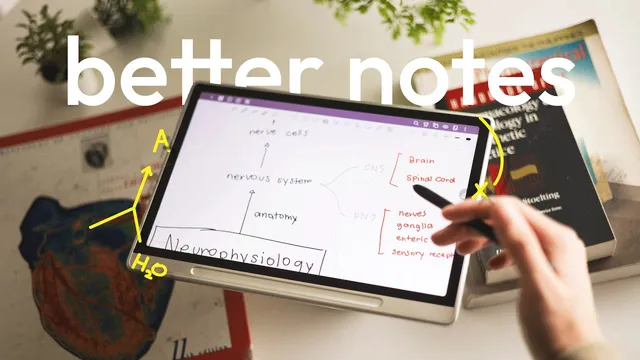
After setting those principles, the walkthrough demonstrates a practical workflow using an anatomy example. The first rule is “less is more”: the map shouldn’t be packed with full sentences or paragraphs. Instead, it should capture core topics and the relationships between them. The process begins with a central concept—“neurophysiology”—then branches into major categories that summarize the structure of the material. In the example, neurophysiology is broken into three fundamental steps: sensory interpretation and motor response, with the map using brackets and arrows to show hierarchy and grouping.
The example then expands into anatomy and system structure. “Neurophysiology” is linked to neurons and the nervous system, and the nervous system is subdivided into two major divisions: the CNS and the PNS. The map uses color to separate relationships—lighter gray for one set of branches—and symbols to mark hierarchy. For instance, a bracket in one color groups organs within the CNS (brain and spinal cord), while a larger bracket groups PNS components such as nerves, ganglia, anteric plexuses, and sensory receptors.
Finally, the method emphasizes explicit relationships across branches. A lighter gray arrow connects the CNS to downstream effects—signals that stimulate muscles to contract—so the map doesn’t just list terms, it shows cause-and-effect or functional links. The overall takeaway is that once the meaning of each node is understood, the visual structure can reduce rereading time and make review faster, because the connections are already laid out on the page.
Cornell Notes
Mind mapping is presented as a visual method for understanding linked information, not as a direct substitute for note-taking. The transcript stresses that effective studying still depends on other techniques like active recall and blurting, so mind maps should function as a supplemental tool. A key rule is “less is more”: include core topics and the relationships between them, using hierarchy markers like brackets and arrows. Colors and symbols help separate categories (such as CNS vs. PNS) and make review faster by keeping context visible. The anatomy example shows how a central concept branches into major systems and then connects functional relationships across the map.
Why does the transcript insist mind mapping is not the same as taking notes?
What does “less is more” mean in the mind-mapping workflow?
How does the example use hierarchy and grouping to represent anatomy content?
What role do colors play beyond decoration?
How does the transcript show mind maps capturing relationships, not just categories?
Why does the transcript warn that mind mapping may not work for everyone?
Review Questions
- What specific elements should a mind map include if the goal is understanding rather than note-taking?
- How do arrows, brackets, and color work together in the anatomy example to represent hierarchy and relationships?
- Why does the transcript argue that mind mapping should be supplemental rather than the only study technique?
Key Points
- 1
Mind mapping is meant to visualize understanding through relationships, not to replace all note-taking.
- 2
Effective studying still requires other methods such as active recall and blurting; mind maps are supplemental.
- 3
Use “less is more”: write core topics and connections, not paragraphs.
- 4
Start with a central concept, then branch into major categories that reflect the structure of the material.
- 5
Use hierarchy markers like brackets and functional links like arrows to show how parts relate.
- 6
Apply colors to distinguish categories and relationship types so the map is easier to review quickly.