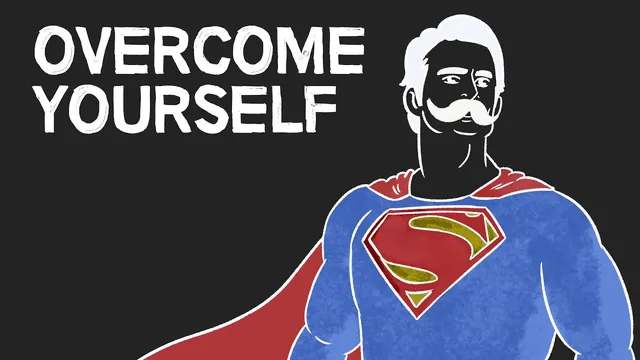
How to Overcome Yourself | Nietzsche’s Superman
Based on Einzelgänger's video on YouTube. If you like this content, support the original creators by watching, liking and subscribing to their content.
Nietzsche’s Übermensch is framed as a remedy for nihilism that can emerge when shared religious and moral foundations weaken.
Briefing
Nietzsche’s “Superman” (Übermensch) is presented as a practical antidote to nihilism: when traditional religious values fade, humanity needs a new way to generate meaning—or risks sliding into despair. The core idea is that the decline of Christianity can be both an opening and a threat. It may free people to create new values, but it also removes a shared moral foundation, leaving many feeling “adrift” and vulnerable to meaninglessness.
In that context, the Übermensch isn’t a superhero with supernatural powers. It’s a higher type of human being who overcomes the limits of “slave morality”—the life-denying ethics Nietzsche associates with Christianity, including an emphasis on sacrifice, self-denial, and repression of instincts. Nietzsche contrasts this with cultures he admired for strength and vigor, arguing that herd morality trains weakness rather than resilience. Yet the danger remains: religions don’t just teach doctrine; for centuries they structured life. Remove that structure and people may lose purpose, which Nietzsche predicted would culminate in nihilism.
The proposed cure is self-overcoming. Nietzsche’s Superman is a person who rejects collective moral and traditional beliefs, breaks free from herd thinking, and creates individual values rooted in lived experience. The famous “tightrope” image—humanity stretched between “beast” and “Superman” over an abyss—captures the process: becoming the Übermensch is an active, ongoing journey through risk, discomfort, and challenge. The point isn’t merely to reach a destination; the dangerous crossing itself signals progress away from a more primitive version of humanity.
Nietzsche also ties this transformation to the “will to power,” described as a fundamental drive of life. The Superman becomes an affirmation of life’s richness and complexity, not an escape from it. Importantly, this path is framed as available to everyone in potential, even if only a few have the strength to endure it. The journey often brings loneliness, ridicule, and social resistance—because the herd prefers safety and belonging, and may treat independent value-creation as a threat.
To make the idea concrete, the transcript emphasizes that there’s no fixed checklist for what a Superman looks like. Authenticity matters: each person must carve an individual path. Still, several “guidelines” appear repeatedly. First comes radical self-acceptance—honestly identifying strengths, weaknesses, passions, and values. Then self-overcoming: confronting flaws, fears, and uncertainties; pursuing challenging goals; seeking new experiences; learning skills; and facing fears directly. Finally, creating one’s own values and purpose is treated as essential for resisting nihilism. A strong “why” to live for can carry someone through almost any “how,” turning existential risk into a source of direction.
Overall, Nietzsche’s Übermensch is framed as a call to action: transcend inherited morality, build personal meaning, and use struggle to transform limitations into growth—so humanity can outgrow nihilism rather than collapse into it.
Cornell Notes
Nietzsche’s Übermensch (Superman/Overman) is presented as a response to nihilism that can follow the erosion of traditional religious values. As Christianity’s moral framework weakens, people may lose purpose and drift into meaninglessness; the Superman offers a way to generate new meaning through individual value-creation. The Übermensch rejects herd morality, embraces individuality, and practices ongoing self-overcoming—moving “over an abyss” between animal instincts and higher human potential. This process is tied to the “will to power,” understood as a fundamental drive of life and a way to affirm life’s complexity. While the path is open to everyone in potential, it demands courage, solitude, and the willingness to endure ridicule and risk.
Why does the transcript connect the decline of Christianity to nihilism?
What makes Nietzsche’s Superman different from a comic-book superhero?
How does “self-overcoming” work in practice, according to the transcript?
What role does the “will to power” play in the Superman ideal?
Why does the path to the Übermensch come with social costs?
If there’s no fixed archetype, what “guidelines” are offered for becoming more Superman-like?
Review Questions
- How does the transcript explain the shift from religious decline to nihilism, and what mechanism prevents collapse into meaninglessness?
- Which elements of self-overcoming are described as necessary (and why are struggle and fear-facing emphasized)?
- Why does the transcript insist there is no fixed Superman archetype, and what would go wrong if someone tried to copy one?
Key Points
- 1
Nietzsche’s Übermensch is framed as a remedy for nihilism that can emerge when shared religious and moral foundations weaken.
- 2
Religious decline is treated as both liberating (new value-creation becomes possible) and destabilizing (many lose purpose and feel “adrift”).
- 3
The Superman rejects herd morality and “slave morality,” replacing inherited rules with self-created values grounded in personal experience.
- 4
Becoming the Übermensch is an ongoing process of self-overcoming, captured by the tightrope metaphor between “beast” and “Superman.”
- 5
The “will to power” links the Superman ideal to life-affirmation rather than repression or self-denial.
- 6
The path is socially costly: people may face loneliness, ridicule, and resistance from those invested in conventional norms.
- 7
Practical guidance emphasizes self-acceptance, challenging goals, new experiences, fear confrontation, and building a strong “why” to live for.