How to plan your exam study schedule (from a serial procrastinator)
Based on Ginny's video on YouTube. If you like this content, support the original creators by watching, liking and subscribing to their content.
Estimate study start dates based on absorption speed, required practice (questions vs reading), break needs, and real distractions—not a generic timetable.
Briefing
A realistic exam study plan beats both last-minute cramming and overly optimistic “start a month early” schedules. The core method is to figure out how long preparation truly takes for a specific person and course—then build a timetable that includes slack time, structured breaks, and review sessions that match how memory fades.
The planning starts with estimating the lead time needed before an exam. There’s no universal number of days, because study speed depends on how quickly someone can absorb and memorize material, how much practice is required (questions versus reading), and how long rest periods are necessary. The approach emphasizes honesty about habits: if phone browsing, fidgeting, or procrastination are part of the routine, that time must be built into the schedule rather than ignored. For the creator, two weeks is a “sweet spot” for intensive review, because it allows for mental breaks and supports spaced repetition—revisiting content over days rather than hours to fight the forgetting curve.
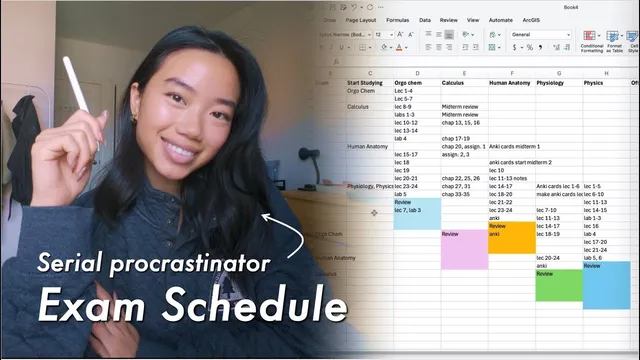
The plan also accounts for course structure and exam timing. Many schools release final exam dates about a month and a half to two months in advance, and students often juggle multiple courses. Instead of isolating each day to one subject, the schedule can mix topics within a day to maintain engagement. For organizing the month, the method is intentionally low-tech: use Excel, break down study by lecture number (matching how lecture notes are labeled), and schedule office hours and review days. Since finals typically emphasize post-midterm material, less time goes to pre-midterm content during final season. A sample pacing for a physiology course illustrates the structure: roughly 10 days of lecture-by-lecture review, followed by about four days of holistic review, including extra attention to difficult topics.
Course difficulty and personal interest also shape the calendar. If a subject feels boring or unengaging, the plan should compensate by starting earlier—adding about an extra week in that case—so the final stretch doesn’t collapse into emergency cramming.
After the monthly plan is set, daily scheduling becomes an energy-management exercise. The creator divides the day into high-focus blocks (for intensive, practice-heavy work like organic chemistry or physics) and lower-focus blocks (for memorization-heavy material like physiology and human anatomy, using active recall and flashcards). Breaks are treated as productivity tools, not interruptions: after several hours of study, a longer “lounge” period helps prevent burnout. Sleep is scheduled as a non-negotiable constraint—shutting down the laptop by a set time to avoid all-nighters and the next-day brain fog that follows.
Overall, the strategy is less about finding a perfect template and more about building a schedule that matches real behavior: plan breaks, plan sleep, plan overlap across multiple finals, and adjust day-to-day based on what actually gets done. The result is steady progress that avoids the last few days panic spiral.
Cornell Notes
A strong exam schedule starts with realistic lead time and ends with daily routines built around energy and memory. Instead of cramming or starting too early, the plan uses a minimum of two weeks of review to support spaced repetition, accounting for breaks and the reality of procrastination or phone distractions. Monthly planning can be done in Excel by lecture number, with office hours and extra review days included, while finals preparation prioritizes post-midterm content. Daily scheduling then assigns intensive, practice-heavy topics to high-focus windows and memorization-heavy subjects to lower-focus periods using active recall and flashcards. Sleep and structured breaks are treated as essential parts of the plan to prevent burnout and all-nighters.
How does someone decide when to start studying for an exam if there’s no fixed “magic number” of days?
Why does the plan emphasize a minimum of two weeks before finals?
What’s the practical way to organize a month of exam study without complex tools?
How should daily study tasks be assigned across the day?
What specific safeguards prevent the schedule from collapsing into burnout or all-nighters?
How does the schedule handle courses that feel boring or harder to engage with?
Review Questions
- What factors besides “days until the exam” determine how early someone should start studying?
- How does spaced repetition change the way review sessions should be scheduled?
- Describe how high-focus and low-focus parts of the day should be used differently for practice-heavy versus memorization-heavy subjects.
Key Points
- 1
Estimate study start dates based on absorption speed, required practice (questions vs reading), break needs, and real distractions—not a generic timetable.
- 2
Use at least two weeks of review to enable spaced repetition over days and reduce forgetting.
- 3
Organize the monthly plan by lecture number (matching note/file labels) and include office hours and dedicated review days.
- 4
Prioritize post-midterm content for finals and reduce time spent on pre-midterm material during final season.
- 5
Mix subjects within a day when multiple finals overlap to stay engaged and maintain momentum.
- 6
Schedule daily work around energy: place intensive practice-heavy topics in high-focus windows and memorization-heavy work in lower-focus windows.
- 7
Protect progress with structured breaks and a fixed bedtime to prevent burnout and all-nighters.