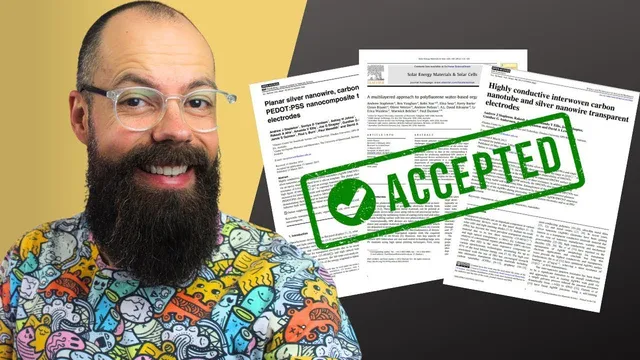
How to Publish a Research Paper: Insider Tricks Every Researcher Must Know
Based on Andy Stapleton's video on YouTube. If you like this content, support the original creators by watching, liking and subscribing to their content.
Publishable work must be genuinely new and novel, and authors must be able to state that contribution clearly and credibly.
Briefing
Publishing a research paper isn’t just about producing new results—it’s about selling the novelty clearly enough that editors and reviewers can’t ignore the value. The core requirement is straightforward: the work must be genuinely new, novel, and interesting, and the author has to be able to state that claim directly (“this is the first time that we have shown…”) without sounding like marketing copy. That framing matters because peer review is partly a gatekeeping process: editors need to see, immediately and up front, why the world needs this specific contribution and why their journal should be the one to publish it.
Once a paper is ready for submission, the next practical step is choosing where to send it. A journal finder tool can be used to match an abstract or keywords to potential journals, then filter by open-access status, subscription requirements, and metrics such as “time to first decision,” impact factor, and time to publication. The transcript emphasizes that impact factor and speed are often treated as competing constraints—authors may aim high, then work down until a realistic fit appears. But the most financially charged part of the process is open-access publishing: after the publisher handles hosting and distribution, authors pay open-access charges, which is portrayed as a major revenue lever for publishers.
The selection process also includes a reality check on search tools and publisher databases. Using different journal finders can yield very different results, and some tools may fail to generate matches for a manuscript title and abstract. Still, the author recommends using the output as a shortlist to discuss with a supervisor, who is described as having both “six sense” for fit and connections to editors that can smooth acceptance. The transcript also warns about desk rejections—cases where an editor rejects after a quick scan (around 20 seconds). Avoiding desk rejection requires turning on the “marketing brain” early: the paper’s novelty and contribution must be prominent in the editor-facing materials, supported by evidence, and presented as the paper’s central angle.
If the paper passes desk review, it enters peer review, where other scientists evaluate the work. The experience varies by field: some areas may be more straightforward when data is rigorous, while others can involve sharper infighting. When reviewer comments arrive—sometimes after weeks or months—the recommended approach is to comply within reason, even when requests include additional citations that can boost the authors’ academic metrics (like H-index and grant prospects). Pushing back too hard can slow the process by triggering additional review cycles, which undermines one of academia’s incentives: publishing quickly to advance a career.
After acceptance, copy editing becomes the final hurdle. The transcript advises reading the formatted proofs carefully, checking that figures remain clear and understandable, and ensuring they work in black and white—since many readers print in grayscale. Small adjustments, such as using dotted instead of colored lines, can improve readability and help future citations. The overall message is pragmatic: success depends on clarity of novelty, strategic journal targeting, careful navigation of editor and reviewer expectations, and meticulous final formatting.
Cornell Notes
To publish in peer-reviewed literature, authors must do more than generate new results—they must present novelty and value so clearly that editors can justify sending the paper out for review. Journal selection should be data-driven: use journal finder tools to filter by open-access status, time to first decision, impact factor, and time to publication, then shortlist options for discussion with supervisors. Desk rejections are often quick rejections after a brief scan, so the paper’s contribution needs to be front-loaded and unmistakable. During peer review, responding to reviewer comments promptly—while refusing only unethical or mismatched requests—helps avoid delays. Final copy-editing matters too: figures should remain readable in black and white to support comprehension and future citations.
What makes a paper “publishable” in practice, beyond having results?
How should authors choose a journal before submitting?
How do desk rejections happen, and how can they be avoided?
What’s the recommended approach when reviewer comments arrive?
Why does copy editing—especially figure formatting—matter after acceptance?
Review Questions
- What specific early-message elements help prevent desk rejection, and where should they appear?
- Which journal filters (e.g., time to first decision, impact factor, open access) most directly affect an author’s submission strategy?
- During peer review, when is it appropriate to refuse reviewer requests, and what are the risks of arguing too much?
Key Points
- 1
Publishable work must be genuinely new and novel, and authors must be able to state that contribution clearly and credibly.
- 2
Journal selection should rely on searchable matching plus filters like open-access status, time to first decision, impact factor, and time to publication.
- 3
Open-access publishing often shifts costs to authors via charges tied to hosting and publication.
- 4
Desk rejections can happen after a very brief editor scan, so novelty and value must be front-loaded and unmistakable.
- 5
Peer review success often depends on timely, constructive responses to reviewer comments, with refusals reserved for unethical or clearly mismatched requests.
- 6
Reviewer-requested citations can influence academic metrics, so authors should treat reasonable citation requests as part of the process.
- 7
Copy editing is not cosmetic: figures should be checked for clarity and black-and-white readability to support comprehension and citations.